
Short Answer
Overview
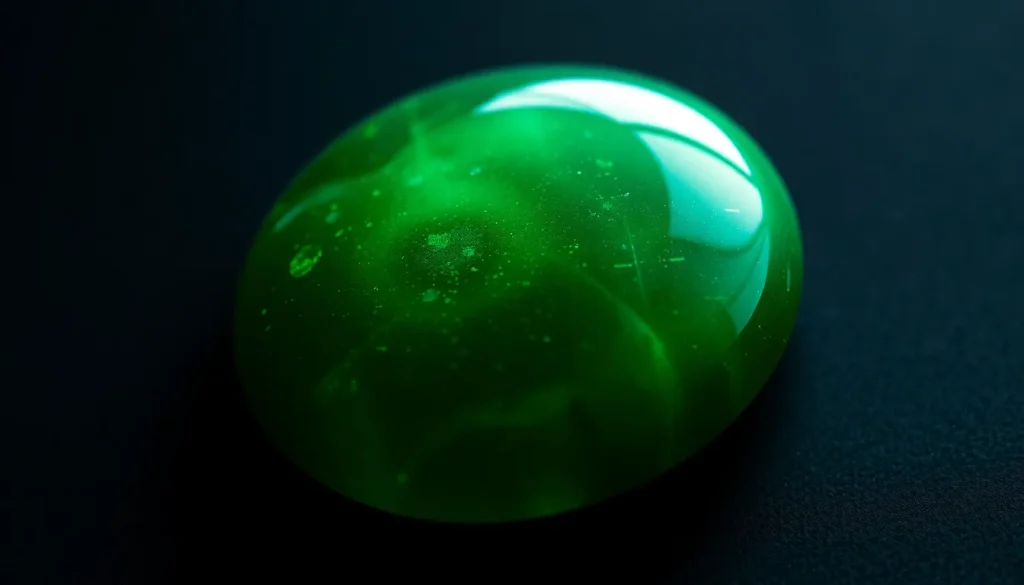
Willemite is a zinc orthosilicate mineral with the chemical formula Zn₂SiO₄. It crystallises in the tetragonal system and is most commonly encountered in bright green, yellow‑green, or yellow shades. The stone displays a high refractive index (≈1.71‑1.73) and an adamantine to vitreous luster, giving it a glass‑like appearance. Natural Willemite fluoresces a vivid green under short‑wave ultraviolet light, a characteristic that aids in identification.
History and Origin
The mineral was first described in 1845 from specimens found near the zinc mines of Franklin, New Jersey, USA. It was named in honour of the German mineralogist William I. Wille, who contributed to early studies of zinc minerals. Since its discovery, Willemite has been recognised both as an ore of zinc and, more rarely, as a gemstone when clear, well‑coloured crystals are found.
Meaning and Symbolology
In traditional gemstone lore, Willemite is associated with growth, renewal, and the heart’s capacity for love. Its vivid green colour symbolizes nature’s vitality and is thought to encourage personal development and confidence. The stone is also linked to emotional balance and the nurturing of relationships.
Healing and Metaphysical Properties
Crystal‑healing practitioners attribute the following beliefs to Willemite:
- Heart‑centered energy: Supports emotional openness, compassion, and forgiveness.
- Physical vitality: Said to aid the circulatory and respiratory systems, though these claims are not medically verified.
- Spiritual growth: Believed to enhance intuition and promote a sense of purpose.
These properties are based on longstanding folklore and are not intended as medical advice.
Varieties and Types
Willemite occurs in several colour varieties, each reflecting trace impurities or structural variations:
- Green Willemite: The most common, ranging from pale apple‑green to deep emerald.
- Yellow Willemite: Often found in the same deposits, displaying a buttery yellow hue.
- Brown or honey‑coloured: Resulting from manganese or iron inclusions.
- Colourless: Rare, highly prized for its clarity.
All natural varieties exhibit strong green fluorescence under UV light, a diagnostic feature for gemologists.
Jewelry Uses and Care
Because of its moderate hardness (5.5 on the Mohs scale) and perfect cleavage, Willemite is cut mainly as cabochons or polished beads rather than faceted stones. It is used in pendants, earrings, and brooches, often set in protective bezels to guard against chipping.
Care recommendations:
- Clean with a soft, lint‑free cloth and mild soapy water; avoid ultrasonic cleaners.
- Store separately from harder gemstones to prevent scratches.
- Protect from prolonged exposure to strong acids or bases, which can etch the surface.
Buying Guide
When selecting Willemite, consider the following factors:
- Colour intensity: Deep, even green is most valued; uneven zoning may lower value.
- Clarity: Inclusions are common; a clean, transparent specimen commands higher prices.
- Fluorescence: Genuine Willemite will fluoresce bright green under UV; be wary of treated stones that mimic this effect.
- Cut and setting: Cabochons with smooth polish showcase the stone’s luster best.
- Origin: Franklin (USA) and Tsumeb (Namibia) are renowned localities for high‑quality material.
Because synthetic Willemite is rare, most market offerings are natural. For assurance, request a gem‑ological report from a reputable laboratory.
FAQ
What is Willemite good for?
Willemite is valued for its vivid green colour and strong fluorescence, making it a decorative gemstone in jewelry. Traditionally, it is believed to promote emotional healing and personal growth, though these are spiritual concepts, not medical facts.
Is Willemite rare?
High‑quality, well‑coloured Willemite is relatively uncommon because most specimens are small, opaque, or display zoning. Notable localities such as Franklin (USA) and Tsumeb (Namibia) produce the finest material, but the stone is not considered as rare as many precious gems.
How can you tell if Willemite is real?
Natural Willemite fluoresces bright green under short‑wave UV light and has a specific gravity around 4.0‑4.4. A professional gem‑lab can confirm its chemical composition (Zn₂SiO₄) and detect any treatments. Look for a lack of faceting and a cabochon cut typical of genuine material.
What chakra is Willemite associated with?
In crystal‑healing traditions, Willemite is linked to the Heart (Anahata) chakra, supporting love, compassion, and emotional balance.
How should you clean Willemite?
Clean Willemite with lukewarm soapy water and a soft cloth. Avoid ultrasonic cleaners, harsh chemicals, and prolonged exposure to acids. Store it separately from harder gemstones to prevent scratches.
Leave a Reply