
Short Answer
Overview
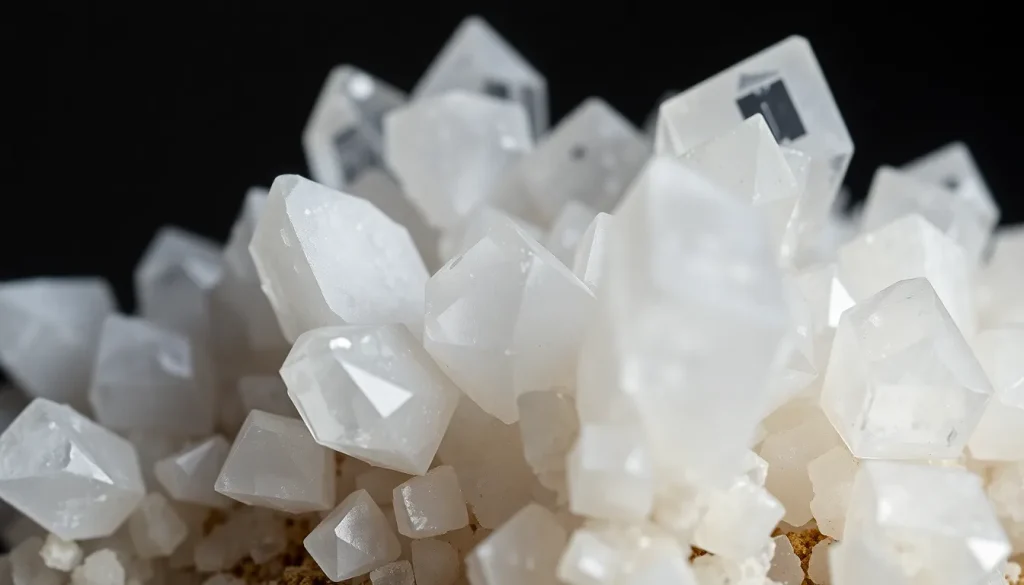
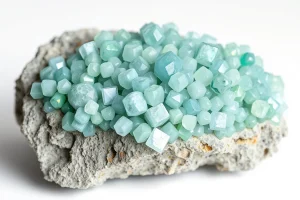
Xonotlite is a calcium silicate mineral with the chemical formula Ca6Si6O18(OH)2. It belongs to the chain‑silicate (inosilicate) subgroup and crystallises in the monoclinic system. Typically colourless to white, Xonotlite displays a vitreous luster and can be transparent to translucent. Its Mohs hardness ranges from 5.5 to 6, making it moderately hard but prone to cleavage.
History and Origin
The mineral was first described in 1889 from specimens collected near the town of Xonotla in the state of Puebla, Mexico – the source of its name. Subsequent occurrences have been reported from hydrothermal veins and skarn deposits in Japan, the United States (Colorado, Arizona), Germany, Canada (Ontario), and Italy. Xonotlite forms in high‑temperature, low‑pressure environments, often alongside wollastonite, diopside, and calcite.
Meaning and Symbolism
In traditional crystal lore, Xonotlite’s clear, glass‑like appearance is associated with purity, clarity of thought, and honest communication. Its white colour is thought to symbolize new beginnings and a clean slate, while the mineral’s structured crystal habit reflects order and discipline.
Healing and Metaphysical Properties
Crystal‑healing practitioners attribute the following beliefs to Xonotlite:
- Communication: Enhances verbal expression and supports the throat chakra, helping users speak their truth.
- Mental Clarity: Assists in clearing mental fog, promoting focus during study or meditation.
- Emotional Balance: Encourages a sense of calm and reduces feelings of overwhelm.
These properties are based on traditional beliefs and are not intended as medical advice.
Varieties and Types
While Xonotlite is generally colourless to white, minor variations can occur:
- Fibrous aggregates – thin, hair‑like crystals that form delicate mats.
- Radiating clusters – prismatic crystals that fan out from a central point, often displaying a glassy sheen.
- Pale gray specimens – caused by trace impurities or exposure to light.
No commercial treatments are common for Xonotlite, and its appearance is largely natural.
Jewelry Uses and Care
Because of its perfect cleavage on {010} and moderate hardness, Xonotlite is used sparingly in jewelry. It appears most often in:
- Beaded necklaces and bracelets, where the stone is set in protective metal settings.
- Cabochons for pendants, often backed with a clear resin to guard against chips.
- Decorative inlays in high‑end watch dials or ornamental objects.
Care instructions:
- Clean with warm, soapy water and a soft brush; avoid harsh chemicals.
- Do not use ultrasonic cleaners or steam cleaners, as the cleavage can cause fracturing.
- Store separately from harder gemstones to prevent scratching.
Buying Guide
When purchasing Xonotlite, consider the following factors:
- Clarity: Look for specimens free of visible inclusions or surface cracks.
- Cut and Setting: Well‑cut cabochons or protected bead settings reduce the risk of damage.
- Origin: Reputable sources will disclose locality; common sources include Japan and the United States.
- Certification: Request a gemological report from a recognized laboratory if the stone is presented as a high‑value piece.
Because Xonotlite is relatively uncommon, prices can vary widely based on size, clarity, and workmanship.
FAQ
What is Xonotlite good for?
Xonotlite is valued for its clear, glassy appearance in ornamental jewelry and as a collector’s mineral. Traditionally, it is believed to support communication, mental clarity, and emotional balance.
Is Xonotlite rare?
Xonotlite is relatively uncommon and typically found in limited localities. High‑quality, clear specimens suitable for jewelry are rarer than rough material, making finished pieces modestly priced.
How can you tell if Xonotlite is real?
Real Xonotlite shows a vitreous luster, perfect cleavage on {010}, and a specific gravity around 2.8–2.9. A professional gemological lab can confirm its identity through X‑ray diffraction or chemical analysis.
What chakra is Xonotlite associated with?
In crystal‑healing traditions Xonotlite is often linked to the Throat Chakra, supporting clear expression and honest communication.
How should you clean Xonotlite?
Clean Xonotlite with warm, mildly soapy water and a soft brush. Avoid ultrasonic or steam cleaners, and keep it away from acids and harsh chemicals to protect its cleavage.
Leave a Reply