
Short Answer
Overview
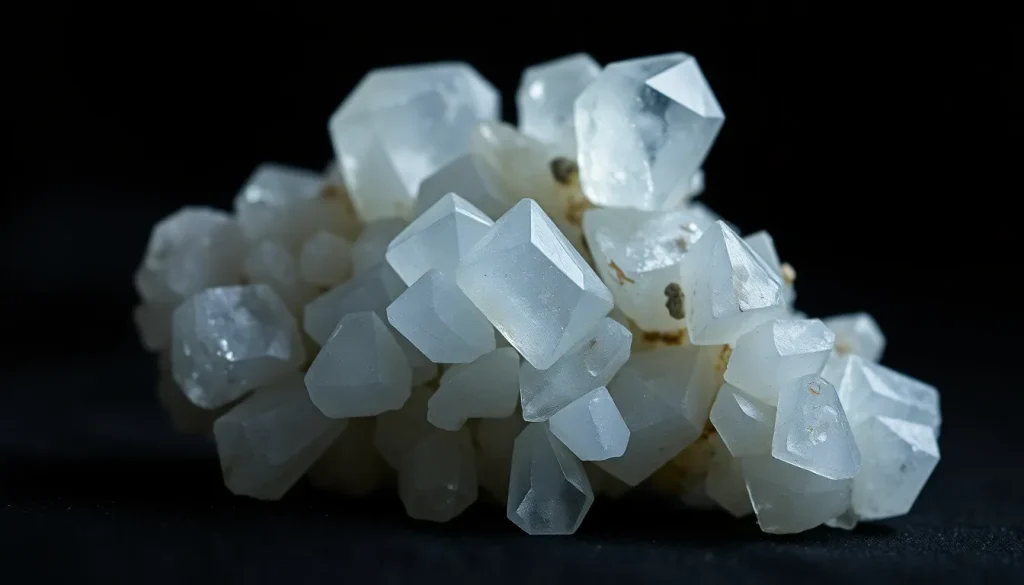
Yugawaralite is a member of the zeolite group, a hydrated calcium‑aluminum silicate mineral with the formula CaAl₂Si₆O₁₅·4H₂O. It typically occurs as translucent to transparent crystals in shades of colourless, white, pale blue, or faint pink. With a Mohs hardness of 5 – 5.5 and a vitreous luster, it is prized by collectors and occasionally set in delicate jewelry pieces.
History and Origin
The mineral was first described in 1914 from the Yugawara region of Kanagawa Prefecture, Japan, which gave it its name. Since then, yugawaralite has been reported from volcanic and hydrothermal environments worldwide, including the United States (Oregon), Iceland, Italy, Brazil, and Canada. Its formation is linked to low‑temperature alteration of volcanic rocks where alkaline fluids promote zeolite crystallization.
Meaning and Symbolism
In traditional gemstone lore, yugawaralite is associated with clarity of thought and gentle communication. Its subtle colour is thought to encourage openness and honesty, making it a symbolic aid for those seeking to express themselves calmly and truthfully.
Healing and Metaphysical Properties
Crystal‑healing practitioners attribute yugawaralite with the ability to balance the throat chakra, fostering clear speech and active listening. It is also believed to support emotional calm, reduce anxiety, and promote a sense of inner peace. These properties are based on longstanding metaphysical traditions and are not medical claims.
Varieties and Types
Yugawaralite occurs in several visual varieties, primarily distinguished by colour:
- Colourless/White: The most common appearance, often used in raw crystal collections.
- Pale Blue: Occurs when trace amounts of iron give a delicate sky‑blue tint.
- Pale Pink: Rare, caused by minimal manganese or other trace elements.
All varieties share the same crystal habit—typically prismatic or tabular crystals with a perfect {010} cleavage.
Jewelry Uses and Care
Because of its modest hardness, yugawaralite is best suited for pendants, earrings, or brooch settings where it is protected from abrasion. It can be cut into cabochons, beads, or small faceted stones. When set in jewelry, avoid exposure to harsh chemicals, ultrasonic cleaners, or high‑impact activities.
Cleaning should be done with warm, soapy water and a soft brush. After rinsing, pat dry with a lint‑free cloth. Store pieces separately to prevent scratching from harder gemstones.
Buying Guide
When purchasing yugawaralite, consider the following:
- Colour and Clarity: Look for even, gentle colour without cloudy inclusions.
- Cut and Setting: Well‑cut cabochons or beads showcase the stone’s transparency.
- Treatment Disclosure: Natural yugawaralite is rarely treated; however, verify that no artificial dye or stabilization has been applied.
- Certification: Reputable dealers may provide a gemological report confirming the mineral identity.
Because the stone is relatively uncommon, prices can vary widely based on size, colour intensity, and quality. Purchasing from established gem dealers ensures authenticity.
FAQ
What is Yugawaralite good for?
Yugawaralite is valued by collectors for its rare zeolite crystal forms and subtle colors. In crystal‑healing traditions it is believed to aid clear communication and emotional calm, though these are not medical claims.
Is Yugawaralite rare?
Yugawaralite is relatively uncommon compared with mainstream gemstones. High‑quality, color‑intense specimens are especially scarce, and most material comes from a few localities such as Japan and Oregon.
How can you tell if Yugawaralite is real?
Authentic yugawaralite displays a vitreous luster, perfect {010} cleavage, and a Mohs hardness of 5‑5.5. It is usually colourless to pale blue and has a white streak. Professional gemological testing (e.g., refractive index measurement) confirms identity.
What chakra is Yugawaralite associated with?
Traditional crystal‑healing sources associate yugawaralite with the throat (Vishuddhi) chakra, promoting clear speech and honest expression.
How should you clean Yugawaralite?
Clean yugawaralite gently with warm soapy water and a soft brush. Rinse thoroughly, pat dry with a lint‑free cloth, and avoid ultrasonic cleaners, harsh chemicals, and prolonged exposure to high heat.
Leave a Reply