
Short Answer
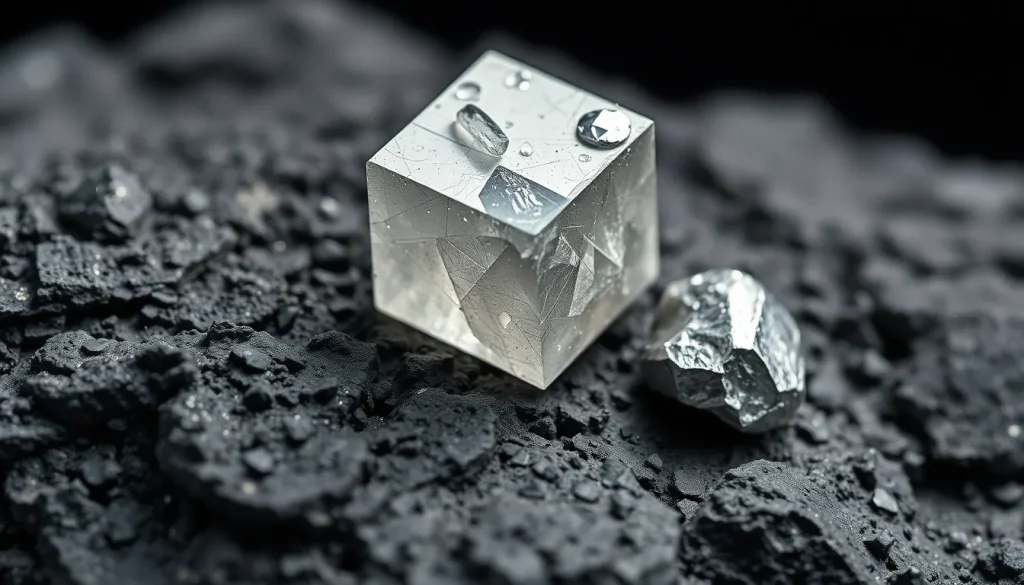
While the average gemstone enthusiast focuses on the brilliance of diamonds or the saturation of rubies, a specialized echelon of collectors seeks the metallic luster and extreme rarity of Platinum Group Minerals (PGMs). These minerals, comprising platinum, palladium, rhodium, ruthenium, iridium, and osmium, rarely occur as distinct, aesthetically pleasing crystals, making high-quality specimens some of the most coveted items in the mineralogical world.
What Is Platinum Group Minerals?
Platinum Group Minerals (PGMs) are a group of naturally occurring minerals containing one or more of the six platinum-group elements. Unlike traditional gemstones, which are typically silicates or oxides, PGMs are often native metals or complex alloys. In the context of collecting, they are prized more for their mineralogical purity and crystal habit than for traditional gemological properties like fire or brilliance.
Most PGMs are found in ultramafic igneous rocks, often associated with chromitite layers. Because these elements are chemically similar and highly resistant to weathering, they often form complex, intergrown mineral species that require advanced laboratory analysis to fully identify.
Varieties and Related Materials
The diversity of PGMs is vast, with hundreds of named species, though only a few are sought after by collectors for their visual appeal:
- Native Platinum: Occurs as grains, nuggets, or rare octahedral crystals. It possesses a bright, silvery-white metallic luster.
- Sperrylite (Platinum Arsenide): One of the few PGMs that forms distinct, cubic crystals. It is highly prized for its metallic shine and geometric perfection.
- Iridingite and Osmiridium: These are often found as alloys. While less “gem-like,” their extreme rarity makes them essential for comprehensive collections.
- Palladium-rich Alloys: Often appearing as pale, silvery grains, these are highly valued when associated with rare host matrices.
Identification and Look-Alikes
Identifying PGMs in the field or in a collection can be challenging due to their similar appearance to other metallic minerals. The following table highlights key distinctions:
| Feature | PGMs (e.g., Platinum) | Pyrite / Chalcopyrite | Galena |
|---|---|---|---|
| Color | Silvery-white to grey | Brass-yellow to gold | Lead-grey |
| Hardness | Generally high (4-6) | Moderate (6-6.5) | Low (2.5) |
| Specific Gravity | Extremely High (14-22) | Moderate (5) | High (7.5) |
| Streak | White to grey | Greenish-black | Lead-grey |
Expert Tip: The most definitive non-destructive test for PGMs is the use of X-ray Fluorescence (XRF) spectroscopy, which can identify the specific elemental composition of the metal without damaging the specimen.
Quality and Value Factors
The value of a PGM specimen is not determined by the “four Cs” of diamonds, but rather by mineralogical criteria:
- Crystal Habit: Well-defined crystals (like the cubes of Sperrylite) are significantly more valuable than massive or granular forms.
- Purity: Specimens that represent a single mineral species rather than a complex alloy are more desirable.
- Association: A PGM crystal still attached to its original host rock (matrix) is generally more valuable than a loose grain.
- Rarity of Species: Elements like Rhodium and Ruthenium are far rarer in mineral form than Platinum, driving up the price for confirmed specimens.
Jewelry Suitability and Care
While native platinum is the gold standard for jewelry settings, PGM minerals are rarely used as faceted gemstones due to their metallic nature and opacity. However, they are occasionally used as cabochons or kept as raw crystals in custom jewelry.
Care Instructions:
- Cleaning: Use only distilled water and a soft brush. Avoid acidic cleaners, which can react with certain PGM alloys.
- Storage: Store in lined specimen boxes. Despite their hardness, some PGM alloys can be brittle and may chip if knocked against harder minerals.
- Handling: Use tweezers or gloves to avoid transferring skin oils, which can dull the metallic luster over time.
FAQ
Can PGM minerals be faceted like diamonds?
Generally, no. PGMs are opaque metallic minerals. While they can be polished or cut into cabochons, they do not exhibit the transparency or dispersion required for traditional faceting.
How can I tell if a metallic mineral is platinum or just pyrite?
The easiest way is weight (specific gravity). Platinum is significantly heavier than pyrite. Additionally, platinum is silvery-white, while pyrite is brassy-yellow.
Are PGM minerals a good investment?
For specialized mineral collectors, yes. High-quality crystals of rare PGM species often appreciate in value due to their scarcity and the limited number of localities that produce them.
Leave a Reply