
Short Answer
Overview
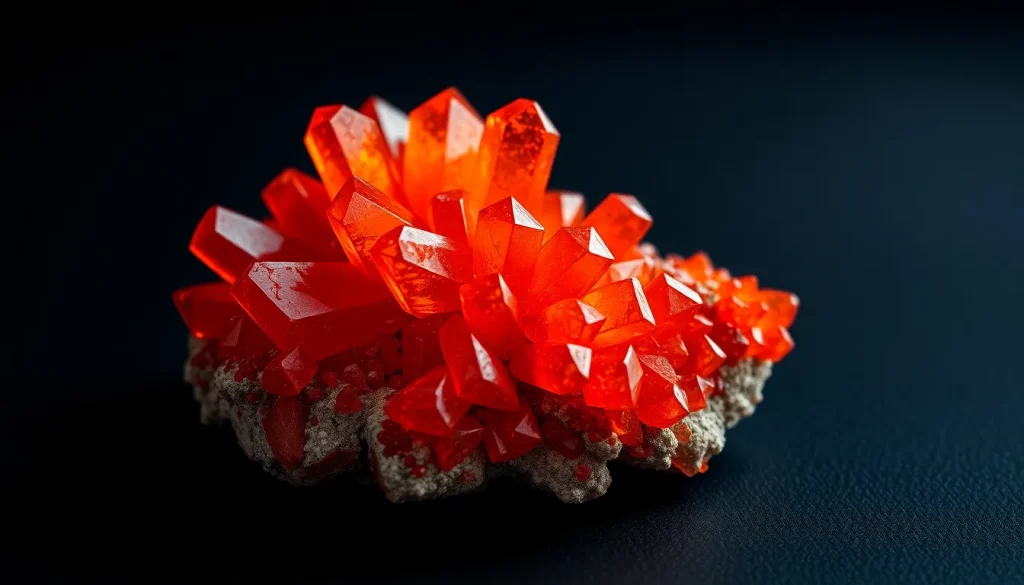
Crocoite is a rare mineral composed of lead chromate (PbCrO₄). It is most celebrated for its bright orange‑red to deep red hue, which can appear almost fluorescent in natural light. With a Mohs hardness of 2.5–3 and an adamantine luster, crocoite is prized by collectors and occasionally used in high‑end jewelry when cut with great care.
History and Origin
The name “crocoite” derives from the Greek word krokos, meaning saffron, a reference to its intense orange coloration. The mineral was first described in 1845 from specimens collected in the Red Lead mines of the Ural Mountains, Russia. Notable localities include the historic Tsumeb Mine in Namibia, the Red Lead Mine at Cornwall, Tasmania (Australia), and the Kivu region of the Democratic Republic of Congo. These deposits form as secondary minerals in oxidized zones of lead‑rich ore bodies, where chromium is introduced by hydrothermal fluids.
Meaning and Symbolism
In traditional gemstone folklore, crocoite’s vivid color is associated with vitality, courage, and the spark of creative energy. Its rarity adds an element of exclusivity, making it a symbol of personal achievement and unique self‑expression. The stone is sometimes linked to the element of fire in alchemical symbolism, representing transformation and renewal.
Healing and Metaphysical Properties
Crystal‑healing practitioners attribute crocoite with the ability to stimulate the Solar Plexus chakra, encouraging confidence, personal power, and clear decision‑making. It is believed to aid emotional balance by dispelling fear and promoting optimism. As with all metaphysical claims, these properties are based on tradition and should not replace professional medical advice.
Varieties and Types
While crocoite itself is a single mineral species, variations can occur based on trace impurities and crystal habit. The most common form is well‑developed orthorhombic prisms displaying the classic orange‑red color. In some specimens, slight oxidation can shift the hue toward orange or brownish‑red. No widely recognized commercial varieties exist beyond the natural stone.
Jewelry Uses and Care
Because crocoite is relatively soft and possesses perfect cleavage on {010}, it is best suited for pendants, earrings, and brooches where the stone can be set securely and protected from impact. Settings that cushion the stone—such as bezel or padded prong mounts—help reduce the risk of chipping.
- Cleaning: Use a soft, lint‑free cloth and mild soap solution. Avoid ultrasonic cleaners and harsh chemicals.
- Storage: Keep crocoite pieces separate from harder gemstones to prevent scratching; store in a soft pouch or lined box.
- Wearability: Limit exposure to prolonged sunlight, as prolonged UV can slightly fade the vivid color over many years.
Buying Guide
When purchasing crocoite, consider the following factors:
- Color Saturation: The most valuable stones exhibit a uniform, intense orange‑red without brown or orange‑yellow zoning.
- Clarity: Inclusions are common; however, large, eye‑clearing crystals are rarer and command higher prices.
- Cut and Faceting: Well‑cut specimens showcase the stone’s brilliance and luster. Avoid heavily shallow cuts that diminish light performance.
- Origin Documentation: Reputable dealers will provide provenance, especially for material from classic localities such as Tsumeb or Tasmania.
- Treatment Disclosure: Natural crocoite is rarely treated, but any enhancement (e.g., heat‑stabilization) should be disclosed.
Because crocoite is uncommon, prices can vary widely. For collectors, a well‑documented, high‑quality specimen may be a worthwhile investment, while jewelry buyers should prioritize durability and secure setting.
FAQ
What is crocoite good for?
Crocoite is valued for its striking orange‑red color in collectors’ cabinets and, when cut carefully, can be used in pendants or earrings. Traditionally, it is believed to boost confidence and creative energy, though these claims are not scientifically proven.
Is crocoite rare?
High‑quality crocoite is relatively rare. Good color, clarity, and size are most commonly found from classic localities such as Tsumeb (Namibia) and Tasmania (Australia). Lesser specimens occur more frequently but are often small or have muted coloration.
How can you tell if crocoite is real?
Authentic crocoite displays a high refractive index (≈2.23), perfect cleavage, and a yellow streak. It is also heavy for its size (specific gravity ≈6). Professional gemologists can confirm authenticity with X‑ray diffraction or spectroscopic analysis.
What chakra is crocoite associated with?
In crystal‑healing traditions, crocoite is linked to the Solar Plexus (Manipura) chakra, where it is said to support personal power and self‑confidence.
How should you clean crocoite?
Clean crocoite with a soft, lint‑free cloth and mild soapy water. Avoid ultrasonic cleaners, harsh chemicals, and prolonged exposure to strong sunlight, as the stone is soft (Mohs 2.5–3) and can be easily scratched or chipped.
Leave a Reply