
Short Answer
Overview
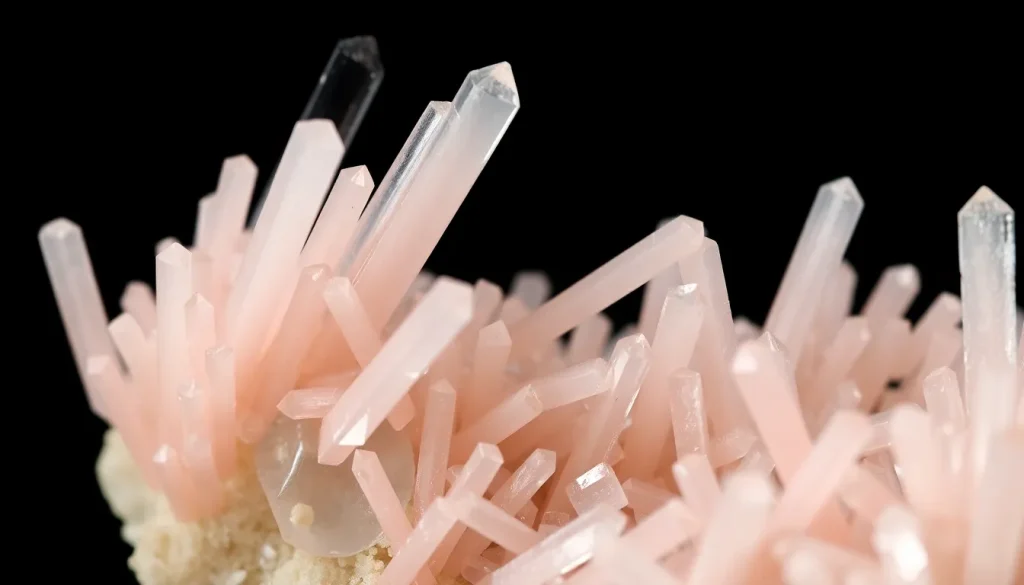
Creedite is a secondary arsenate mineral with the chemical formula Ca₂Mg₃(AsO₄)₃·8H₂O. It belongs to the monoclinic crystal system and typically forms slender, tabular crystals that can appear white, colorless, pink, or pale yellow. Because of its relatively low hardness (3–4 on the Mohs scale) and perfect cleavage, creedite is more commonly found in mineral collections than in mainstream jewelry, though it is occasionally cut into cabochons or beads for niche designs.
History and Origin
The mineral was first described in 1902 from the Creed Mine in the Owens Valley of California, United States, which gave it its name. Creedite forms in the oxidized zones of arsenic‑rich ore deposits, where it precipitates from groundwater that has leached calcium, magnesium, and arsenate ions. Notable localities include the original Creed Mine (California), the Hualapai Mountains (Arizona), the state of Sonora in Mexico, Namibia, and several sites in Peru and Spain.
Meaning and Symbolism
In traditional crystal‑healing lore, creedite is associated with clarity of thought and emotional balance. It is said to encourage honesty, help release suppressed feelings, and promote a gentle flow of creative energy. These symbolic meanings make it appealing to collectors who value gemstones not only for their visual appeal but also for their purported spiritual resonance.
Healing and Metaphysical Properties
According to crystal‑healing beliefs (not medical fact), creedite is thought to aid the heart chakra, fostering compassion and emotional openness. Practitioners claim it can assist in detoxifying the body’s arsenic load, support the immune system, and help the wearer maintain mental clarity during stressful situations. As with all metaphysical claims, these should be regarded as traditional beliefs rather than scientifically proven effects.
Varieties and Types
Creedite does not have widely recognized commercial varieties, but specimens can differ in color and crystal habit:
- White/Colorless Creedite – the most common, displaying a vitreous luster.
- Pink Creedite – caused by trace manganese or iron, prized for its soft blush.
- Yellowish Creedite – rare, often linked to slight iron oxidation.
All types share the same basic crystal structure and physical properties.
Jewelry Uses and Care
Because creedite is soft and has perfect cleavage, it is best suited for pendants, earrings, and brooches where the stone can be set low and protected. Cabochons are the most common cut, emphasizing the stone’s translucence and subtle coloration.
Care guidelines:
- Clean gently with lukewarm water and a soft brush; avoid ultrasonic cleaners.
- Do not expose to acids, harsh chemicals, or prolonged sunlight, which can alter color.
- Store separately from harder gemstones to prevent scratching.
- Handle with care during setting, as the perfect cleavage makes it prone to breakage under pressure.
Buying Guide
When purchasing creedite, consider the following factors:
- Color and Clarity – White or pale pink stones with minimal inclusions are most sought after.
- Cut Quality – A well‑polished cabochon that showcases the stone’s natural luster adds value.
- Origin Documentation – Reputable dealers provide provenance, especially for specimens from classic localities like the Creed Mine.
- Treatment Disclosure – Most creedite is untreated, but any heat or dye treatments should be disclosed.
- Price Range – Creedite is generally affordable, but rare pink or large, flawless pieces can command higher prices.
Always request a gem‑ological report or at‑least a basic identification from a certified laboratory if you are buying a high‑value piece.
FAQ
What is creedite good for?
Creedite is prized by collectors for its delicate crystal habit and subtle colors. Traditionally, it is believed to promote emotional balance and mental clarity, though these are spiritual concepts, not medical facts.
Is creedite rare?
High‑quality creedite with good color and clarity is relatively rare because the mineral forms in limited oxidized zones and is soft, making it difficult to cut and preserve.
How can you tell if creedite is real?
Real creedite is typically soft (Mohs 3–4), has perfect cleavage, and shows a vitreous to pearly luster. It will feel cool to the touch and may display a white streak. Professional testing, such as X‑ray diffraction or a gem‑lab report, is recommended for certainty.
What chakra is creedite associated with?
In crystal‑healing traditions, creedite is most often linked to the Heart (Anahata) chakra, supporting love and emotional openness.
How should you clean creedite?
Clean creedite gently with lukewarm water and a soft brush. Avoid ultrasonic cleaners, harsh chemicals, and prolonged exposure to sunlight. Store it separately from harder gemstones to prevent scratches.
Leave a Reply