
Short Answer
Overview
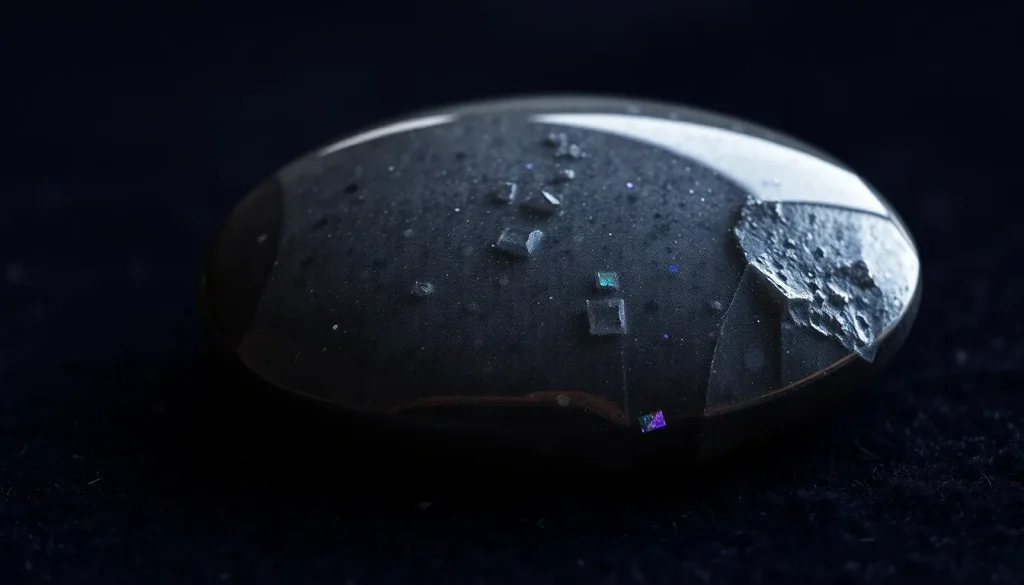
Cobaltite (CoAsS) is a metallic sulfide mineral that forms in hydrothermal veins and contact metamorphic settings. It typically appears as cubic crystals or massive aggregates with a distinctive gray‑black to pewter color and a brilliant metallic luster. When cut as a cabochon, cobaltite can display a subtle violet or blue iridescence, making it a sought‑after material for specialty jewelry and collector pieces.
History and Origin
The mineral was first described in 1845 from an occurrence in the Harz Mountains of Germany. Early miners noted its cobalt content, which later became important in the production of blue pigments and alloys. Natural cobaltite specimens have been reported from several continents, including North America, Europe, and Asia. Although never a mainstream gemstone, the turn of the 21st century saw a modest rise in its use for high‑end, custom jewelry.
Meaning and Symbolology
In traditional gemstone lore, cobaltite is associated with inner strength, resilience, and the ability to reflect one’s true self. Its dark, reflective surface is thought to symbolize depth of character and the capacity to endure challenges while maintaining a clear inner vision.
Healing and Metaphysical Properties
Crystal‑healing practitioners attribute grounding and protective qualities to cobaltite. It is believed to anchor scattered energy, promote emotional stability, and assist in the release of negative patterns. Some claim it enhances focus and determination, especially during periods of transition. These properties are considered spiritual or symbolic and are not intended as medical advice.
Varieties and Types
While cobaltite itself is a single mineral species, variations in color and iridescence can occur based on trace elements and crystal habit. Specimens may range from dull black to a bright, pewter‑gray with a faint violet sheen. Rarely, oxidized surfaces develop a brownish‑red tarnish. No recognized commercial “varieties” exist beyond the natural variations described.
Jewelry Uses and Care
Because cobaltite ranks 5.5–6.5 on the Mohs scale, it is relatively soft compared with traditional gemstones such as sapphire or quartz. It is therefore most often used in low‑impact settings—pendants, earrings, and brooches—or as a cabochon in rings with protective bezel settings. The mineral’s metallic luster is best displayed under direct lighting.
Care instructions:
- Avoid scratches by keeping the stone away from harder materials such as quartz, topaz, or diamond.
- Clean with a soft, lint‑free cloth; mild soapy water may be used, but harsh chemicals, ultrasonic cleaners, and steam should be avoided.
- Store separately from other gemstones to prevent abrasion.
- Because cobaltite can oxidize over time, limit prolonged exposure to harsh sunlight and acidic environments.
Buying Guide
When purchasing cobaltite, consider the following factors:
- Color and Luster: Look for a deep, uniform gray‑black base with a bright metallic sheen. A slight violet or blue iridescence is a valued characteristic.
- Cut and Finish: Cabochons should be polished to a high shine without excessive surface blemishes. Faceted pieces are rare and typically found in collector markets.
- Clarity: Inclusions are common, but they should not obscure the overall luster. Visible cracks or heavy inclusions may weaken the stone.
- Origin Documentation: Reputable dealers will provide provenance, especially for specimens from notable localities such as Ontario (Canada) or the Urals (Russia).
- Treatment Disclosure: Some cobaltite stones are stabilized with resin to improve durability. Ensure any treatments are fully disclosed.
n
Because cobaltite is not widely traded on the mainstream gemstone market, purchasing from a certified gem‑lab or a specialist mineral dealer is recommended.
FAQ
What is cobaltite good for?
Cobaltite is primarily valued by collectors for its unique metallic luster and by jewelers for striking cabochon pieces. Traditional beliefs also associate it with grounding, protection, and emotional resilience, though these are not medically substantiated.
Is cobaltite rare?
Cobaltite is uncommon as a gem‑quality material. High‑quality, well‑crystallized specimens suitable for jewelry are rare, especially those with strong iridescence. However, the mineral itself occurs in several worldwide localities, making raw material moderately available.
How can you tell if cobaltite is real?
Real cobaltite feels heavy for its size, shows a metallic gray‑black color, and has a black streak. It lacks the bright sparkle of glass imitations. A professional gemologist can confirm authenticity with X‑ray fluorescence (XRF) or a refractive index test.
What chakra is cobaltite associated with?
In crystal‑healing traditions, cobaltite is linked to the Root (Muladhara) chakra, supporting grounding and stability.
How should you clean cobaltite?
Clean cobaltite with a soft, lint‑free cloth and mild soapy water if needed. Avoid ultrasonic cleaners, steam, or harsh chemicals, and store it separately from harder gemstones to prevent scratches.
Leave a Reply