
Short Answer
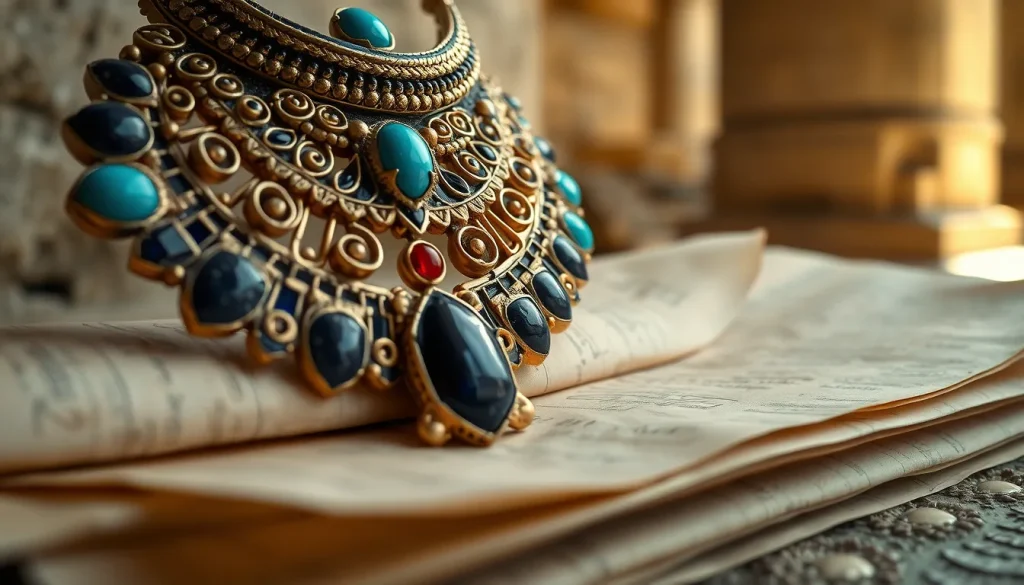
For the Ancient Egyptians, gemstones were far more than mere ornaments; they were conduits of divine power and essential tools for the journey into the afterlife. The meticulous selection of colors and minerals reflected a complex cosmology where the physical properties of a stone were inextricably linked to its metaphysical utility.
Documented Context
The use of gemstones in Egypt is documented across three millennia, from the Early Dynastic Period to the Ptolemaic era. Gemstones were primarily utilized in amulets, scarabs, pectoral jewelry, and funerary masks. The Egyptian approach to gemology was centered on color symbolism rather than mineral species. For instance, any deep blue stone was associated with the heavens and the Nile, regardless of whether it was Lapis Lazuli or a glazed faience.
The mastery of lapidary arts in Egypt allowed for the creation of intricate intaglios and cabochons that served as both artistic expressions and protective talismans.
Place and Period
While Egypt possessed some local resources, it was a hub of ancient international trade. The primary periods of gemstone proliferation include:
- The Old Kingdom: Focus on local stones and the early import of Lapis Lazuli via Mesopotamia.
- The Middle Kingdom: Expansion of trade routes into the Levant and Nubia, increasing the availability of Carnelian and Amethyst.
- The New Kingdom: The golden age of Egyptian jewelry, characterized by opulent gold settings and a vast array of imported gemstones.
Key sourcing locations included the Eastern Desert for gold and quartz, and distant regions like Afghanistan for the highly prized Lapis Lazuli.

Historical Uses
Gemstones were employed in specific contexts to ensure the wearer’s protection and status. The following table outlines the primary stones used and their intended purposes:
| Gemstone | Primary Color | Symbolic Meaning | Common Use |
|---|---|---|---|
| Lapis Lazuli | Deep Blue | Night sky, royalty, truth | Royal jewelry, scarabs |
| Carnelian | Red-Orange | Blood, energy, vitality | Amulets for protection |
| Turquoise | Blue-Green | Joy, fertility, rebirth | Pectorals, deity idols |
| Amethyst | Purple | Sobriety, spiritual power | Signet rings, beads |
| Jasper | Red/Green/Yellow | Strength, grounding | Utilitarian seals |
Beyond jewelry, gemstones were integrated into sarcophagi and canopic jars to protect the internal organs of the deceased, ensuring their preservation for eternity.
Later Interpretations
Following the fall of the pharaonic dynasties, the symbolic meanings of these stones evolved. The Greeks and Romans adopted many Egyptian beliefs, integrating the concept of ‘healing stones’ into their own medical and mystical practices. The association of Lapis Lazuli with royalty persisted, eventually influencing the use of ultramarine pigment in Renaissance art to depict the robes of the Virgin Mary, echoing the ancient Egyptian association of the color blue with the divine.
Modern Associations
In contemporary gemology and metaphysical circles, the ‘Egyptian palette’—the combination of blue, red, and green—is still viewed as a symbol of balance and cosmic order. Modern collectors often seek ‘Egyptian-style’ jewelry, and the historical use of these stones informs current theories on crystal healing, particularly the use of Carnelian for motivation and Lapis Lazuli for intellectual clarity.
Source Limitations
Understanding Egyptian gemstones presents several challenges for modern gemologists:
- Terminology: Ancient texts often use generic terms for colors rather than specific mineral names.
- Faience: Much of what appears to be gemstone in museum collections is actually faience (a sintered quartz ceramic), which was used as a cheaper alternative to semi-precious stones.
- Degradation: Organic gemstones and certain minerals have degraded over millennia, leaving gaps in the archaeological record.
FAQ
Did Ancient Egyptians use diamonds?
No, diamonds were not used in Ancient Egypt as they were not available through their trade networks at the time.
What is the difference between Lapis Lazuli and Faience?
Lapis Lazuli is a natural metamorphic rock, whereas faience is a man-made glazed ceramic designed to look like semi-precious stones.
Why was Carnelian so important?
Its red color symbolized the blood of Isis and the energy of the sun, making it vital for protective amulets.
Leave a Reply