Short Answer
Overview
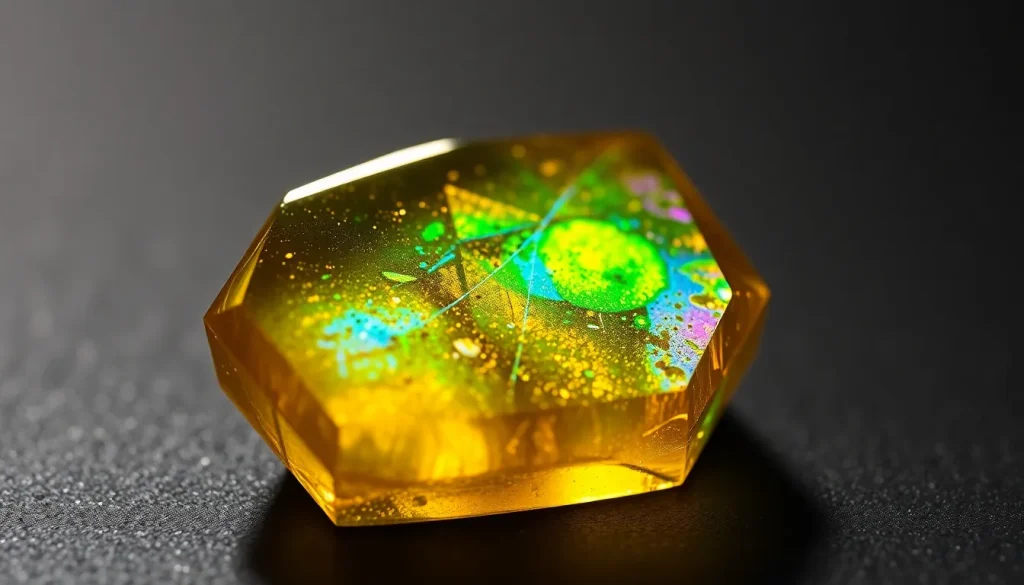
Chalcopyrite (CuFeS₂) is a sulfide mineral belonging to the copper‑iron sulfide group. It crystallizes in the tetragonal system, forming distinctive square‑topped pyramids or massive granular aggregates. The stone displays a brass‑yellow to golden color that often exhibits a vivid iridescent play of blues, greens, and purples when freshly cut. Its metallic luster and high specific gravity (4.1–4.3) make it easy to recognize among other sulfide minerals.
History and Origin
The name “chalcopyrite” derives from the Greek words chalkos (copper) and pyr (fire), reflecting its copper content and the fiery metallic sheen of its crystals. First described in 1797 from the Falun copper mines in Sweden, chalcopyrite quickly became known as an important copper ore. Throughout the 19th and early 20th centuries, mineral collectors prized well‑formed specimens for their striking colors, while occasional cabochons entered ornamental jewelry.
Meaning and Symbolism
In traditional gemstone lore, chalcopyrite is associated with wealth, ambition, and the transformation of raw potential into tangible success. Its bright, reflective surface is said to mirror personal goals, encouraging perseverance and confidence. The stone is also linked to protection against negativity, acting as a “mirror” that reflects unwanted energies away.
Healing and Metaphysical Properties
Crystal‑healing practitioners attribute the following properties to chalcopyrite, describing them as beliefs rather than medical facts:
- Energy amplification: Enhances the wearer’s personal power and motivation.
- Financial focus: Supports clear thinking in business and financial decisions.
- Root chakra alignment: Grounding and stabilizing, helping one feel secure in material matters.
- Emotional balance: Assists in releasing fear and self‑doubt, promoting confidence.
These attributes are rooted in longstanding metaphysical traditions and should not replace professional medical advice.
Varieties and Types
While chalcopyrite is a single mineral species, its appearance varies with oxidation and surface condition:
- Freshly cut: Bright brass‑yellow with a high‑shine metallic luster.
- Iridescent surface: When the outer layer oxidizes, thin films produce blues, greens, purples, and pinks—often called “rainbow chalcopyrite.”
- Massive forms: Granular or massive aggregates used for ornamental slabs.
Occasionally, chalcopyrite is heat‑treated to enhance its iridescent colors, a process known as “thermal enhancement.”
Jewelry Uses and Care
Because of its relatively low hardness (3.5–4 on the Mohs scale) and perfect basal cleavage, chalcopyrite is best suited for earrings, pendants, and brooches where abrasion is minimal. When set in protective bezels or as a cabochon, the stone can showcase its metallic sparkle without excessive wear.
Care guidelines:
- Clean with a soft, lint‑free cloth; avoid ultrasonic cleaners.
- Use mild soapy water for deeper cleaning, then dry thoroughly.
- Store separately from harder gemstones to prevent scratching.
- Avoid prolonged exposure to acids or harsh chemicals, which can accelerate tarnish.
Buying Guide
When selecting chalcopyrite for jewelry or collection, consider the following factors:
- Color and iridescence: Look for vibrant brass‑yellow base with clear, colorful play of light. Over‑tarnished specimens may lack visual interest.
- Cut and finish: Well‑polished cabochons reveal the metallic sheen; avoid pieces with visible chips or heavy surface damage.
- Origin and treatment disclosure: Reputable dealers will state if the stone has been heat‑treated or coated to enhance color.
- Certification: For high‑value pieces, request a gemological report confirming composition (CuFeS₂) and any treatments.
Because chalcopyrite is often confused with pyrite (FeS₂) or other sulfide minerals, professional verification by a certified gemologist is recommended for significant purchases.
FAQ
What is chalcopyrite good for?
Chalcopyrite is primarily an industrial copper ore, but its metallic brilliance makes it popular for ornamental cabochons, collectors' specimens, and as a metaphysical stone for grounding and ambition.
Is chalcopyrite rare?
High‑quality chalcopyrite with vivid iridescence is less common than ordinary ore specimens. Rarity depends on crystal size, clarity of metallic surface, and whether the stone is untreated.
How can you tell if chalcopyrite is real?
Real chalcopyrite feels heavy for its size, has a metallic luster, a black streak, and perfect basal cleavage. A professional gemologist can confirm composition with X‑ray diffraction or a handheld spectroscope.
What chakra is chalcopyrite associated with?
Traditional crystal‑healing belief links chalcopyrite to the Root (Muladhara) chakra, supporting grounding and material stability.
How should you clean chalcopyrite?
Wipe gently with a soft cloth; for deeper cleaning use mild soapy water and a soft brush, then dry thoroughly. Avoid ultrasonic cleaners, harsh chemicals, and abrasive materials.
Leave a Reply