
Short Answer
Overview
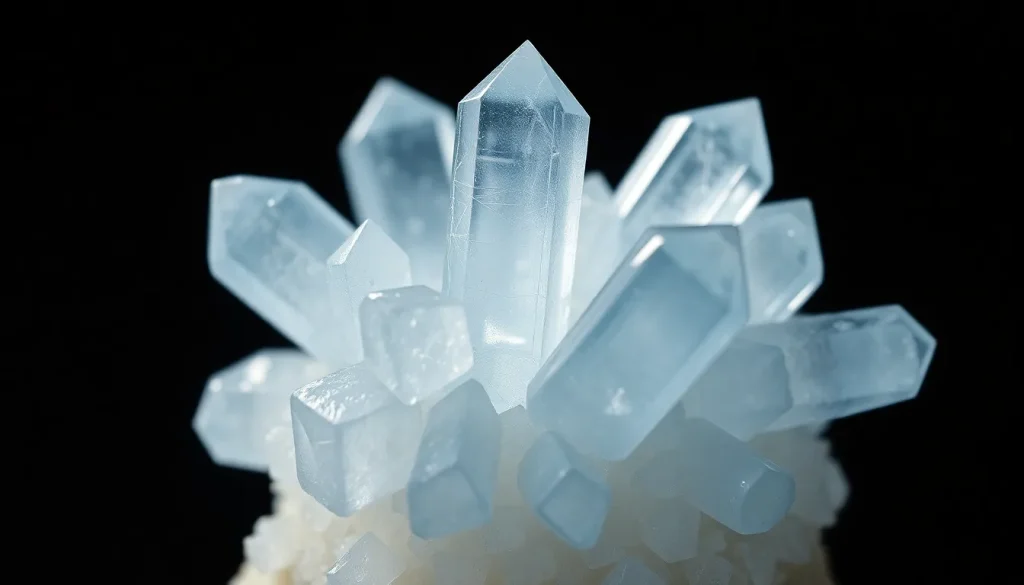
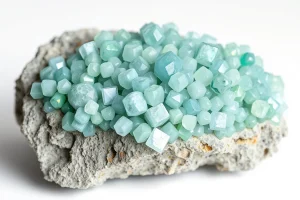
Celestite, also known as celestine, is a naturally occurring mineral composed of strontium sulfate (SrSO4). It is most recognized for its soft, pastel blue coloration that resembles a clear sky, though colorless and white varieties also occur. The crystal typically forms in orthorhombic prisms or tabular habits and exhibits a vitreous luster. With a Mohs hardness of 3–3.5, celestite is relatively soft, making it suitable for certain jewelry applications when properly protected.
History and Origin
Celestite was first described in 1790 from deposits near the village of Celestyn in Bohemia (now the Czech Republic), a name that inspired its modern moniker. Historically, the mineral was mined for its strontium content, which is used in pyrotechnics and ceramics. In the 19th century, collectors prized celestite for its striking blue crystals, and it entered the ornamental stone market. Today, significant celestite localities include the United States (Ohio, New York, Illinois), Madagascar, Mexico, Spain, Italy, Brazil, and Russia.
Meaning and Symbolism
In traditional gemstone lore, celestite is associated with the heavens, serenity, and higher consciousness. Its gentle blue tone is said to evoke feelings of calm, clarity, and spiritual uplift. The stone is often presented as a symbol of inner peace and a reminder to look upward for inspiration.
Healing and Metaphysical Properties
Crystal‑healing practitioners attribute several metaphysical qualities to celestite. It is believed to facilitate communication with higher realms, enhance intuition, and promote mental clarity. Some claim that celestite can aid in meditation, relieve stress, and support the throat chakra’s expression of truth. These properties are rooted in traditional belief systems and are not supported by medical science.
Varieties and Types
Celestite is found primarily in two color varieties:
- Blue Celestite – The classic sky‑blue hue, ranging from pale pastel to deeper azure.
- Colorless/White Celestite – Transparent to milky crystals that lack significant coloration.
Occasionally, inclusions of other minerals produce subtle shades of gray or pink, but these are less common. All varieties share the same chemical composition and crystal structure.
Jewelry Uses and Care
Because of its softness, celestite is most often used in earrings, pendants, and brooches where the stone can be set securely and protected from abrasion. It is also popular in beaded designs and as a decorative element in crystal collections. When caring for celestite jewelry:
- Avoid harsh chemicals, ultrasonic cleaners, and steam cleaning.
- Wipe the stone gently with a soft, damp cloth and mild soap if needed.
- Store pieces separately in a soft pouch to prevent scratching from harder gemstones.
Because celestite can be hygroscopic, prolonged exposure to high humidity may cause surface clouding; keeping the stone in a dry environment helps preserve its brilliance.
Buying Guide
When selecting celestite, consider the following factors:
- Color Saturation – Deep, uniform blue is generally more prized than pale or uneven hues.
- Clarity – Look for stones with minimal inclusions, especially for use in jewelry.
- Cut and Faceting – Well‑cut cabochons or faceted stones showcase the stone’s luster without excessive edge loss.
- Treatment Disclosure – Natural celestite is rarely treated, but some specimens may be dyed to enhance color; reputable dealers will disclose any treatments.
- Certification – For higher‑value pieces, request a gemological report from a recognized laboratory.
n
Because celestite is relatively abundant in several regions, price is generally moderate, but high‑quality, deep‑blue, well‑cut pieces can command premium prices.
FAQ
What is Celestite good for?
Celestite is valued for its decorative sky‑blue color in jewelry and ornamental pieces. Traditionally, crystal‑healers claim it supports communication, mental clarity, and spiritual calm, though these uses are not medically verified.
Is Celestite rare?
Celestite is not considered rare globally, but high‑quality, deep‑blue, clear specimens are less common. Rarity increases with larger crystal size, excellent color saturation, and minimal inclusions.
How can you tell if Celestite is real?
Real celestite feels relatively soft (Mohs 3–3.5) and displays perfect cleavage on {010}. It has a characteristic sky‑blue hue and a white streak. Professional gemological testing, such as refractive index measurement, confirms authenticity.
What chakra is Celestite associated with?
In crystal‑healing traditions, celestite is linked to the Throat Chakra (Vishuddhi) for clear communication, and some sources also associate it with the Crown Chakra for spiritual connection.
How should you clean Celestite?
Clean celestite gently with a soft, damp cloth and mild soap if needed. Avoid ultrasonic cleaners, steam, and harsh chemicals. Store it separately in a soft pouch to prevent scratching, and keep it away from prolonged humidity.
Leave a Reply