Short Answer
{
“title”: “Cancrinite – Mineral Properties, Meaning, and Jewelry Guide”,
“slug”: “cancrinite-gemstone”,
“excerpt”: “Cancrinite is a rare carbonate‑rich feldspathoid mineral known for its colorless to pale blue crystals and occasional use in fine jewelry. Learn about its physical traits, symbolic meanings, and how to care for it.”,
“seo_title”: “Cancrinite Gemstone Facts, Meaning & Care”,
“meta_description”: “Discover Cancrinite’s chemical formula, color range, metaphysical meanings, jewelry uses, and buying tips in this comprehensive gemstone encyclopedia entry.”,
“content”: “
Overview
n
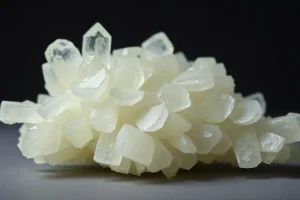
Cancrinite is a relatively uncommon mineral belonging to the cancrinite group of feldspathoids. It is a sodium‑calcium carbonate‑silicate that forms hexagonal crystals with a vitreous to pearly luster. In its gem‑grade form it is prized for a colourless to very pale blue, yellow, or green appearance that can display a subtle translucency. Because of its moderate hardness (5–6 on the Mohs scale) and perfect cleavage, it is used sparingly in jewelry, typically in cabochons, beads, or as an accent stone.
nn
History and Origin
n
The name “cancrinite” honours the Russian mineralogist Georg von Cancrin (1805‑1885), who first described the mineral in 1839 from specimens collected in the Kola Peninsula. It occurs in silica‑undersaturated, alkaline igneous rocks such as nepheline syenites, carbonatites, and some metamorphosed carbonate rocks. Notable localities include the Ilmen Mountains (Russia), the Marble Canyon area (California, USA), the Stillwater Complex (Canada), and several alkaline complexes in Norway and Finland.
nn
Meaning and Symbolism
n
In traditional gemstone lore, cancrinite is associated with clarity of thought and the ability to express one’s inner truth. Its often‑clear appearance is said to symbolize purity and the unfolding of hidden potential. Collectors also value it as a symbol of rarity and scientific curiosity, reflecting the mineral’s unique place among feldspathoid minerals.
nn
Healing and Metaphysical Properties
n
Crystal‑healing practitioners describe cancrinite as a stone that supports communication and emotional balance. It is believed to aid the throat chakra, encouraging honest expression, and the heart chakra, fostering compassion. Users claim it can help release old emotional patterns, promote mental focus, and assist in manifesting creative ideas. These properties are based on traditional belief systems and are not intended as medical advice.
nn
Varieties and Types
n
Cancrinite exhibits several colour varieties, most commonly:
n
- n
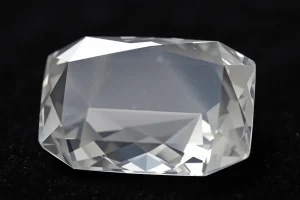
- Colourless/White: Transparent to translucent, often used in high‑clarity cabochons.
- Pale Blue: Light sky‑blue hue, prized for its subtle colour.
- Pale Yellow: Soft lemon‑tint, occasionally found in larger masses.
- Pale Green: Very light green, rare and sought after by collectors.
n
n
n
n
n
All varieties share the same crystal structure; colour differences arise from trace impurities such as iron or titanium. No artificial treatments are common, although heat can sometimes intensify the pale blue shade.
nn
Jewelry Uses and Care
n
Because cancrinite’s hardness is only moderate, it is best suited for pieces that are not subject to heavy impact. Popular jewelry applications include:
n
- n
- Cabochon pendants set in silver or gold.
n
- n
- Beaded necklaces and bracelets, often combined with harder stones for durability.
- Inlay work in decorative objects where the stone is protected from abrasion.
n
n
n
Care instructions:
n
- n
- Clean with lukewarm water, mild soap, and a soft brush. Avoid ultrasonic cleaners.
- Dry gently with a lint‑free cloth; do not expose to rapid temperature changes.
- Store separately from harder gemstones to prevent scratching.
n
n
n
nn
Buying Guide
n
When purchasing cancrinite, consider the following criteria:
n
- n
- Color and Transparency: High‑clarity, colourless specimens are the most valuable; subtle blue or yellow hues add interest but may be priced lower.
- Cut and Faceting: Cabochons preserve the stone’s natural translucency; faceted stones must be protected by settings that cushion the stone.
- Origin: Specimens from classic localities such as the Kola Peninsula or the Stillwater Complex are often more collectible.
- Certification: Request a gemological report from a reputable lab to verify authenticity and any treatments.
n
n
n
n
n
Because cancrinite is not widely mined for commercial gem production, prices can vary considerably based on size, clarity, and colour. Always buy from reputable dealers who provide clear return policies.
”
,
“categories”: [“Gemstone Encyclopedia”, “Minerals”],
“tags”: [“gemstone”, “crystal”, “mineral”, “jewelry”, “meaning”],
“image_prompt”: “A high‑resolution macro photograph of a clear cancrinite crystal showing its hexagonal prism shape, soft pale blue translucency, subtle vitreous luster, lit by diffused natural light on a dark velvet background, with fine detail of crystal faces and surface texture, no text or watermark.”,
“quick_facts”: [
{“label”: “Chemical Formula”, “value”: “Na6Ca2[(CO3)2][Al6Si6O24]·2H2O”},
{“label”: “Mineral Class”, “value”: “Feldspathoid (tectosilicate)”},
{“label”: “Crystal System”, “value”: “Hexagonal”},
{“label”: “Mohs Hardness”, “value”: “5 – 6”},
{“label”: “Specific Gravity”, “value”: “2.3 – 2.5”},
{“label”: “Refractive Index”, “value”: “1.511 – 1.534”},
{“label”: “Luster”, “value”: “Vitreous to pearly”},
{“label”: “Transparency”, “value”: “Transparent to translucent”},
{“label”: “Color Description”, “value”: “Colourless, white, pale blue, pale yellow, pale green”},
{“label”: “Cleavage”, “value”: “Poor; conchoidal to uneven fracture”},
{“label”: “Streak”, “value”: “White”},
{“label”: “Birthstone Month”, “value”: “Not a traditional birthstone”},
{“label”: “Zodiac Sign”, “value”: “No standard association”},
{“label”: “Primary Chakra”, “value”: “Throat, Heart”},
{“label”: “Mining Locations”, “value”: “Russia (Kola Peninsula), USA (California), Canada (British Columbia), Norway, Finland”},
{“label”: “Also Known As”, “value”: “Cancrinite”}
],
“related_terms”: [
{“term”: “Feldspathoid”, “definition”: “A group of tectosilicate minerals that form in silica‑undersaturated igneous rocks, distinct from feldspars.”},
{“term”: “Nephiline”, “definition”: “A common feldspathoid mineral often occurring alongside cancrinite in alkaline igneous complexes.”},
{“term”: “Carbonate Group”, “definition”: “Minerals that contain the carbonate ion (CO3)2‑, of which cancrinite incorporates two groups per formula unit.”}
],
“references”: [
“Gemological Institute of America (GIA) – Mineral Species Database”,
“Mindat.org – Cancrinite mineral data”,
“International Gem Society (IGS) – Cancrinite gemstone profile”,
“Smithsonian Institution – Mineralogical Collection records”
],
“faq”: [
{
“question”: “What is cancrinite good for?”,
“answer”: “Cancrinite is valued for its subtle colour and translucency in jewelry, and in crystal‑healing circles it is believed to aid communication and emotional balance. It has no proven medical benefits.”
},
{
“question”: “Is cancrinite rare?”,
“answer”: “Cancrinite is relatively rare as a gem‑quality stone. High‑clarity, colourless specimens are especially scarce, while pale‑blue or yellow varieties are more common but still limited to specific alkaline rock localities.”
},
{
“question”: “How can you tell if cancrinite is real?”,
“answer”: “Real cancrinite exhibits a hexagonal crystal habit, a Mohs hardness of 5–6, and a white streak. Professional testing such as refractive index measurement and spectroscopic analysis can confirm authenticity.”
},
{
“question”: “What chakra is cancrinite associated with?”,
“answer”: “Traditional crystal‑healing beliefs link cancrinite primarily to the Throat chakra for clear expression, and secondarily to the Heart chakra for compassion.”
},
{
“question”: “How should you clean cancrinite?”,
“answer”: “Clean gently with lukewarm water, mild soap, and a soft brush. Avoid ultrasonic cleaners, harsh chemicals, and sudden temperature changes to prevent damage.”
}
],
“related_articles”: [
“Nephiline – A Common Feldspathoid”,
“Scapolite – Related Alkaline Mineral”,
“Alkali Feldspar – Overview”,
“Feldspathoid Minerals – Group Characteristics”
],
“taxonomy_terms”: {
“color”: [“Colourless/White”, “Blue to Violet”],
“chakra”: [“THROAT / VISHUDDI”, “HEART / ANAHATA”],
“silo”: [“Carbonates”, “Silicates”],
“mineral_family”: [“Cancrinite Group”]
}
}
Leave a Reply