Short Answer
Overview
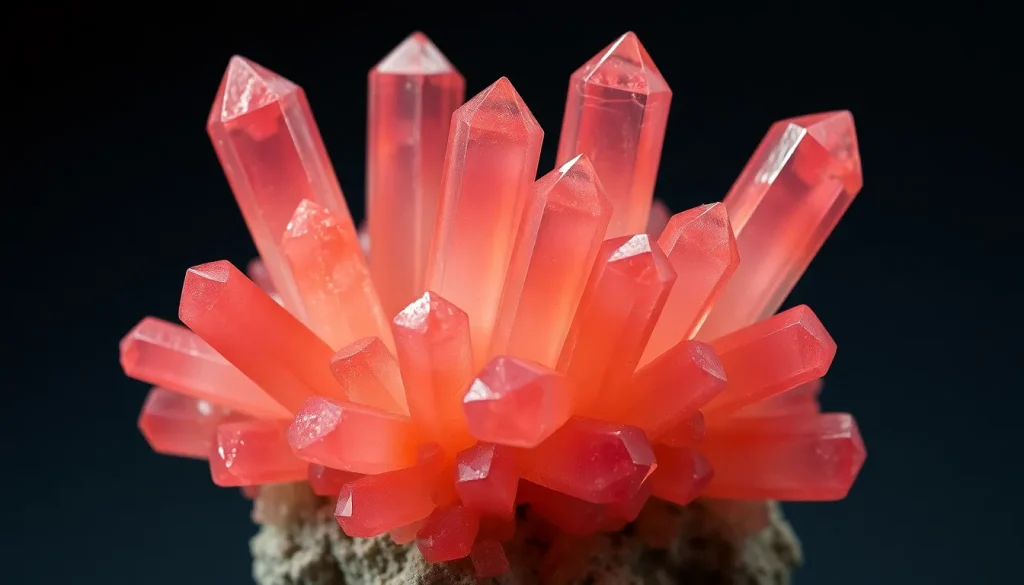
Bustamite is a calcium‑manganese silicate mineral (CaMnSi2O6) belonging to the wollastonite group. It typically occurs as pink to reddish‑orange crystals with a vitreous luster and a hardness of 6.5–7 on the Mohs scale, making it suitable for certain types of jewelry when cut and polished.
History and Origin
The name “bustamite” honors the Spanish geologist Juan Bustamante, who first described the mineral in the late 19th century. Natural occurrences are documented in metamorphic skarns and contact zones where manganese‑rich fluids interact with calcium‑silicate rocks. Notable localities include Turkey, Italy, the United States, and Canada.
Meaning and Symbolism
In traditional gemstone lore, bustamite’s soft pink hue is associated with love, compassion, and emotional balance. It is said to encourage gentle self‑acceptance and to support harmonious relationships.
Healing and Metaphysical Properties
Crystal‑healing practitioners attribute bustamite with the ability to calm emotional turbulence and to promote inner peace. It is believed to aid heart‑center meditation, foster forgiveness, and assist in releasing past emotional wounds. These claims are rooted in cultural belief systems and are not medical advice.
Varieties and Types
While bustamite itself is a distinct species, it is sometimes referred to by alternative names such as “manganese wollastonite” or “pink wollastonite.” The mineral can appear in several crystal habits, including prismatic, tabular, and massive granular forms. Color intensity varies from pale salmon to deep reddish‑orange depending on manganese content and trace impurities.
Jewelry Uses and Care
Because of its hardness (6.5–7) and perfect cleavage on one plane, bustamite is best used in settings that protect the stone from impact, such as bezel or pendant mounts. It is commonly fashioned into cabochons, beads, and occasional faceted pieces. Care recommendations include:
- Clean with lukewarm soapy water and a soft brush; avoid ultrasonic cleaners.
- Store separately from harder gemstones to prevent scratching.
- Avoid prolonged exposure to acids or harsh chemicals, which can alter surface polish.
Buying Guide
When selecting bustamite, consider the following factors:
- Color Saturation: Deep, even pink‑orange hues are most valued.
- Clarity: Inclusions are common; look for stones with minimal cloudiness.
- Cut Quality: Well‑cut cabochons or faceted stones that showcase the stone’s luster.
- Treatment Disclosure: Natural bustamite is rarely treated, but verify that no dyes or stabilizers have been applied.
- Certification: Request a gemological report from a reputable laboratory for high‑value pieces.
Because high‑quality bustamite is relatively scarce, prices can vary widely based on color, size, and workmanship.
FAQ
What is bustamite good for?
Bustamite is valued for its attractive pink hue in jewelry and as a collector’s mineral. Traditionally it is believed to promote emotional balance and compassion, though these are spiritual beliefs, not medical facts.
Is bustamite rare?
High‑quality, vivid pink bustamite is relatively rare because suitable deposits are limited and large, clear crystals are uncommon. Lesser‑color or included specimens are more widely available.
How can you tell if bustamite is real?
Authentic bustamite displays a vitreous luster, a hardness of 6.5–7, and a white streak. It may show perfect cleavage on one direction. Professional gemological testing, such as refractive index measurement, confirms its identity.
What chakra is bustamite associated with?
In crystal‑healing traditions, bustamite is linked to the Heart (Anahata) chakra, supporting love and emotional healing.
How should you clean bustamite?
Clean bustamite with lukewarm soapy water and a soft brush. Avoid ultrasonic cleaners and harsh chemicals, and store it separately from harder gemstones to prevent scratching.
Leave a Reply