
Short Answer
Overview
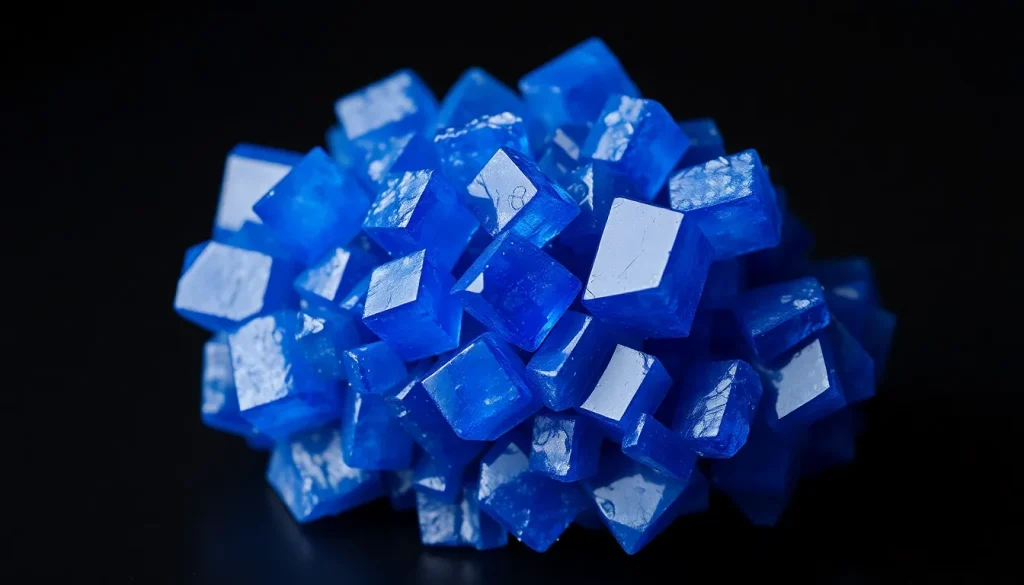
Boleite is a rare, deep‑blue mineral belonging to the halide family. It is a complex hydrated potassium‑sodium‑iron‑aluminium silicate chloride with the formula K2Na2Fe2+4Al2(AlSi3O10)4Cl9·8H2O. Crystals typically form as well‑developed cubes or pseudo‑cubic aggregates that display a vivid indigo to royal blue color. Because of its softness and perfect cleavage, boleite is mainly a collector’s stone, though finely cut cabochons are occasionally set in jewelry.
History and Origin
Boleite was first described in 1975 from the Bole mine in the Copperbelt Province of northern Zambia. The name derives directly from this locality. Since its discovery, additional occurrences have been reported from a few other sites, notably in New Mexico (USA) and in Namibia, but the Zambian specimens remain the most celebrated.
Meaning and Symbolism
In traditional gemstone lore, the intense blue of boleite is associated with depth, introspection, and the vastness of the sky or sea. It is thought to encourage calm communication, support truthful expression, and aid in the release of emotional blockages. The stone is sometimes given as a token of loyalty and fidelity because of its steadfast color.
Healing and Metaphysical Properties
Crystal‑healing practitioners attribute several metaphysical qualities to boleite. It is believed to stimulate the Crown Chakra, fostering spiritual insight and higher‑level consciousness. Some claim it can assist in clearing mental fog, enhancing intuition, and promoting a sense of inner peace. These properties are based on traditional beliefs and are not intended as medical advice.
Varieties and Types
Boleite does not have widely recognized varieties, but its appearance can differ according to crystal size, degree of hydration, and trace element content. The most common habit is cubic or pseudo‑cubic crystals, though massive aggregates and fibrous forms have also been noted. Color may range from deep indigo to a lighter, turquoise‑tinged blue, sometimes exhibiting a slight iridescent sheen.
Jewelry Uses and Care
Because boleite ranks only 2.5–3 on the Mohs hardness scale and has perfect cleavage, it is unsuitable for rings or bracelets that endure heavy wear. When used, it is typically set as a cabochon in pendants, earrings, or brooches where the stone is protected from impact. Care recommendations include:
- Clean gently with a soft, lint‑free cloth; avoid ultrasonic cleaners.
- Use mild soap and lukewarm water if deeper cleaning is needed, then dry immediately.
- Store separately from harder gemstones to prevent scratching.
- Avoid prolonged exposure to direct sunlight or extreme heat, which can alter the hydration state.
Buying Guide
When purchasing boleite, consider the following factors:
- Color intensity: Deep, uniform blue is most valued.
- Crystal habit: Well‑formed cubes or clear pseudo‑cubic aggregates command higher prices.
- Clarity: Inclusions are common; a relatively inclusion‑free surface is preferred for cabochons.
- Treatment: Genuine boleite is rarely treated, but confirm that any enhancement (e.g., dye) is disclosed.
- Certification: Request a gemological report from a reputable laboratory, especially for larger or unusually vivid specimens.
Because the market for boleite is niche, prices can vary widely. Collectors often pay a premium for specimens from the original Zambian locality.
FAQ
What is boleite good for?
Boleite is primarily valued by collectors for its striking blue color and unique crystal habit. In crystal‑healing circles it is believed to support spiritual insight and calm communication, but these are traditional beliefs, not medical facts.
Is boleite rare?
Yes, boleite is considered rare. High‑quality, deep‑blue specimens from the original Zambian locality are especially scarce, while smaller or less vivid samples from other localities are more common but still limited.
How can you tell if boleite is real?
Authentic boleite displays a characteristic deep blue color, perfect cubic or pseudo‑cubic habit, and a Mohs hardness of about 2.5–3. Simple tests such as hardness, specific gravity, and refractive index can help, but professional gemological analysis is recommended for certainty.
What chakra is boleite associated with?
Traditional crystal‑healing sources associate boleite with the Crown Chakra, citing its blue hue as supportive of higher‑level consciousness and spiritual insight.
How should you clean boleite?
Because boleite is soft and can be fragile, clean it gently with a soft cloth and mild soap solution. Avoid ultrasonic cleaners, harsh chemicals, and prolonged exposure to heat or direct sunlight.
Leave a Reply