
Short Answer
Overview
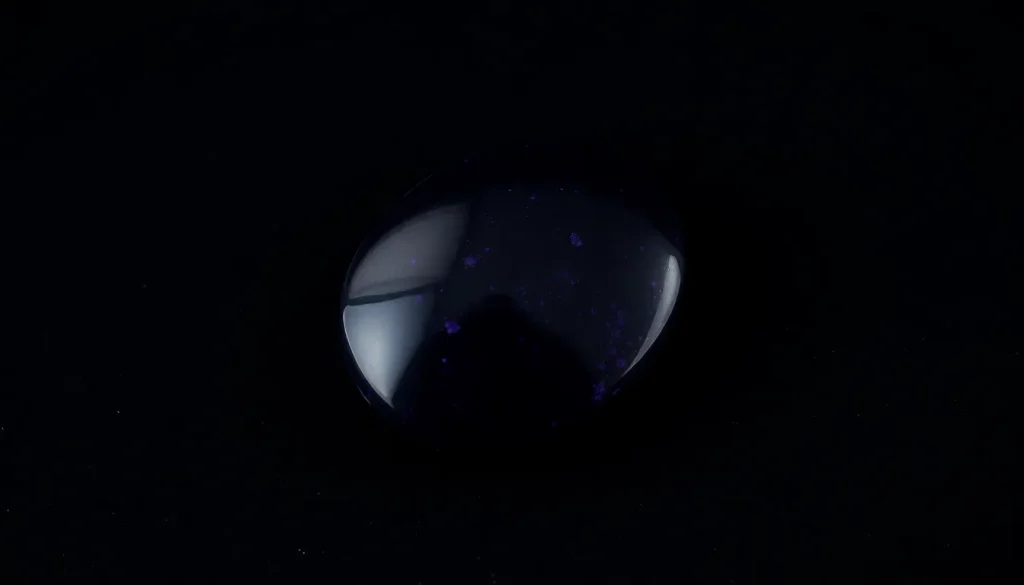
Bismutotantalite is a scarce oxide mineral belonging to the scheelite group. Its chemical composition is generally expressed as (Bi,Tb)TaO4, indicating that bismuth (Bi) dominates the structure with minor tantalum (Ta) and occasional terbium (Tb) substitution. Crystals are typically orthorhombic, displaying a high specific gravity and a sub‑adamantine to adamantine luster. Natural specimens are most often opaque black, though some may show a dark violet sheen under certain lighting.
History and Origin
The mineral was first identified in the early 20th century during mineralogical surveys of tantalum‑bearing pegmatites in the Democratic Republic of the Congo. Its name combines the dominant elements—bismuth and tantalum—followed by the suffix “‑ite” indicating a mineral. Bismutotantalite occurs in granitic pegmatites and rare alkaline complexes where high‑temperature fluids concentrate bismuth and tantalum. Because of its rarity, most gem‑quality stones are sourced from a few localities, primarily in Central Africa and, in trace amounts, from some South‑American pegmatites.
Meaning and Symbolism
In traditional gemstone lore, bismutotantalite is associated with deep grounding and inner strength. Its dark color is thought to absorb negative energies, providing protection during meditation or spiritual work. Collectors often cite the stone as a symbol of resilience, reflecting the mineral’s ability to form under extreme geological conditions.
Healing and Metaphysical Properties
Crystal‑healing practitioners attribute the following properties to bismutotantalite:
- Grounding – believed to anchor the wearer’s energy to the Earth, helping to alleviate feelings of disconnection.
- Protection – said to create a shield against psychic intrusion and environmental stress.
- Focus and Clarity – purported to aid concentration and decision‑making, especially in high‑pressure situations.
These claims are based on longstanding metaphysical traditions and are not supported by scientific evidence. The stone should never be used as a substitute for professional medical advice.
Varieties and Types
Natural bismutotantalite is essentially a single mineral species, but variations arise from differing trace element content and crystal habit:
- Bismuth‑rich variety – exhibits a deeper black color and higher specific gravity.
- Terbium‑substituted variety – may show a faint violet or purplish tint due to Tb incorporation.
- Synthetic analogs – laboratory‑grown bismuth tantalate crystals used in optical research are sometimes faceted for decorative purposes, though they are not considered natural gemstones.
Jewelry Uses and Care
Because of its high hardness (6–6.5 on the Mohs scale) and excellent luster, bismutotantalite can be cut into cabochons, beads, or small faceted stones. Its density makes it feel substantial in a setting, which many designers appreciate for statement pieces such as pendants and cufflinks. Care recommendations include:
- Avoid prolonged exposure to strong acids or alkalis, which can etch the surface.
- Clean with a soft, lint‑free cloth and mild soap‑water solution; use a soft brush for crevices.
- Do not ultrasonic clean delicate settings that contain softer stones.
- Store separately from softer gems to prevent scratching.
Buying Guide
When evaluating bismutotantalite, consider the following factors:
- Color and Luster – deep, uniform black with a bright sub‑adamantine sheen is most desirable.
- Clarity – inclusions are common; a clean eye‑clean stone commands a premium.
- Cut – well‑proportioned cabochons or expertly faceted stones showcase the stone’s brilliance.
- Origin Documentation – reputable dealers provide provenance, especially for stones sourced from the Congo or other known localities.
- Treatment Disclosure – some specimens may be heat‑treated to enhance luster; ask for full disclosure.
Given its rarity, prices can vary widely; always request a gemological report from a recognized laboratory (e.g., GIA, IGI) to confirm authenticity.
FAQ
What is bismutotantalite good for?
Bismutotantalite is prized for its striking black color and high luster in jewelry, and traditional crystal‑healing beliefs attribute grounding and protective qualities to it. It is not recognized for any medical or therapeutic function.
Is bismutotantalite rare?
Yes, natural bismutotantalite is considered rare. High‑quality, eye‑clean stones are especially scarce, and most occurrences are limited to a few pegmatite localities in Central Africa and parts of South America.
How can you tell if bismutotantalite is real?
Authentic bismutotantalite feels heavy for its size, has a sub‑adamantine luster, and shows no fluorescence under UV light. Professional testing—such as specific gravity measurement, refractive index determination, and X‑ray diffraction—by a certified gem lab is recommended for certainty.
What chakra is bismutotantalite associated with?
In metaphysical practice, bismutotantalite is commonly linked to the Root (Muladhara) chakra, reflecting its grounding and protective symbolism.
How should you clean bismutotantalite?
Clean bismutotantalite with a soft, lint‑free cloth and mild soapy water. Use a soft brush for crevices if needed. Avoid abrasive cleaners, ultrasonic baths, and harsh chemicals, and store it separately from softer gemstones.
Leave a Reply