
Short Answer
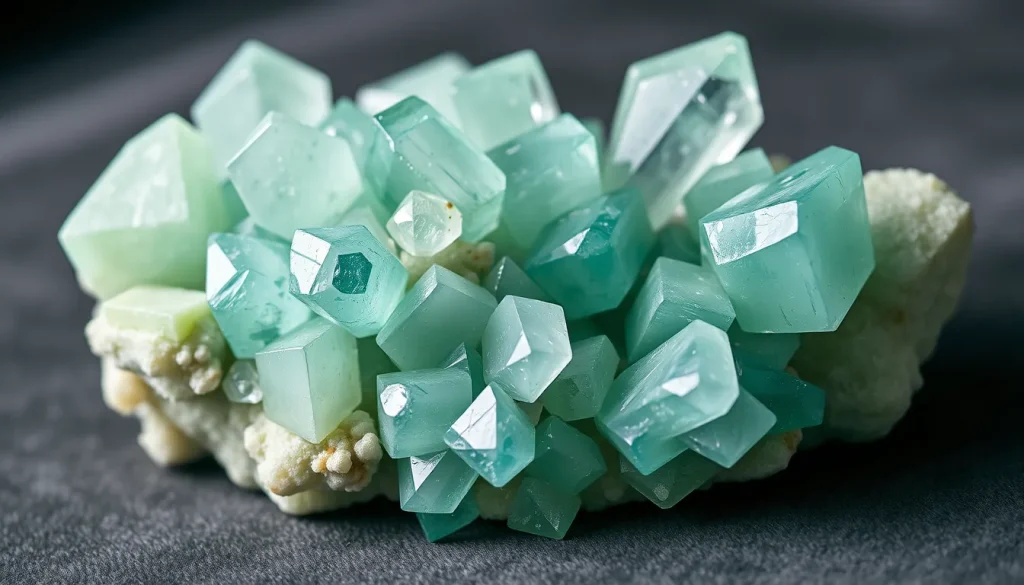
Phosphophyllite is one of the most visually arresting yet elusive minerals in the gemological world. Characterized by its vibrant, translucent mint-green to sea-foam turquoise coloration, this rare phosphate mineral is highly prized by specimen collectors and connoisseurs of rare earth elements. While it possesses a celestial aesthetic, its physical fragility makes it a challenging stone for traditional jewelry, positioning it primarily as a prized mineralogical curiosity.
What Is Phosphophyllite?
Phosphophyllite is a rare hydrated calcium-copper phosphate mineral. Chemically represented as Ca2Cu5(PO4)4(OH)2, its distinct color is derived from the presence of copper within its crystal lattice. It typically forms in the oxidation zones of copper deposits, often associated with other rare phosphate minerals.
The mineral is most famous for its occurrence in the quarry of the Phosphophyllite Mine in the United States (specifically in some rare localities) and certain deposits in Brazil. In its purest form, it displays a vitreous luster and can occur as small, well-defined crystals or as massive, translucent aggregates.
Practical Uses and Limitations
Due to its chemical composition and physical properties, Phosphophyllite is rarely used in commercial jewelry. Its primary utility lies in mineralogical research and private collections.
- Collector Specimens: The most common use is as a display specimen, where the natural crystal habit can be admired.
- Educational Study: It serves as a primary example of copper-bearing phosphate minerals in geology courses.
- Limitations: Its low hardness and sensitivity to environmental factors make it unsuitable for rings, bracelets, or any jewelry subject to daily wear.
Identification and Look-Alikes
Identifying Phosphophyllite requires a keen eye and professional equipment, as several other minerals share its distinctive pale green palette.
| Gemstone | Distinguishing Feature | Hardness (Mohs) |
|---|---|---|
| Phosphophyllite | Mint-green to turquoise, phosphate chemistry | 3.5 – 4.0 |
| Chrysocolla | Usually opaque, lacks distinct crystal faces | 2.0 – 4.0 |
| Amazonite | Opaque to translucent, distinct white streaks | 6.0 – 6.5 |
| Fluorite | Higher clarity, cubic crystal system | 4.0 |
Jewelry Suitability and Care
If a collector chooses to set Phosphophyllite in a piece of jewelry, it must be treated as an extremely fragile material. It is not suitable for any piece that might encounter friction or chemicals.
Gemologist’s Tip: Never use ultrasonic cleaners or steam cleaners on Phosphophyllite. The thermal shock and high-frequency vibrations can cause the crystal to shatter or lose its luster.
Care Guidelines:
- Cleaning: Use only a soft, dry microfiber cloth. If necessary, a slightly damp cloth with distilled water may be used, followed immediately by drying.
- Storage: Store in a separate, padded gemstone box to prevent harder minerals (like quartz or diamonds) from scratching the surface.
- Environment: Keep the specimen away from direct sunlight for extended periods, as some phosphate minerals can be sensitive to UV exposure, leading to color fading.
Symbolism and Modern Beliefs
While Phosphophyllite lacks a deep historical record in ancient civilizations due to its rarity, it has gained significance in modern metaphysical circles. It is often associated with emotional healing and spiritual clarity.
Believers suggest that the stone’s soothing green hue helps in balancing the heart and throat centers, encouraging open communication and the release of stagnant emotional energy. In contemporary pop culture, the mineral has seen a surge in interest due to its depiction in artistic media, further cementing its image as a symbol of transformation and fragility.
FAQ
Can Phosphophyllite be worn in a ring?
It is strongly discouraged. Due to its low Mohs hardness (3.5-4), it scratches easily and can break under pressure.
How can I tell Phosphophyllite apart from Amazonite?
Amazonite is significantly harder (6.0-6.5) and usually opaque with a more 'blocky' look, whereas Phosphophyllite is softer and more translucent.
Is Phosphophyllite expensive?
Yes, due to its extreme rarity and the limited number of high-quality localities, it is highly valued by mineral collectors.
Leave a Reply