
Short Answer
Overview
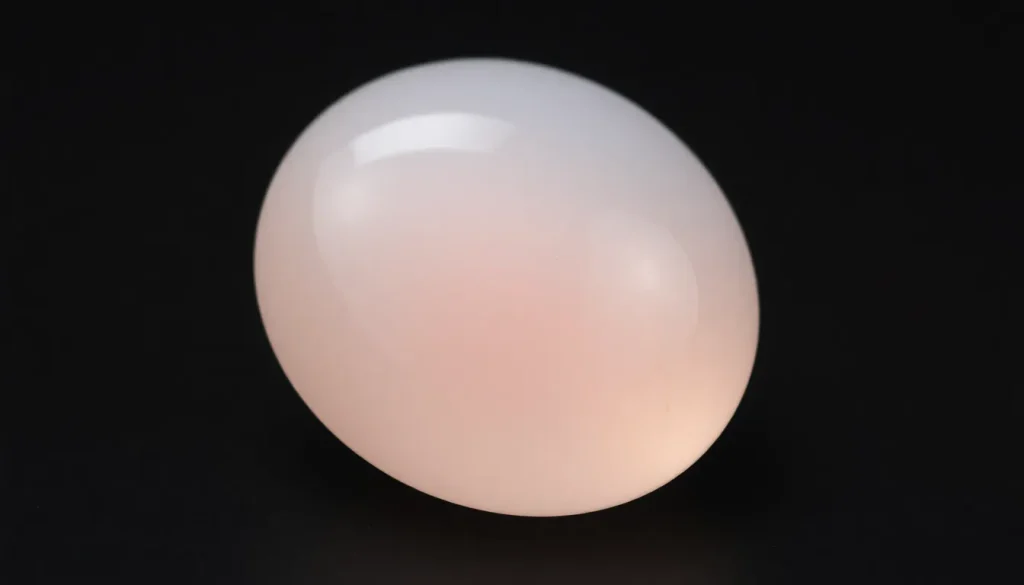
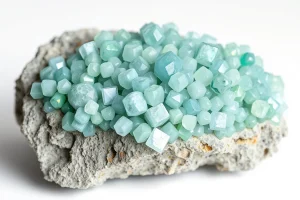
Mesolite is a member of the zeolite group of hydrated aluminosilicate minerals. It typically occurs as fine, needle‑like crystals or as massive aggregates with a vitreous to pearly luster. The stone is most often colourless or white, though pale shades of pink, yellow, or brown can appear due to trace impurities.
History and Origin
The name “mesolite” derives from the Greek mesos (middle) and lithos (stone), reflecting its intermediate position among zeolites discovered in the early 19th century. First described in 1813 from deposits in the Harz Mountains of Germany, mesolite has since been identified in volcanic and sedimentary environments worldwide, especially where low‑temperature hydrothermal fluids alter volcanic glass.
Meaning and Symbolism
In traditional crystal lore, mesolite is associated with clarity of thought and emotional balance. It is said to aid communication, promote calm decision‑making, and support the expression of truth. Some cultures view it as a stone that helps “clear the fog” of confusion, encouraging mental focus and inner peace.
Healing and Metaphysical Properties
According to crystal‑healing beliefs, mesolite is thought to resonate with the throat and third‑eye chakras, fostering clear communication and intuitive insight. Practitioners claim it can assist in releasing old emotional patterns, enhancing meditation, and supporting the respiratory system. These properties are regarded as symbolic rather than medical advice.
Varieties and Types
Mesolite occurs in several forms, distinguished mainly by colour and crystal habit:
- Colourless/White Mesolite – the most common variety, prized for its translucency.
- Pale Pink Mesolite – coloration caused by trace iron or manganese.
- Yellowish or Brownish Mesolite – minor impurity inclusions give a warm hue.
All varieties share the same basic chemical composition and crystal structure.
Jewelry Uses and Care
Because of its modest hardness (5–5.5 on the Mohs scale) and perfect cleavage on {010}, mesolite is best suited for pendants, earrings, and brooch settings where the stone can be protected from abrasion. It is often cut as cabochons to showcase its luster without risking fracture.
Care instructions:
- Clean with a soft, lint‑free cloth; avoid ultrasonic cleaners.
- Use mild warm soapy water and a soft brush if needed.
- Avoid exposure to harsh chemicals, extreme heat, or rapid temperature changes.
- Store separately from harder gemstones to prevent scratches.
Buying Guide
When selecting mesolite, consider the following factors:
- Clarity and Colour – Look for a uniform, translucent appearance with minimal cloudiness.
- Cut and Setting – Cabochons are preferred; ensure the setting protects the stone’s perfect cleavage.
- Origin – Reputable sources will disclose the mining locality; common sources include the United States (California, Oregon), Canada (British Columbia), Japan, Norway, and Italy.
- Treatment Disclosure – Natural mesolite is seldom treated, but any dyeing or stabilization should be clearly stated.
- Certification – For high‑value pieces, request a gemological report from a recognized laboratory.
Because mesolite is not a mainstream commercial gemstone, prices are modest and largely dependent on size, clarity, and craftsmanship.
FAQ
What is mesolite good for?
Mesolite is valued in jewelry for its subtle colour and luster, and in crystal traditions for promoting mental clarity and balanced communication. It is not recognized for any medical or therapeutic use.
Is mesolite rare?
Mesolite is not considered a rare mineral; it occurs in many volcanic and sedimentary deposits worldwide. High‑quality, translucent stones suitable for jewelry are less common than lower‑grade material.
How can you tell if mesolite is real?
Real mesolite shows a perfect {010} cleavage, a vitreous to pearly luster, and a specific gravity around 2.2. Professional gemologists can confirm identity with refractive index measurements and X‑ray diffraction.
What chakra is mesolite associated with?
Traditional crystal beliefs link mesolite to the throat and third‑eye chakras, supporting clear expression and insight, though no single standard chakra is universally accepted.
How should you clean mesolite?
Clean mesolite gently with a soft cloth and mild warm soapy water. Avoid ultrasonic cleaners, harsh chemicals, and sudden temperature changes, and store it separately from harder gemstones.
Leave a Reply