
Short Answer
Overview
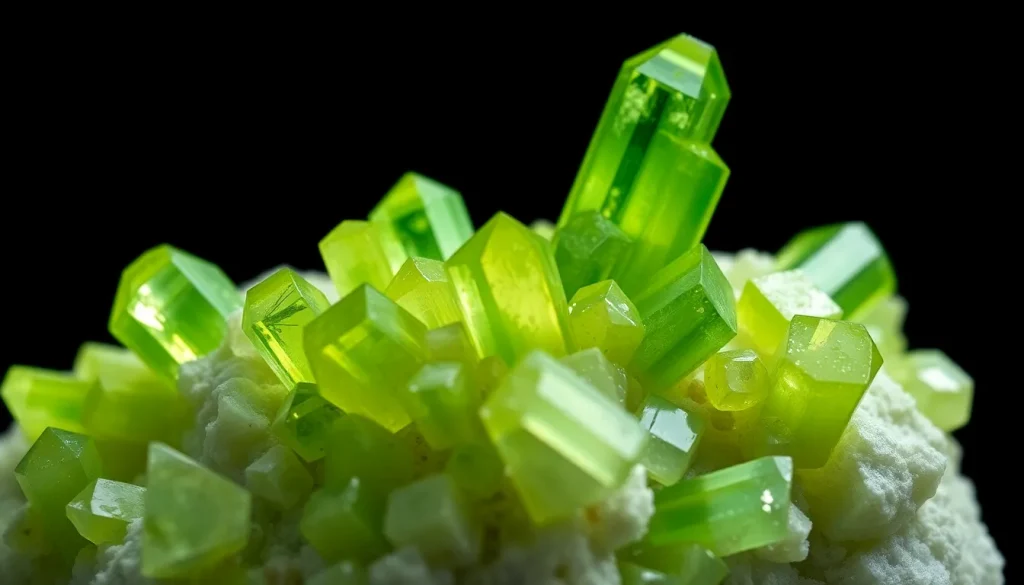
Bayldonite is a secondary copper‑lead arsenate mineral with the chemical formula CuPb₂(AsO₄)₂(OH)₂. It forms in the oxidized zones of lead‑copper ore deposits, where arsenic‑rich solutions precipitate the distinctive emerald‑green crystals. The stone is generally found as massive aggregates or as well‑formed orthorhombic prisms measuring a few millimetres to several centimetres. Its vivid colour and relative scarcity make it a collector’s favourite and, on occasion, a decorative gemstone in jewelry.
History and Origin
The mineral was first described in the early 20th century from specimens discovered in the Bayldon Mine, located in the state of Arizona, United States. It was named after the mine, which itself derived its name from a local prospector. Since then, additional occurrences have been reported in other oxidized lead‑copper districts, including localities in Chile and Peru. Bayldonite is typically a product of supergene alteration, forming long after the primary ore has been exposed to weathering processes.
Meaning and Symbolism
In traditional gemstone lore, the vivid green of Bayldonite is associated with growth, renewal, and the heart’s emotional balance. Its copper component is often linked to creativity and communication, while the lead element is thought to lend a grounding influence. Collectors and crystal enthusiasts may choose Bayldonite for its reputed ability to encourage personal development and harmonious relationships.
Healing and Metaphysical Properties
Crystal‑healing practitioners attribute Bayldonite with several metaphysical qualities. It is believed to support the heart chakra, fostering compassion, forgiveness, and emotional openness. Some traditions claim it can aid in detoxifying the body’s energetic pathways and assist in releasing old patterns that hinder personal growth. These properties are considered symbolic and are not a substitute for professional medical advice.
Varieties and Types
Bayldonite belongs to the broader arsenate family and shares visual similarities with related minerals such as olivenite, libethenite, and erythrite. While the basic composition remains consistent, colour variations can range from bright emerald‑green to yellow‑green, depending on the relative proportions of copper and lead, as well as trace impurities. No widely recognised commercial varieties exist; each specimen is unique.
Jewelry Uses and Care
Because of its moderate hardness (Mohs 3.5–4) and perfect cleavage, Bayldonite is best suited for pendants, earrings, or cabochon settings where the stone is protected from impact. It should be set in protective settings such as bezel or channel settings rather than prong settings that expose edges. Care instructions include:
- Avoid harsh mechanical impacts; the stone can fracture along cleavage planes.
- Clean with a soft, damp cloth; mild soap and lukewarm water are acceptable.
- Do not use ultrasonic cleaners or steam cleaning, as rapid temperature changes may cause cracking.
- Store separately from harder gemstones to prevent scratching.
Buying Guide
When purchasing Bayldonite, consider the following factors:
- Colour intensity: The most valued specimens display a vivid, even green without brown or gray mottling.
- Clarity and inclusions: Minor secondary minerals are acceptable, but large fractures diminish value.
- Cut and setting: Well‑cut cabochons that protect the stone’s edges are preferred.
- Origin documentation: Reputable dealers will provide provenance, especially for material from classic localities such as the Bayldon Mine.
- Treatment disclosure: Natural Bayldonite is rarely treated; any enhancement (e.g., dye) should be fully disclosed.
Because Bayldonite can be confused with other green arsenates, obtaining a certificate from a qualified gemological laboratory is advisable for high‑value pieces.
FAQ
What is Bayldonite good for?
Bayldonite is prized by collectors for its vivid green colour and is occasionally used in pendants or earrings. Traditional crystal‑healing beliefs associate it with heart‑chakra balance and emotional renewal, though these are not medical facts.
Is Bayldonite rare?
High‑quality Bayldonite is relatively rare because it forms only in specific oxidized lead‑copper deposits. Specimens with intense, even colour and minimal fractures are especially scarce, while lower‑grade material is more common in mineral collections.
How can you tell if Bayldonite is real?
Authentic Bayldonite exhibits a distinctive green hue, a specific gravity above 5.0, and a vitreous luster. A professional gemological lab can confirm its composition with X‑ray diffraction or spectroscopy. Simple tests like hardness (≈3.5–4) and streak (light green) also help differentiate it from look‑alikes.
What chakra is Bayldonite associated with?
In crystal‑healing traditions Bayldonite is linked to the Heart (Anahata) chakra, where it is believed to promote love, compassion, and emotional balance.
How should you clean Bayldonite?
Clean Bayldonite gently with a soft, damp cloth and mild soap if needed. Avoid ultrasonic or steam cleaners, and never expose the stone to harsh chemicals or rapid temperature changes, as its moderate hardness and cleavage make it prone to damage.
Leave a Reply