
Short Answer
Overview
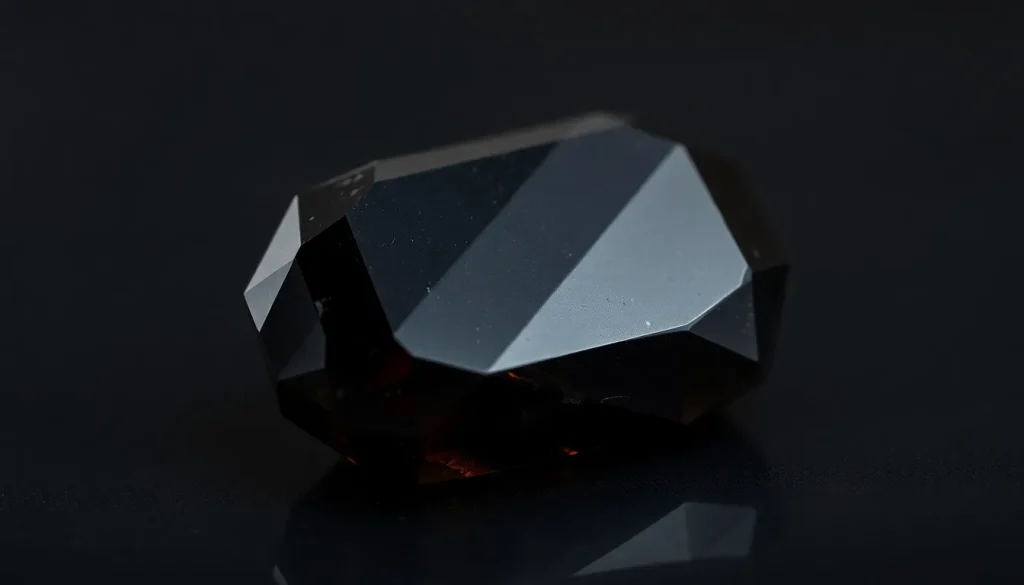
Ludwigite is a dark‑colored borate mineral belonging to the ludwigite group. It typically appears black, dark brown, or greenish‑black with a vitreous to submetallic luster. Though not a conventional birthstone, it is occasionally cut for ornamental jewelry and collector pieces.
History and Origin
The mineral was first described in 1865 and named after the German mineralogist Ernst Ludwig. Naturally occurring specimens are found in metamorphic manganese‑rich deposits. Notable localities include Brazil (Minas Gerais), Madagascar, Sri Lanka, the United States (North Carolina), and India.
Meaning and Symbolism
In traditional gemstone lore, Ludwigite’s deep black hue is associated with grounding, protection, and inner strength. It is thought to help the wearer stay resilient during challenging times and to absorb negative influences.
Healing and Metaphysical Properties
Crystal‑healing practitioners attribute the following beliefs to Ludwigite:
- Grounding: Helps connect the wearer to the Earth’s energy.
- Protection: Said to shield against psychic or emotional attacks.
- Transformation: Encourages personal growth by confronting hidden fears.
These claims are based on tradition and are not medical advice.
Varieties and Types
Ludwigite itself does not have widely recognized color varieties, but it belongs to a small group of related borate minerals, such as:
- Vonsenite – a manganese‑rich member with a brownish hue.
- Jahnite – a similar borate that can appear dark green.
All share a comparable orthorhombic crystal structure and similar hardness.
Jewelry Uses and Care
Because Ludwigite is relatively hard (6.5–7 on the Mohs scale) and has a striking metallic luster, it is sometimes faceted for pendants, rings, and cufflinks. It is opaque, so designs often rely on the stone’s surface polish rather than transparency.
Care recommendations:
- Clean with a soft, lint‑free cloth; avoid abrasive cleaners.
- Use warm, soapy water for routine cleaning, then dry thoroughly.
- Do not expose to prolonged high heat or strong acids, as surface alteration can occur.
- Store separately from softer gems to prevent scratching.
Buying Guide
When purchasing Ludwigite, consider the following factors:
- Color and Luster: Deep, uniform black with a high‑shine surface is most valued.
- Cut Quality: Well‑polished facets enhance the stone’s metallic appearance.
- Origin Documentation: Reputable dealers should provide provenance, especially for specimens from known localities.
- Treatment Disclosure: Natural Ludwigite is rarely treated, but some pieces may be stabilized; request clarification.
- Certification: For high‑value items, an independent gemological report (e.g., GIA) confirms authenticity.
Because Ludwigite is uncommon, prices can vary widely. Compare multiple sources and request return policies before finalizing a purchase.
FAQ
What is Ludwigite good for?
Ludwigite is valued for its dark metallic luster in specialty jewelry and as a collector’s mineral. In crystal‑healing circles it is believed to aid grounding and protection, though these are traditional beliefs, not medical facts.
Is Ludwigite rare?
Ludwigite is relatively uncommon; high‑quality, well‑cut stones are rarer than rough material. Availability depends on locality and the presence of deep, uniform color without surface damage.
How can you tell if Ludwigite is real?
Authentic Ludwigite is opaque, has a metallic to vitreous luster, and a Mohs hardness of 6.5–7. Simple tests include checking hardness (cannot be scratched by quartz) and observing its dark, uniform color. For certainty, obtain a professional gemological report.
What chakra is Ludwigite associated with?
There is no universally accepted chakra assignment for Ludwigite; some practitioners link it to the Root chakra because of its grounding symbolism, while others list it under “No single standard chakra.”
How should you clean Ludwigite?
Clean Ludwigite with a soft, lint‑free cloth. For deeper cleaning, use warm, mild soapy water and rinse with distilled water, then dry gently. Avoid abrasive cleaners, ultrasonic baths, and extreme heat, as they can affect the surface polish.
Leave a Reply