
Short Answer
Overview
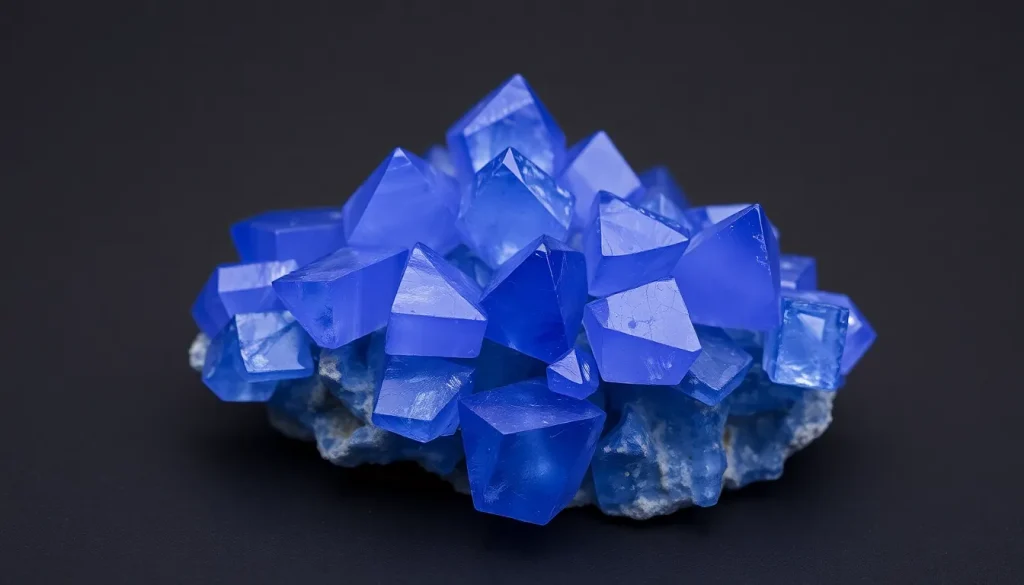
Lazulite is a phosphate mineral prized by collectors and occasional jewelry designers for its intense blue to indigo hues. Chemically it is a magnesium‑iron aluminum phosphate with the formula (Mg,Fe)Al2(PO4)2(OH)2. It crystallizes in the orthorhombic system, typically forming tabular or prismatic crystals that display perfect cleavage on {010}. On the Mohs scale its hardness ranges from 5.5 to 6, making it moderately durable but still requiring careful handling.
History and Origin
The name lazulite derives from the Spanish word “lazul,” meaning “blue,” a nod to its most distinctive characteristic. First described scientifically in the early 19th century, lazulite occurrences were noted in the United Kingdom and later in Brazil, the United States, and several African localities. Historically, it has been used more as a collector’s mineral than a mainstream gemstone, largely because large, clean crystals suitable for faceting are uncommon.
Meaning and Symbolism
In traditional gemstone lore, lazulite is associated with clarity of thought, inner truth, and communication. Its deep blue color is thought to mirror the sky and sea, symbolizing depth, calm, and spiritual insight. The stone is sometimes given as a gift to mark personal growth, honest expression, or to support artistic endeavors.
Healing and Metaphysical Properties
Crystal‑healing practitioners attribute a range of metaphysical qualities to lazulite. It is believed to aid in emotional balance, enhance intuition, and promote honest communication. Some claim it assists with throat‑chakra activation, helping the wearer articulate thoughts clearly. These properties are based on tradition and should not be considered medical advice.
Varieties and Types
- Pure Blue Lazulite: Exhibits a vivid sapphire‑like blue with minimal green or violet tint.
- Green‑Blue Lazulite: Shows a noticeable turquoise or teal hue, often due to higher iron content.
- Violet Lazulite: Displays a deep violet‑blue, rarer and highly prized by collectors.
All varieties share the same basic chemical structure; color variations arise from trace element substitutions, chiefly iron for magnesium.
Jewelry Uses and Care
Because of its moderate hardness, lazulite is best suited for pendants, earrings, and brooches where the stone can be set low and protected. It should be avoided in rings or bracelets that are subject to frequent impact. Care recommendations include:
- Clean with lukewarm water and a soft brush; avoid ultrasonic cleaners.
- Store separately from harder gemstones to prevent scratching.
- Protect from prolonged exposure to acids, perfumes, and harsh chemicals.
When set in protective metal settings such as gold or silver, lazulite can retain its brilliance for many years.
Buying Guide
When purchasing lazulite, consider the following factors:
- Color Saturation: Deep, even blue with minimal inclusions commands the highest value.
- Clarity: Small, well‑distributed inclusions are common; large fractures reduce desirability.
- Cut Quality: A skilled cutter will orient the stone to showcase its natural cleavage and luster.
- Treatment Disclosure: Lazulite is rarely treated, but any enhancement (e.g., oiling) should be fully disclosed.
- Certification: Request a gemological report from a reputable laboratory for high‑value pieces.
Reputable sources include gem dealers affiliated with the International Gem Society, certified gem shows, or established auction houses.
FAQ
What is lazulite good for?
Lazulite is valued for its vivid blue color in jewelry and collector pieces. Traditionally it is believed to support clear communication and emotional balance, though these claims are not medically verified.
Is lazulite rare?
High‑quality lazulite with deep, even color and good clarity is relatively rare. It occurs in several countries, but large, clean crystals suitable for faceting are uncommon, making fine specimens valuable.
How can you tell if lazulite is real?
Real lazulite exhibits a specific gravity around 3.0–3.2, a refractive index in the 1.63–1.65 range, and perfect cleavage on {010}. A professional gemological lab can confirm authenticity with spectroscopy and microscopy.
What chakra is lazulite associated with?
In crystal‑healing traditions, lazulite is most commonly linked to the Throat chakra, and some practitioners also associate it with the Third Eye chakra for intuition.
How should you clean lazulite?
Clean lazulite with lukewarm water and a soft brush. Avoid ultrasonic cleaners, harsh chemicals, and prolonged exposure to acids. Store it separately from harder gemstones to prevent scratching.
Leave a Reply