
Short Answer
Overview
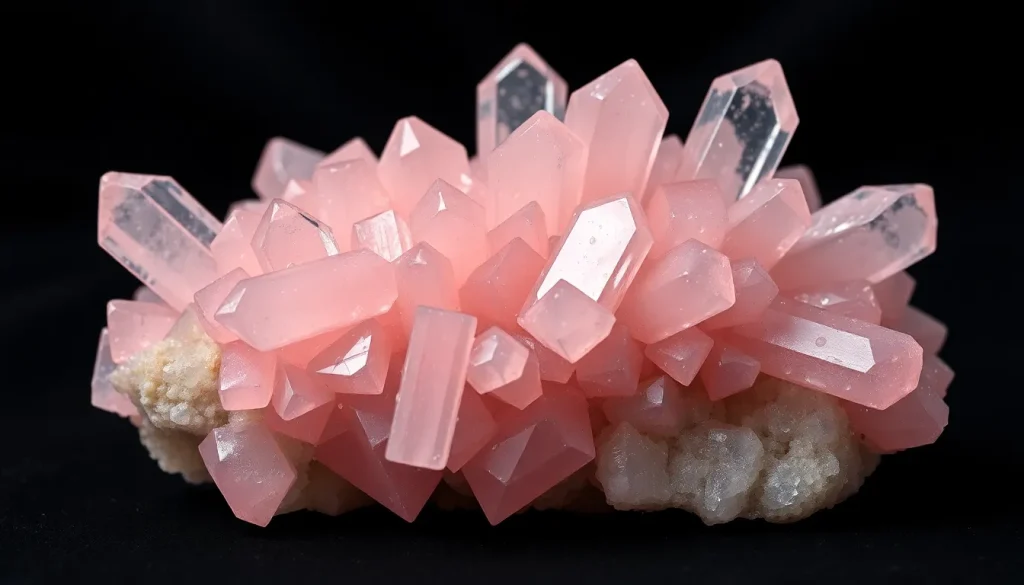
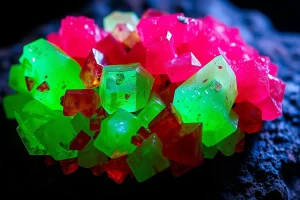
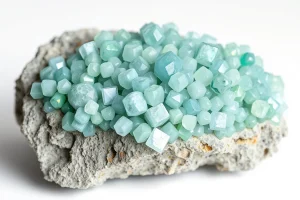
Kurnakovite is a hydrated magnesium borate mineral with the chemical formula MgB3O5(OH)·5H2O. It belongs to the borate family and crystallises in the monoclinic system. Natural specimens are typically colourless, white, or very pale pink, and may appear transparent to translucent. Because of its modest hardness (Mohs 3) and perfect cleavage, it is a relatively fragile gemstone, prized more for its rarity and unique chemistry than for durability.
History and Origin
The mineral was first described in 1915 from deposits in the Ural Mountains of Russia. It was named in honour of the Russian chemist Nikolay Sergeevich Kurnakov (1859‑1920), a pioneer in the study of boron compounds. Kurnakovite forms in evaporite environments where magnesium‑rich solutions interact with borate‑bearing waters, producing well‑formed prismatic crystals. Notable localities include Russia (Ural and Kola regions), the United States (California and Utah), and Canada (British Columbia).
Meaning and Symbolism
In gemstone lore, kurnakovite is associated with clarity of thought and gentle transformation. Its often‑clear or softly pink appearance is said to reflect purity and emotional balance, encouraging the bearer to move beyond confusion toward inner peace.
Healing and Metaphysical Properties
Traditional crystal‑healing beliefs attribute the following properties to kurnakovite:
- Emotional calmness: Said to soothe anxiety and promote a steady emotional state.
- Intellectual clarity: Believed to aid concentration and clear mental fog.
- Energy grounding: Sometimes linked to the Root Chakra, helping to anchor scattered energies.
These attributes are based on folklore and should not be taken as medical advice.
Varieties and Types
Kurnakovite is the dimorph of boracite, meaning they share the same chemical composition but crystallise in different crystal systems (monoclinic for kurnakovite, orthorhombic for boracite). Colour variations range from colourless to very pale pink; occasional brownish tones result from trace impurities. No widely recognised commercial varieties exist beyond these natural colour differences.
Jewelry Uses and Care
Because of its low hardness and perfect cleavage, kurnakovite is used mainly in pendants, earrings, and cabochons set in protective settings. When worn, it should be kept away from hard impacts and abrasive cleaning agents.
- Cleaning: Use a soft, damp cloth; mild soap and lukewarm water are acceptable. Avoid ultrasonic cleaners and steam.
- Storage: Store separately in a soft pouch or lined compartment to prevent scratching.
- Maintenance: Periodic inspection by a qualified gemologist is advisable, especially for settings that may stress the stone.
Buying Guide
When selecting kurnakovite, consider the following factors:
- Clarity: Look for specimens free of visible inclusions, which can weaken the stone.
- Colour: Colourless or very pale pink stones are the most sought after; deeper pink may indicate impurities.
- Cut: Cabochon cuts are preferred to protect the fragile crystal faces.
- Origin: Reputable dealers will disclose the locality; Russian and North American sources are most common.
- Certification: Request a gemological report from a recognized laboratory (e.g., GIA or IGI) to confirm authenticity.
Because treatments are rare for kurnakovite, any enhancement claims should be examined carefully.
FAQ
What is kurnakovite good for?
Kurnakovite is valued as a rare collector's mineral and occasional gemstone for pendants and cabochons. Traditionally, it is believed to promote emotional calmness and mental clarity, though these claims are not scientifically verified.
Is kurnakovite rare?
High‑quality, colourless or pale pink kurnakovite crystals are relatively rare because suitable deposits are limited and the stone is fragile. It is less common than many popular gemstones, but not among the world’s rarest minerals.
How can you tell if kurnakovite is real?
Authentic kurnakovite has a Mohs hardness of about 3, perfect cleavage, and a white streak. It is typically colourless to pale pink with a vitreous luster. Professional testing, such as a gemological report or X‑ray diffraction, is recommended for certainty.
What chakra is kurnakovite associated with?
In crystal‑healing traditions, kurnakovite is sometimes linked to the Root Chakra for grounding, though there is no universally accepted chakra association.
How should you clean kurnakovite?
Clean kurnakovite gently with a soft, damp cloth and mild soap. Avoid ultrasonic cleaners, steam, or harsh chemicals, as the stone is soft (hardness 3) and has perfect cleavage that can be damaged by vibration.
Leave a Reply