
Short Answer
Overview
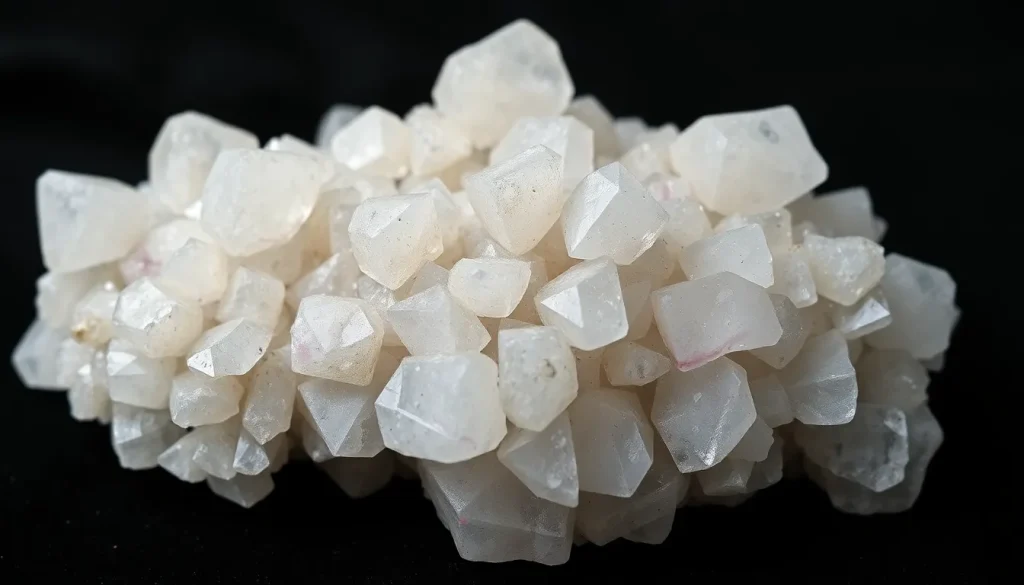
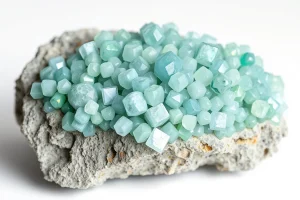
Hemimorphite is a zinc silicate mineral with the chemical formula Zn4Si2O7(OH)2·H2O. It crystallises in the orthorhombic system and typically forms botryoidal, stalactitic, or massive aggregates. The stone ranges in colour from pure white and colourless to shades of gray, brown, pink, green, or blue. With a Mohs hardness of 4.5–5, it is suitable for ornamental use, especially in earrings, pendants, and collector pieces.
History and Origin
The name “hemimorphite” derives from the Greek words hemi (half) and morph (form), referring to its crystals that display different terminations at opposite ends. It was first described in 1825 by Austrian mineralogist Wilhelm Haiding after specimens from the Freiberg district in Saxony, Germany. Historically, hemimorphite was an important source of zinc ore and was mined extensively in the United States (particularly the Missouri Zinc District), Germany, Morocco, and Australia.
Meaning and Symbolism
In traditional gemstone lore, hemimorphite is associated with grounding, stability, and personal empowerment. Its earthy hues are thought to encourage a sense of security and to help the wearer stay connected to the physical world. The stone is also linked to perseverance, aiding those who face challenging circumstances to remain resilient.
Healing and Metaphysical Properties
Crystal‑healing practitioners attribute the following properties to hemimorphite, based on long‑standing belief rather than scientific evidence:
- Root Chakra – Supports grounding and helps balance the base energy centre.
- Detoxification – Said to aid the body’s natural detox processes, especially of the skin and lymphatic system.
- Emotional Stability – Believed to calm anxiety, reduce fear, and foster confidence.
- Physical Support – Traditionally thought to assist with bone health and joint flexibility.
These claims are part of metaphysical traditions and should not be taken as medical advice.
Varieties and Types
Hemimorphite occurs in several habit forms, each with distinct visual characteristics:
- Botryoidal – Rounded, grape‑like masses that are the most common form in collections.
- Stalactitic – Needle‑like crystals that hang from cave walls or mine shafts.
- Massive – Dense, compact aggregates lacking distinct crystal faces.
Colour variations arise from trace impurities: iron can impart brown tones, while manganese may give a pink hue. Untreated, high‑clarity specimens can exhibit a subtle adamantine luster.
Jewelry Uses and Care
Because of its modest hardness, hemimorphite is best suited for jewelry that experiences limited abrasion, such as pendants, brooches, and earrings. It should be set securely to protect against chipping, especially along its perfect {010} cleavage plane.
Care instructions:
- Clean with a soft, lint‑free cloth and mild soap‑water solution.
- Avoid ultrasonic cleaners and steam, which can exacerbate cleavage.
- Store separately from harder gemstones to prevent scratches.
- Protect from prolonged exposure to strong acids or alkaline solutions.
Buying Guide
When purchasing hemimorphite, consider the following factors:
- Source and locality – Reputable mines such as the Missouri Zinc District (USA) or the Freiberg region (Germany) are known for quality material.
- Clarity and colour – Transparent to translucent stones with minimal inclusions are rarer and more valuable.
- Cut and treatment – Ensure the stone has not been dyed or artificially enhanced unless disclosed.
- Certification – Request a gemological report from a recognized laboratory (e.g., GIA, IGI) for high‑value pieces.
- Setting suitability – Verify that the jeweler uses protective settings that accommodate the stone’s cleavage.
Buying from established dealers who provide provenance information reduces the risk of acquiring synthetic or misidentified material.
FAQ
What is hemimorphite good for?
Hemimorphite is prized for its distinctive white‑gray to pink colours, making it a collector’s gemstone and a grounding element in jewelry. Traditionally, it is believed to aid stability and detoxification, though these are metaphysical claims.
Is hemimorphite rare?
High‑quality, transparent hemimorphite is relatively uncommon, especially in vivid colours. The mineral is abundant in zinc districts, but fine specimens suitable for jewelry are less frequent, making them moderately rare.
How can you tell if hemimorphite is real?
Real hemimorphite shows an orthorhombic crystal habit, perfect cleavage on {010}, and a white streak. Its hardness (4.5–5) can be tested with a steel file. For certainty, seek a gemological report or laboratory verification.
What chakra is hemimorphite associated with?
In crystal‑healing traditions, hemimorphite is most commonly linked to the Root (Muladhara) chakra, supporting grounding and stability.
How should you clean hemimorphite?
Clean hemimorphite gently with warm, soapy water and a soft cloth. Avoid ultrasonic cleaners, steam, harsh chemicals, and prolonged exposure to acids, as the stone’s cleavage makes it susceptible to damage.
Leave a Reply