
Short Answer
Overview
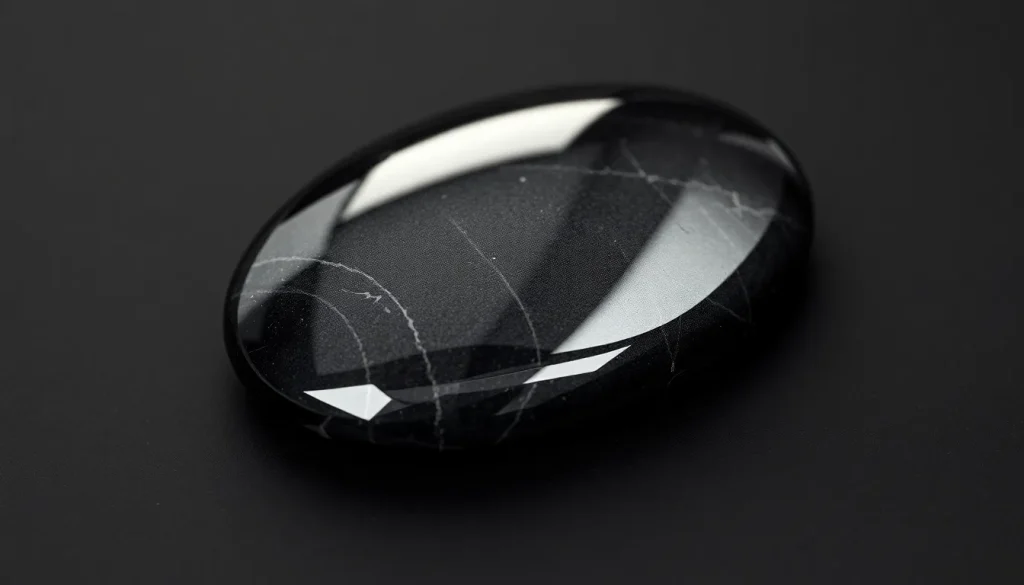
Hematite is an iron oxide mineral (Fe2O3) renowned for its metallic gray to black appearance and high specific gravity. It crystallises in the trigonal system and is commonly found as tabular or massive forms. With a Mohs hardness of 5.5–6.5, it is hard enough for many types of jewellery yet remains relatively easy to work.
History and Origin
Humans have used hematite since the Paleolithic era, grinding it into red ochre for pigment in cave paintings and body decoration. Ancient Egyptians fashioned beads and amulets, believing the stone held protective powers. Geologically, hematite forms in sedimentary, metamorphic, and igneous environments, often as a primary ore of iron.
Meaning and Symbolism
Traditional cultures associate hematite with grounding, strength, and protection. Its dark, reflective surface is thought to mirror the inner self, encouraging honesty and confidence. In modern symbolic use, hematite is given as a gift to signify stability and perseverance.
Healing and Metaphysical Properties
Crystal‑healing practitioners claim hematite can balance the root chakra, improve circulation, and aid in the absorption of iron nutrients. It is also said to calm a scattered mind, promote focus, and help release negative emotions. These beliefs are not medical facts and should not replace professional health advice.
Varieties and Types
- Specular hematite – highly reflective, mirror‑like surfaces; most common in jewellery.
- Earthy (or ochre) hematite – coarse, reddish‑brown powder used historically as pigment.
- Martite – a pseudomorph where hematite replaces magnetite, retaining the original crystal shape.
- Red hematite – displays a reddish hue in transmitted light; often cut as a cabochon.
Jewelry Uses and Care
Because of its metallic luster and substantial weight, hematite is popular for beads, pendants, cufflinks, and men’s accessories. It is typically polished to a high shine and set in silver or gold to accentuate its reflectivity. Care instructions include:
- Wipe with a soft, lint‑free cloth after each wear.
- Clean gently with warm soapy water and a mild brush; avoid abrasive cleaners.
- Do not expose to strong acids, chlorine, or ultrasonic cleaners, which can dull the surface.
- Store separately from softer gemstones to prevent scratching.
Buying Guide
When selecting hematite, consider the following:
- Luster – genuine hematite exhibits a bright metallic or submetallic sheen; dull specimens may be low‑grade or treated.
- Weight – its high specific gravity makes it noticeably heavy for its size.
- Origin – reputable dealers will disclose mining locations such as Australia, Brazil, or the United States.
- Treatment disclosure – some pieces are dyed or coated; request certification if the stone is to be used in high‑value jewellery.
For valuable purchases, ask for a gemological report or have the stone examined by a qualified laboratory.
FAQ
What is hematite good for?
Hematite is valued for its striking metallic appearance in jewellery and decorative objects; traditionally it is believed to aid grounding, protection, and mental focus, though these claims are not medically verified.
Is hematite rare?
Hematite is abundant as an iron ore worldwide, but high‑quality, well‑polished specimens suitable for fine jewellery are less common and can command higher prices.
How can you tell if hematite is real?
Real hematite feels heavy for its size, shows a metallic luster, and leaves a reddish‑brown streak on unglazed porcelain. Professional gemological testing can confirm composition and detect any surface treatments.
What chakra is hematite associated with?
In crystal‑healing traditions, hematite is most often linked to the Root chakra, supporting grounding and stability.
How should you clean hematite?
Clean hematite gently with warm soapy water and a soft brush, then dry with a lint‑free cloth. Avoid harsh chemicals, ultrasonic cleaners, and prolonged exposure to acids, which can dull its surface.
Leave a Reply