
Short Answer
Overview
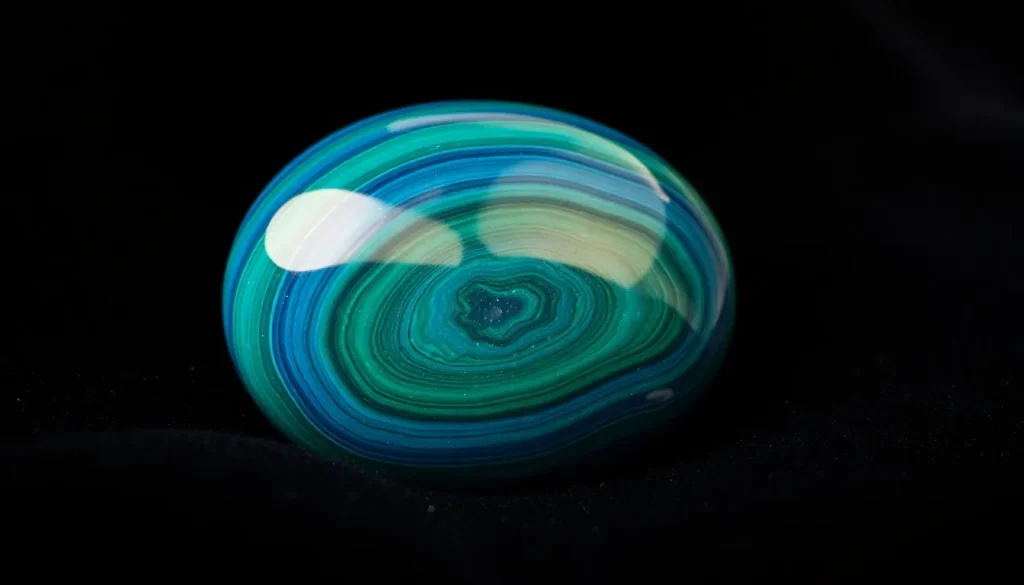
Azurmalachite is a composite gemstone formed from intergrown crystals of azurite and malachite, two copper carbonate minerals. The resulting stone displays striking bands of azure blue and verdant green, often resembling a natural watercolor. Because it is a natural intergrowth or a lab‑created composite, azurmalachite is valued for its vivid coloration rather than for rarity.
History and Origin
The first documented occurrences of azurmalachite date back to the 19th century when miners in the Congo region reported specimens that displayed both azurite and malachite in the same matrix. Early collectors prized the stone for its ornamental appeal, and it soon appeared in European cabinet pieces. In the mid‑20th century, gem‑cutters began engineering the composite deliberately, bonding azurite and malachite layers to produce larger, more uniform pieces for jewelry.
Meaning and Symbolism
Traditionally, the blue of azurite has been linked to communication, insight, and the throat chakra, while the green of malachite is associated with growth, transformation, and the heart chakra. Together, azurmalachite is said to symbolize the harmony of mind and heart, encouraging honest expression and emotional balance.
Healing and Metaphysical Properties
In crystal‑healing circles, azurmalachite is believed to aid in emotional release and to promote clear communication. Practitioners claim it can help alleviate stress, support respiratory health, and assist in the detoxification of copper overload, though these statements are not medically verified. The stone is often used in meditation to align the throat and heart chakras, fostering a sense of inner truth.
Varieties and Types
Azurmalachite occurs in two primary forms:
- Natural intergrowth: A genuine geological combination where azurite and malachite crystalize together, producing irregular banding.
- Engineered composite: A lab‑created material in which thin slices of azurite and malachite are glued or fused, allowing for larger, more consistent slabs.
The intensity of color can vary from pale turquoise‑green to deep royal blue with rich emerald tones, depending on the proportion of each mineral and the presence of trace elements.
Jewelry Uses and Care
Because of its attractive banded pattern, azurmalachite is commonly set in pendants, earrings, rings, and cabochons. Its relatively low hardness (3.5–4 on the Mohs scale) makes it suitable for pieces that are not subject to heavy wear. Care recommendations include:
- Avoid exposure to acids, harsh chemicals, or prolonged water contact, as both azurite and malachite can dissolve.
- Clean gently with a soft, damp cloth; for stubborn grime, use a mild soap solution and dry immediately.
- Store separately from harder gemstones to prevent scratching.
Because the stone can be porous, it should not be used in swimming pools, hot tubs, or saunas.
Buying Guide
When purchasing azurmalachite, consider the following criteria:
- Color balance: High‑quality stones display a harmonious blend of blue and green without one color dominating excessively.
- Clarity: Look for minimal veining or surface blemishes; a smooth, well‑polished surface enhances the stone’s visual impact.
- Origin: Reputable dealers will disclose whether the piece is a natural intergrowth or an engineered composite.
- Treatment disclosure: Some stones are stabilized with resin; ensure any treatments are fully disclosed.
Request a certification or a professional appraisal if the stone is presented as a high‑value item, and always buy from a trusted gem‑trade source.
FAQ
What is azurmalachite good for?
Azurmalachite is prized for its decorative appeal in jewelry and ornamental objects. Traditionally, it is believed to support clear communication and emotional balance, though these are metaphysical claims, not medical facts.
Is azurmalachite rare?
High‑quality azurmalachite is relatively uncommon because it requires a favorable balance of blue and green colors and minimal blemishes. Natural intergrowths are scarcer than engineered composites, but the stone is not considered ultra‑rare.
How can you tell if azurmalachite is real?
Authentic azurmalachite shows the characteristic banded pattern of azurite and malachite and feels slightly porous. A professional gemological test, such as refractive index measurement or spectroscopy, can confirm its composition and reveal any treatments.
What chakra is azurmalachite associated with?
In crystal‑healing traditions, azurmalachite is linked to the throat chakra for communication and the heart chakra for emotional harmony. These associations are symbolic and not scientifically validated.
How should you clean azurmalachite?
Clean gently with a soft, damp cloth and mild soap if needed. Avoid acidic cleaners, ultrasonic baths, or prolonged exposure to water, as the stone can be sensitive to chemicals and moisture.
Leave a Reply