
Short Answer
Overview
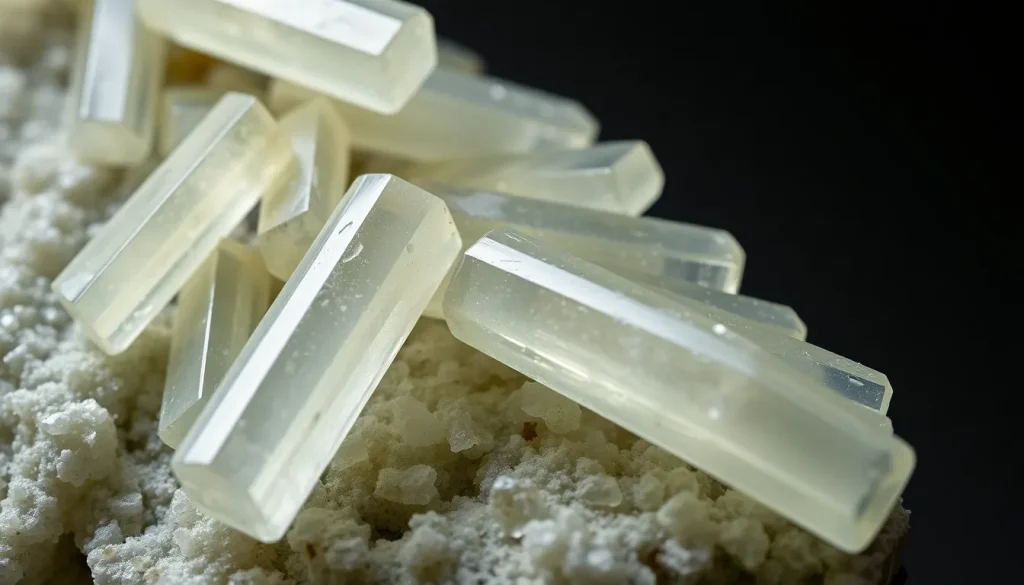
Goosecreekite is a relatively rare arsenate mineral first described from specimens collected at Goose Creek, Nevada, USA. Chemically it is a hydrated calcium‑iron arsenate with the formula Ca₂Fe²⁺(AsO₄)₂·2H₂O. The mineral forms elongated, tabular crystals that can exhibit a glossy, vitreous luster. Color ranges from colorless to very pale green, and the stone is typically translucent to transparent.
History and Origin
The type locality for goosecreekite is the Goose Creek mining district in western Nevada, where the mineral was identified in the early 2000s. It occurs in oxidized zones of arsenic‑rich base‑metal deposits, forming as a secondary mineral in the presence of calcium‑bearing solutions. Because of its limited occurrence, goosecreekite is primarily of interest to mineral collectors and researchers rather than large‑scale commercial mining.
Meaning and Symbolism
In traditional crystal‑healing circles, goosecreekite is associated with renewal and emotional balance. Its pale green hue is thought to reflect growth, new beginnings, and a gentle encouragement to release old patterns. The stone is sometimes used as a symbolic reminder to stay grounded while embracing change.
Healing and Metaphysical Properties
Believers attribute several metaphysical qualities to goosecreekite:
- Emotional Healing: Said to soothe anxiety and promote calmness.
- Heart Chakra Support: Linked to the heart chakra, it is thought to enhance compassion and self‑love.
- Physical Well‑Being: Some traditions claim it can aid the detoxification of heavy metals, though these claims are not medically verified.
These properties are based on folklore and crystal‑healing traditions and should not replace professional medical advice.
Varieties and Types
Goosecreekite does not have widely recognized varieties. However, specimens can differ in color intensity (from almost clear to faint green) and crystal size, depending on the exact geochemical conditions of formation.
Jewelry Uses and Care
Because of its modest hardness (approximately 3.5–4 on the Mohs scale) and perfect cleavage, goosecreekite is not commonly used in mainstream jewelry. When set in pendants or earrings, it is usually protected in bezel or protective settings to minimize impact. Care recommendations include:
- Avoid harsh mechanical impact; the stone can chip or fracture.
- Clean gently with a soft, damp cloth; avoid ultrasonic cleaners and harsh chemicals.
- Store separately from harder gemstones to prevent scratching.
Buying Guide
When considering a goosecreekite specimen or jewelry piece, keep the following in mind:
- Origin Documentation: Reputable dealers should provide provenance, especially confirming the Nevada type locality.
- Visual Inspection: Look for the characteristic tabular crystals and the pale green to colorless coloration. Any unusually vivid color may indicate treatment.
- Hardness Test: A Mohs scratch test (using a fingernail or copper coin) can help verify the stone’s relative softness.
- Professional Verification: For high‑value pieces, request a gemological report that includes refractive index, specific gravity, and X‑ray diffraction data.
Because goosecreekite is rare, prices can vary widely based on size, clarity, and origin. Collectors often value well‑formed crystals more than rough material.
FAQ
What is goosecreekite good for?
Practically, goosecreekite is prized by collectors for its rarity and distinctive crystal habit. Traditionally, crystal‑healing enthusiasts believe it promotes emotional balance and supports the heart chakra.
Is goosecreekite rare?
Yes, goosecreekite is considered rare. Quality specimens are limited to a few localities, primarily Goose Creek, Nevada, and the stone is seldom found in large, gem‑quality crystals.
How can you tell if goosecreekite is real?
Real goosecreekite shows the characteristic tabular crystal form, pale green to colorless color, and a vitreous luster. A Mohs hardness test (3.5–4) and specific gravity measurement (~3.2) can help, but professional gemological analysis is recommended for confirmation.
What chakra is goosecreekite associated with?
In crystal‑healing traditions, goosecreekite is linked to the Heart (Anahata) chakra, thought to encourage compassion and emotional renewal.
How should you clean goosecreekite?
Clean gently with a soft, damp cloth and mild soap if needed. Avoid ultrasonic cleaners, harsh chemicals, and mechanical impact due to its relatively low hardness and perfect cleavage.
Leave a Reply