
Short Answer
Overview
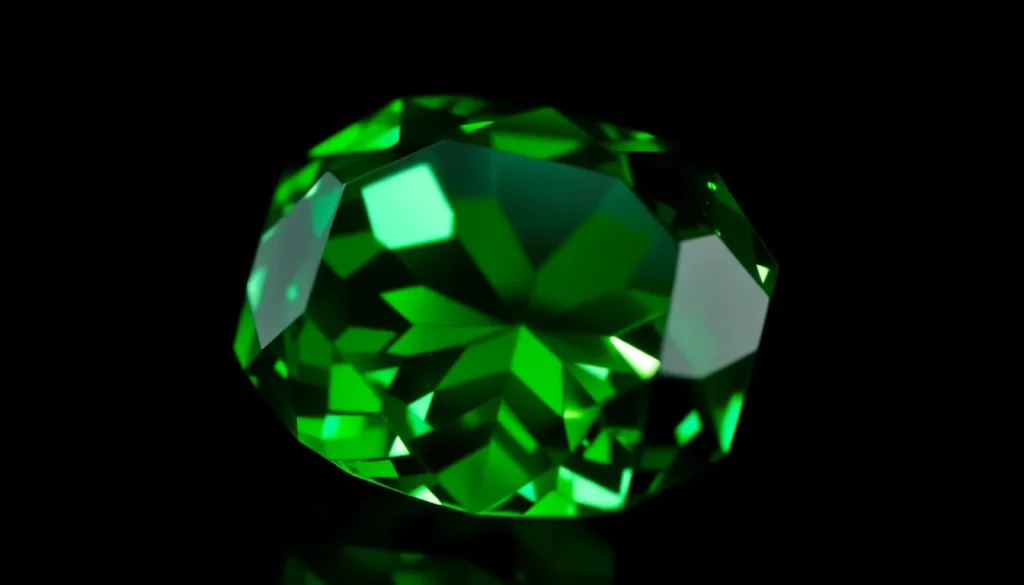
Uvarovite (Ca3Cr2(SiO4)3) is a rare, vivid green garnet belonging to the nesosilicate group. It crystallizes in the cubic system and is renowned for its emerald‑like hue, high refractive index, and durability, making it suitable for fine jewelry when of gem‑quality.
History and Origin
The stone is named after the Russian mineralogist Count Sergei Semenovitch Uvarov, who first described it in 1832. Historically, the most significant deposits have been found in the Kalahari Manganese Field of South Africa, the Ural Mountains of Russia, and the Luanshan region of Tanzania. Early specimens were collected by European explorers in the 19th century and displayed in mineral cabinets across Europe.
Meaning and Symbolism
Traditional gemstone lore associates uvarovite with renewal, hope, and the heart’s capacity to give. Its bright green color is said to symbolize growth, abundance, and the revitalizing power of nature. In contemporary jewelry marketing, uvarovite is often highlighted as a symbol of rarity and unique personal expression.
Healing and Metaphysical Properties
Within crystal‑healing traditions, uvarovite is believed to promote emotional balance, encourage compassion, and strengthen the heart chakra. Practitioners claim it can aid in releasing old patterns, fostering optimism, and supporting the immune system, though these effects are not medically verified.
Varieties and Types
- Natural Vivid Green Uvarovite: The most prized, displaying a saturated emerald‑green to bluish‑green hue.
- Yellow‑Green Uvarovite: Less common, with a lighter, more yellowish tint.
- Synthetic Uvarovite: Laboratory‑grown crystals produced by the hydrothermal method; optically identical but less valuable.
- Heated or Treated Specimens: Rarely, heat treatment is used to enhance color saturation, though most gem‑quality stones are untreated.
n
Jewelry Uses and Care
With a Mohs hardness of 7–7.5, uvarovite is suitable for rings, pendants, earrings, and brooches. Its conchoidal fracture requires careful cutting to avoid chipping. Recommended care includes:
- Cleaning with warm, soapy water and a soft brush.
- Avoiding ultrasonic cleaners if the stone is set in fragile metal.
- Storing separately from softer gemstones to prevent scratches.
Uvarovite does not react to most common jewelry chemicals, but prolonged exposure to strong acids should be avoided.
Buying Guide
When purchasing uvarovite, consider the following criteria:
- Color Saturation: Deep, even green without brown or gray overtones commands the highest price.
- Clarity: Inclusions are common; a clean stone with minimal visible flaws is preferred.
- Cut: Well‑proportioned cuts maximize brilliance; common cuts include round brilliant, oval, and cushion.
- Certification: Request a GIA or IGI report that confirms natural origin and identifies any treatments.
- Provenance: Reputable sources from South Africa or Russia are typical for high‑quality material.
Because uvarovite is rare, prices vary widely. Compare multiple dealers and request detailed photographs under both daylight and UV light to assess authenticity.
FAQ
What is uvarovite good for?
Uvarovite is valued for its striking green color in fine jewelry, and traditionally it is believed to promote emotional renewal and heart‑centered compassion. It is also collected as a rare mineral specimen.
Is uvarovite rare?
High‑quality, vivid green uvarovite is considered rare because it occurs in limited localities and large gem‑size crystals are uncommon. Treated or synthetic stones are more readily available, but natural gem‑quality material commands premium prices.
How can you tell if uvarovite is real?
Authentic uvarovite displays a consistent, saturated green color, a high refractive index (≈1.83), and a cubic crystal habit. Professional testing with a spectroscope, refractometer, and possibly X‑ray diffraction can confirm its identity. Always request a reputable gemological report.
What chakra is uvarovite associated with?
In crystal‑healing traditions, uvarovite is linked to the Heart (Anahata) chakra, where it is said to support love, compassion, and emotional balance.
How should you clean uvarovite?
Clean uvarovite gently with warm, mild soapy water and a soft brush. Rinse thoroughly and pat dry with a lint‑free cloth. Avoid ultrasonic cleaners and harsh chemicals; store separately from softer stones to prevent scratches.
Leave a Reply