Short Answer
Overview
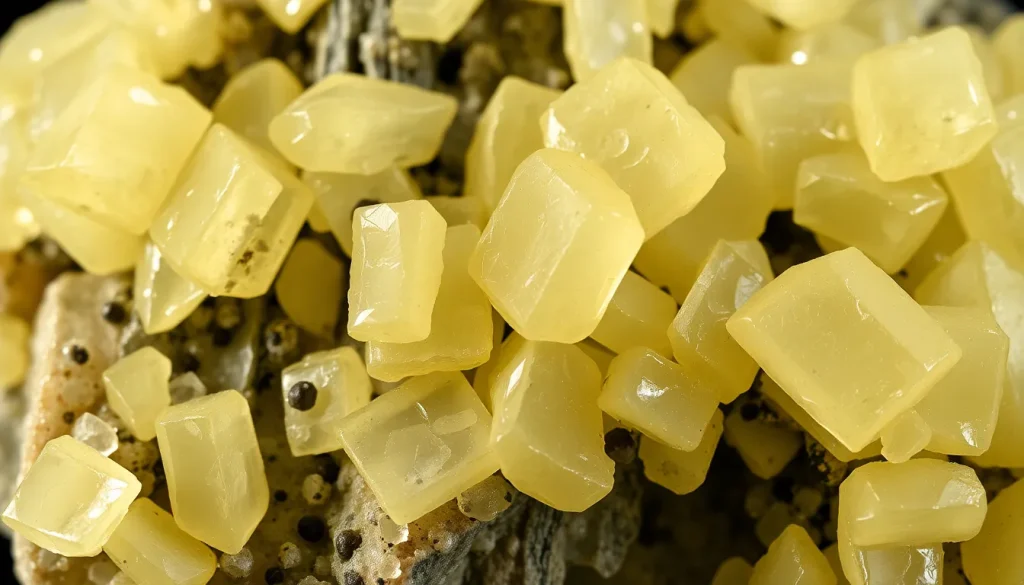
Ugrandite is a rare phosphate mineral that occurs in limited localities worldwide. It typically forms as small, tabular crystals or granular masses that display a colorless to pale‑yellow appearance with a vitreous to pearly luster. Because of its modest hardness and modest refractive index, Ugrandite is most often encountered by mineral collectors rather than mainstream jewelry designers, though cut specimens have occasionally been set in pendants and earrings.
History and Origin
The mineral was first described in the early 1970s after being identified in a phosphate deposit in Brazil. It was named in honor of the mineralogist Dr. Ugrand, who contributed significantly to the study of phosphate minerals. Subsequent occurrences have been reported from a few other sites, notably a pegmatitic environment in Madagascar, but comprehensive mining data remain limited.
Meaning and Symbolism
In traditional gemstone lore, Ugrandite is associated with clarity of thought and subtle emotional balance. Its gentle coloration is thought to symbolize purity and the quiet strength of inner resolve. Collectors often value the stone for its rarity and the sense of discovery it represents.
Healing and Metaphysical Properties
Crystal‑healing practitioners attribute Ugrandite with the ability to aid mental focus, encourage calm communication, and support the integration of new ideas. It is sometimes used in meditation to promote a feeling of grounded clarity. These properties reflect traditional beliefs and are not intended as medical advice.
Varieties and Types
Ugrandite does not have widely recognized commercial varieties, but specimens can differ in hue and clarity:
- Colorless form: Often the most sought after for its transparency.
- Pale yellow form: Shows a gentle warmth that is prized by some collectors.
- Inclusions: Occasionally contains minute fluid inclusions that create a subtle sparkle.
Jewelry Uses and Care
Because Ugrandite rates around 3.5–4 on the Mohs hardness scale, it is relatively soft compared with most gemstones used in everyday jewelry. When set, it is best suited to pieces that experience limited wear, such as pendants, earrings, or brooches. Care recommendations include:
- Clean with a soft, lint‑free cloth and mild soap solution; avoid ultrasonic cleaners.
- Store separately from harder stones to prevent scratching.
- Protect from prolonged exposure to heat or harsh chemicals, which could affect surface luster.
Buying Guide
When considering a purchase, keep the following points in mind:
- Source documentation: Request provenance or a gemological report to confirm natural origin.
- Color and clarity: Choose specimens with minimal inclusions and a hue that matches personal preference.
- Cut and setting: Ensure the stone has been cut by a reputable cutter and is set in a protective mounting.
- Treatment disclosure: Ask whether any stabilizers, dyes, or impregnation have been applied.
- Price considerations: Expect modest pricing relative to more common gemstones, but rarity can increase value for high‑quality, well‑documented pieces.
FAQ
What is Ugrandite good for?
Ugrandite is prized by collectors for its rarity and subtle color, and it is occasionally used in delicate jewelry. Traditional crystal‑healing beliefs attribute it with mental clarity and calm communication, though these claims are not medically verified.
Is Ugrandite rare?
Yes, Ugrandite is considered rare. High‑quality, transparent specimens are limited to a few localities, and most material is found in small, fragmented crystals.
How can you tell if Ugrandite is real?
Real Ugrandite can be identified by its monoclinic crystal habit, low Mohs hardness (3.5‑4), and characteristic white streak. A gemological laboratory can confirm its chemical composition and verify that it is not a treated imitation.
What chakra is Ugrandite associated with?
In crystal‑healing traditions, Ugrandite is sometimes linked to the Throat Chakra for its purported aid in clear communication, but there is no universally accepted chakra association.
How should you clean Ugrandite?
Clean Ugrandite with a soft cloth and mild soapy water. Avoid ultrasonic cleaners, steam, or harsh chemicals, and store it separately from harder gemstones to prevent scratching.
Leave a Reply