
Short Answer
Overview
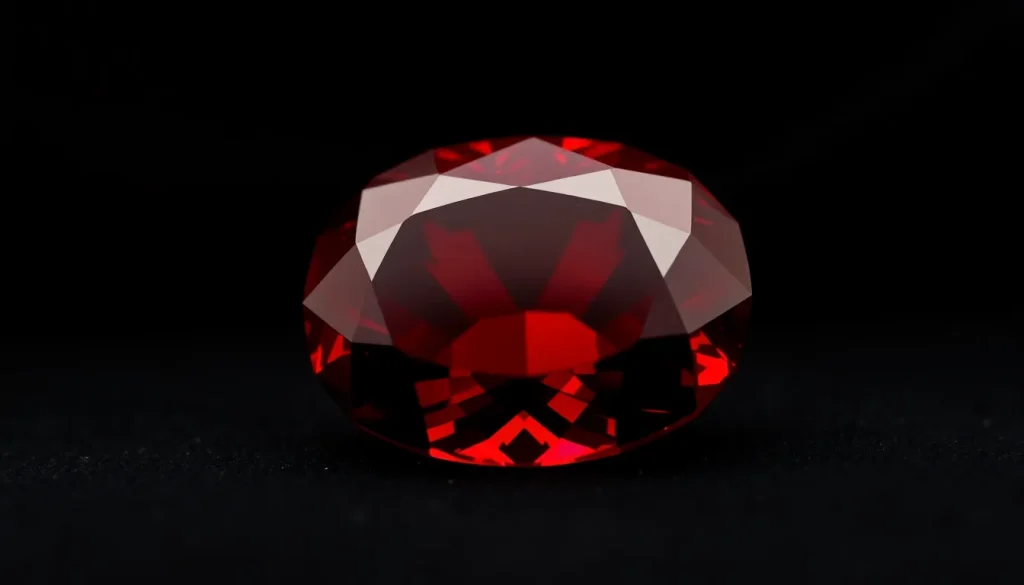
Pyrope is the deep‑red member of the garnet group, chemically Mg3Al2(SiO4)3. It crystallises in the isometric system and is valued for its vivid blood‑red colour, high refractive index, and good hardness, which make it a popular choice for rings, pendants, and high‑end gemstone collections.
History and Origin
The name “pyrope” derives from the Greek words pyr (fire) and ops (face), referring to its fiery appearance. Historically, pyrope garnets have been found in ancient burial sites across Europe and Africa, indicating their long use as ornamental stones. Major natural deposits are located in the Kaapvaal Craton of South Africa, the Tanzanian and Kenyan highlands, the Ural Mountains of Russia, and the state of Arizona in the United States. Today, pyrope is also produced synthetically for industrial abrasives, though natural stones remain the standard for jewelry.
Meaning and Symbolism
In traditional gemstone lore, pyrope is associated with vitality, courage, and the heart’s passion. It is said to inspire confidence, protect the wearer from negative influences, and promote emotional balance. Because of its deep red hue, it is often linked to love, strength, and the life‑force energy of fire.
Healing and Metaphysical Properties
Crystal‑healing practitioners describe pyrope as a stone that grounds the wearer’s energy, stimulating the root chakra and encouraging a sense of security. It is believed to boost circulation, support the blood‑forming system, and aid in the release of old emotional patterns. These claims are based on tradition and should not replace professional medical advice.
Varieties and Types
Pyrope occurs both as a pure species and in solid‑solution series with almandine, forming the common “almandine‑pyrope” garnet. Important varieties include:
- Almandine‑Pyrope (Andradite‑rich): Exhibits a slightly brownish tint.
- Uvarovite‑influenced Pyrope: Rare, with a subtle greenish hue.
- Synthetic Pyrope: Produced by the Verneuil (flame‑fusion) method for industrial use.
Jewelry Uses and Care
Because pyrope rates 7–7.5 on the Mohs scale, it is suitable for everyday wear in rings and bracelets. However, its crystal structure has no true cleavage, and it can fracture if subjected to sharp impacts. Recommended care includes:
- Cleaning with warm, soapy water and a soft brush.
- Avoiding ultrasonic cleaners if the stone has been heat‑treated or is set in a fragile mount.
- Storing separately from harder gemstones such as diamonds to prevent scratching.
Periodic professional inspection ensures that prongs remain secure and that any surface treatments remain intact.
Buying Guide
When selecting pyrope, consider the following factors:
- Colour Saturation: Deep, even red without brown or orange overtones is most prized.
- Clarity: Inclusions are common; a clean appearance enhances value.
- Cut: Well‑proportioned facets maximize brilliance.
- Treatment Disclosure: Natural pyrope is rarely treated, but some stones may be heat‑enhanced to improve colour.
- Certification: Request a grading report from a reputable laboratory (e.g., GIA, IGI) for high‑value pieces.
Pricing varies widely depending on colour intensity, size, and origin. Authentic natural pyrope from renowned localities such as Tanzania or South Africa often commands higher prices than synthetically produced stones.
FAQ
What is pyrope good for?
Practically, pyrope is used in fine jewelry due to its hardness and vivid red colour. Traditionally, it is believed to promote courage, vitality, and emotional balance.
Is pyrope rare?
High‑quality, deep‑red pyrope is less common than some other garnet varieties, especially from renowned localities. However, pyrope is more abundant than many rare gemstones, and synthetic versions are readily available.
How can you tell if pyrope is real?
Real pyrope displays a high refractive index, a vitreous luster, and no visible cleavage. A professional gemologist can confirm authenticity with a refractometer, spectroscope, and, if needed, a laboratory report.
What chakra is pyrope associated with?
Traditional crystal lore links pyrope to the Root (Muladhara) chakra, supporting grounding and stability.
How should you clean pyrope?
Clean pyrope gently with warm soapy water and a soft brush. Avoid harsh chemicals, ultrasonic cleaners if the stone is heat‑treated, and store it separately from harder gemstones to prevent scratching.

Leave a Reply