
Short Answer
Overview
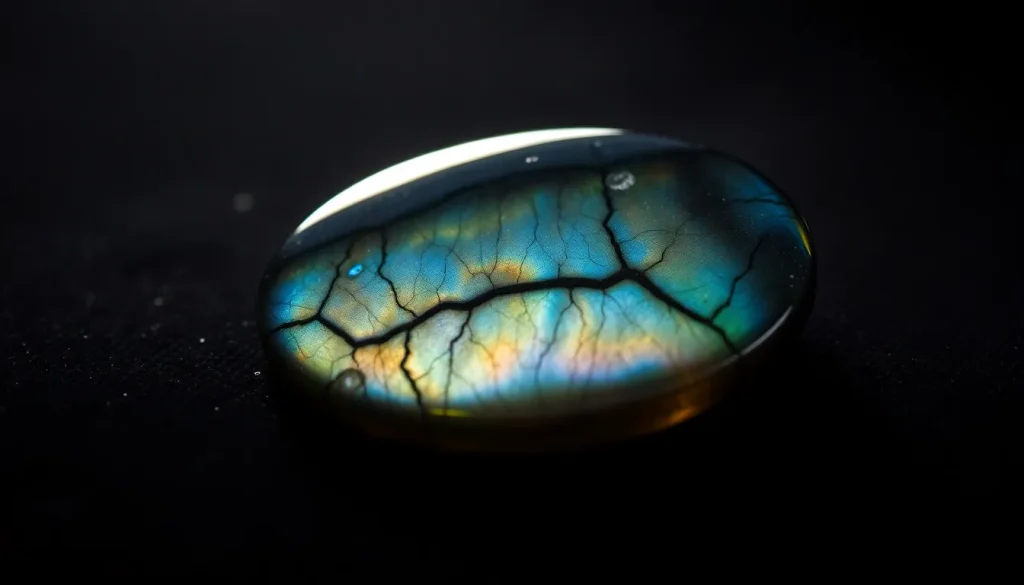
Labradorite is a member of the plagioclase series of the feldspar group, valued for its distinctive optical phenomenon known as labradorescence. This effect appears as vivid flashes of blue, green, gold, or violet that shift with the movement of light. The stone typically occurs in dark gray to black host material, making the iridescent play of color especially dramatic. With a Mohs hardness of 6 to 6.5, it is suitable for many types of jewelry, though care is required to protect its surface.
History and Origin
The name “labradorite” derives from the Labrador Peninsula in Canada, where the mineral was first identified in the late 18th century. Indigenous peoples of the region collected the stone for its visual properties, and early European explorers noted its shimmering colors. Significant deposits are also found in Finland (where high‑quality material is marketed as “spectrolite”), Madagascar, Russia, Australia, and the United States (particularly California). The stone has been used historically in ornamental carvings, cameo work, and as a decorative element in architecture.
Meaning and Symbolism
In traditional folklore, labradorite is considered a stone of transformation. It is said to protect the aura, strengthen intuition, and aid in navigating change. The shifting colors are often interpreted as a metaphor for inner potential and the hidden facets of personality. In contemporary crystal‑healing circles, labradorite is associated with enhancing creativity, encouraging self‑discovery, and shielding against negative energies.
Healing and Metaphysical Properties
Crystal‑healing practitioners attribute the following properties to labradorite, though these claims are not scientifically verified:
- Emotional balance: Believed to calm anxiety and help release old emotional patterns.
- Intuition and psychic development: Said to awaken the third eye chakra, supporting meditation and dream work.
- Physical support: Traditionally thought to assist the respiratory system and alleviate stress‑related tension.
These uses are based on cultural and metaphysical traditions, not on medical evidence. Individuals should consult health professionals for any medical concerns.
Varieties and Types
While all labradorite shares the same basic composition, several varieties are recognized by collectors:
- Spectrolite: High‑quality labradorite from Finland with exceptionally vivid labradorescence.
- Black Labradorite: Darker material with subtle flashes, often used in contemporary jewelry.
- Rainbow Labradorite: Specimens that display a broader spectrum of colors, including reds and purples.
All varieties are natural; however, some stones are treated with heat or resin to enhance clarity or durability. Treatment should be disclosed by reputable dealers.
Jewelry Uses and Care
Labradorite is commonly set in rings, pendants, earrings, and bracelets. Because it has perfect cleavage in two directions, it can be prone to chipping if struck. The following care guidelines are recommended:
- Cleaning: Use a soft, lint‑free cloth and mild soap with lukewarm water. Avoid ultrasonic cleaners and steam, which may affect any surface treatments.
- Storage: Keep pieces separate from harder gemstones (e.g., quartz, diamonds) in a padded pouch or compartment.
- Avoid harsh chemicals: Perfumes, hairsprays, and cleaning agents can dull the stone’s surface.
- Professional inspection: Have settings checked annually, especially for rings that experience frequent wear.
Buying Guide
When purchasing labradorite, consider the following factors:
- Color play: The intensity and range of labradorescence are the primary determinants of value. Look for bright, multi‑colored flashes that shift with light.
- Clarity: Inclusions are common, but a clean, well‑polished surface enhances the optical effect.
- Cut and setting: Cabochon cuts are most popular because they maximize the visibility of labradorescence.
- Origin and treatment disclosure: Reputable sellers will provide provenance and note any heat or resin treatments.
- Certification: For high‑value pieces, a gemological report from a recognized laboratory (e.g., GIA) can confirm authenticity.
Prices vary widely based on quality, size, and origin. Spectrolite from Finland typically commands higher prices due to its superior color play.
FAQ
What is Labradorite good for?
Labradorite is prized for its striking visual effect in jewelry and decorative objects, and in crystal‑healing traditions it is believed to support intuition, emotional balance, and protection against negative energies.
Is Labradorite rare?
High‑quality labradorite with vivid labradorescence is relatively uncommon, especially from premium sources like Finland. However, the mineral is found in several countries, making it more available than many true rare gemstones.
How can you tell if Labradorite is real?
Real labradorite exhibits a dark base color with a clear, shifting play of color when viewed from different angles. A trained gemologist can confirm its composition with refractive index and specific gravity measurements, and can detect any treatments.
What chakra is Labradorite associated with?
Traditional crystal‑healing beliefs link Labradorite most often with the Throat chakra, and sometimes with the Third Eye chakra, for its reputed ability to enhance communication and intuition.
How should you clean Labradorite?
Clean labradorite with warm, soapy water and a soft cloth. Avoid ultrasonic cleaners, steam, and harsh chemicals, and store it separately from harder gemstones to prevent scratches.
Leave a Reply