
Short Answer
Overview
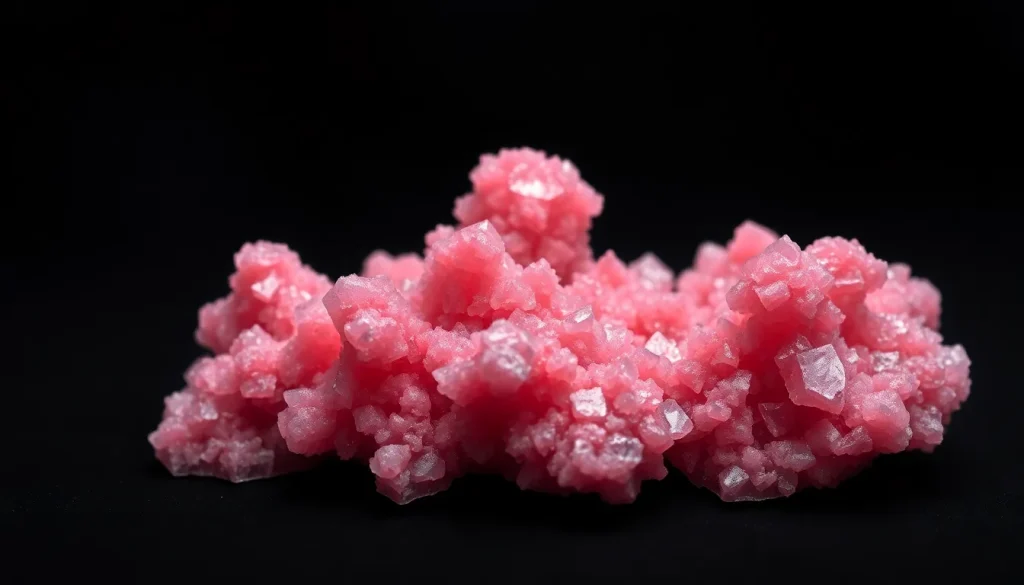
Erythrite, commonly known as cobalt bloom, is a secondary mineral with the chemical formula Co3(AsO4)2·8H2O. It forms bright pink to reddish‑orange crusts, botryoidal masses, and stalactitic aggregates. Because of its striking color and rarity, erythrite is of interest to mineral collectors, crystal enthusiasts, and occasionally to jewelry designers.
History and Origin
The name “erythrite” derives from the Greek word erythros meaning “red”. First described in the late 19th century from specimens found in the copper‑cobalt districts of the Congo, the mineral was later identified in several other cobalt‑rich locales worldwide. It typically forms in oxidized zones of cobalt‑bearing arsenide deposits, where groundwater alters primary minerals such as cobaltite and arsenopyrite.
Meaning and Symbolism
In traditional gemstone lore, erythrite is associated with courage, vitality, and emotional balance. Its vivid pink hue is said to represent the heart’s energy, while the cobalt component links it to strength and resilience. Collectors often regard it as a symbol of transformation, reflecting the mineral’s formation from the alteration of darker parent ores.
Healing and Metaphysical Properties
Crystal‑healing practitioners attribute the following metaphysical qualities to erythrite:
- Grounding and protection: Believed to anchor personal energy to the Earth, helping to alleviate anxiety.
- Emotional support: Said to encourage self‑acceptance and the release of repressed feelings.
- Physical vitality: Traditional belief holds that it can stimulate circulation and support the body’s natural healing processes, though these claims are not medically proven.
These properties are rooted in folklore and should not replace professional medical advice.
Varieties and Types
Erythrite occurs in several habit types:
- Botryoidal crusts: Rounded, grape‑like masses that display the stone’s most intense pink color.
- Stalactitic aggregates: Thin, hair‑like formations that hang from cave or mine walls.
- Massive crusts: Thin, sheet‑like coatings on host rocks.
All varieties share the same chemical composition; differences are purely morphological. The trade name “cobalt bloom” is frequently used for any bright pink erythrite specimen.
Jewelry Uses and Care
Because erythrite ranks only 2.5‑3 on the Mohs hardness scale and exhibits perfect cleavage, it is fragile and unsuitable for everyday wear. When used in jewelry, it is typically set as a cabochon, bead, or in protective settings such as bezels or pendants that limit exposure to impact.
Care instructions:
- Avoid scratching: clean with a soft, lint‑free cloth; do not use abrasive cleaners.
- Protect from heat and chemicals: erythrite is water‑soluble in acidic conditions and can be damaged by perfumes, lotions, or acidic cleaning solutions.
- Store separately: keep in a padded pouch or a compartment away from harder gemstones.
Buying Guide
When purchasing erythrite, consider the following factors:
- Color intensity: The most valuable specimens display a uniform, vivid pink to reddish‑orange hue without brown or gray discoloration.
- Clarity and surface: Look for smooth, well‑formed crusts or botryoidal masses; excessive surface weathering can reduce aesthetic appeal.
- Origin: High‑quality material often originates from known cobalt districts such as Zambia, the Democratic Republic of Congo, and Morocco.
- Treatment disclosure: Genuine erythrite is natural; some sellers may apply dyes or sealants to enhance color. Request documentation or a gemological report when possible.
- Certification: For valuable pieces, a certificate from a reputable laboratory (e.g., GIA or IGI) can verify authenticity.
Because the stone is soft and water‑soluble, it is best suited for collectors rather than daily adornment.
FAQ
What is erythrite good for?
Erythrite is prized by collectors for its vivid pink color and is occasionally set in jewelry as a decorative cabochon. Traditionally, crystal‑healing practitioners attribute grounding and emotional‑balancing properties to it, though these claims are not medically verified.
Is erythrite rare?
High‑quality erythrite specimens are relatively rare because the mineral forms only in specific cobalt‑rich oxidized zones and is soft, limiting its use in jewelry. Fine, vivid pink material from well‑known localities like Zambia is especially scarce.
How can you tell if erythrite is real?
Real erythrite displays a bright, uniform pink to reddish‑orange hue, a subadamantine luster, and a low hardness (2.5‑3). It feels slightly greasy and may show a pale pink streak. Professional testing, such as X‑ray diffraction or a gemological report, confirms its composition and rules out dyed substitutes.
What chakra is erythrite associated with?
In crystal‑healing traditions, erythrite is most commonly linked to the Root (Muladhara) chakra, where it is believed to provide grounding and stability.
How should you clean erythrite?
Clean erythrite gently with a soft, dry cloth. Avoid ultrasonic cleaners, steam, or acidic solutions, as the mineral is soft and water‑soluble. If deeper cleaning is needed, use lukewarm water with a mild neutral soap, rinse quickly, and pat dry, then store in a protective pouch.
Leave a Reply