
Short Answer
Overview
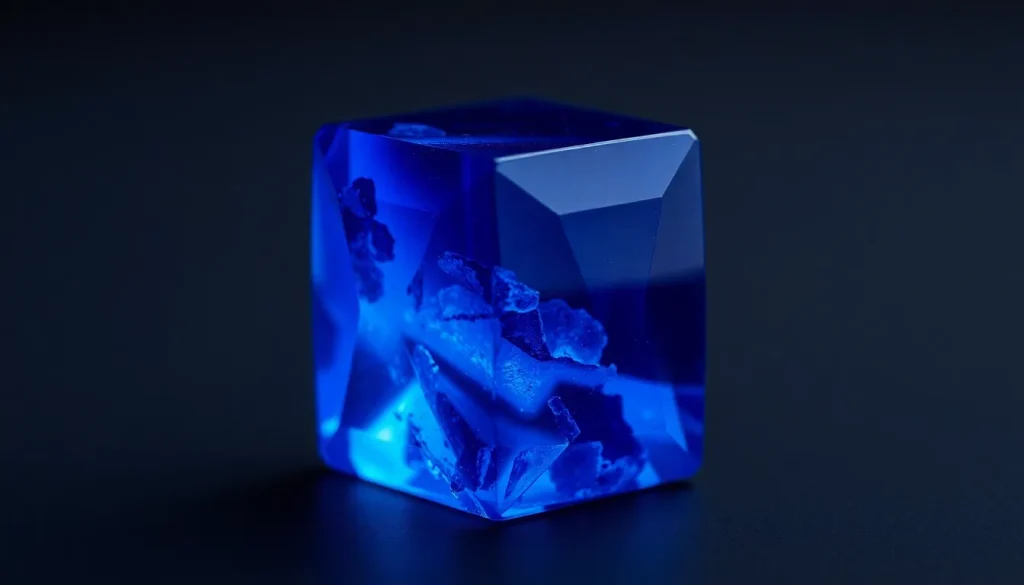
Nosean is a member of the sodalite group of feldspathoid minerals. Its chemical composition is a sodium aluminosilicate with chlorine, most commonly expressed as Na8(Al6Si6O24)Cl2. It crystallises in the isometric (cubic) system and typically forms well‑developed cubes or octahedra. The stone is best known for its vivid blue to blue‑green colour, although colourless, pink, and white specimens also occur.
History and Origin
The name “nosean” derives from the German word “Nosean” used historically for blue sodalite found in the Ural Mountains of Russia. Early specimens were collected in the 19th century and described as a distinct mineral in 1862. Significant localities include the Ural region (Russia), the Bancroft area of Ontario (Canada), and the San Benito County of California (USA). The mineral is often associated with other sodalite‑group members such as lazurite, which gives the famed “lapis lazuli” its deep blue.
Meaning and Symbolism
In traditional gemstone lore, Nosean is thought to embody clarity of thought and truthful communication. Its cool blue hue is associated with calmness, mental focus, and the ability to express ideas without distortion. The stone is occasionally linked to the element of water, symbolising emotional balance and the smoothing of inner turbulence.
Healing and Metaphysical Properties
Crystal‑healing practitioners attribute Nosean with the ability to enhance mental clarity, aid in meditation, and support the throat chakra for clearer speech. It is believed to assist in releasing old emotional patterns and fostering a sense of inner peace. These claims are based on traditional beliefs and should not be taken as medical advice.
Varieties and Types
While the term “Nosean” refers to the pure mineral, it is sometimes marketed as “blue sodalite” when the colour is particularly vivid. Variants include:
- Blue Nosean – the most common commercial colour, ranging from sky‑blue to deep teal.
- Colorless/White Nosean – rare, translucent specimens prized by collectors.
- Pink Nosean – a very limited occurrence, often resulting from trace impurities.
Jewelry Uses and Care
Because of its modest hardness (5.5–6 on the Mohs scale) and perfect cubic cleavage, Nosean is best used in pendants, earrings, and cabochons where the stone is set protectively. It should be avoided in rings or bracelets that endure heavy impact.
Care guidelines:
- Clean with a soft, lint‑free cloth and mild soapy water; avoid ultrasonic cleaners.
- Do not expose to harsh chemicals or prolonged heat, which can affect colour stability.
- Store separately from harder gemstones to prevent scratches.
Buying Guide
When purchasing Nosean, consider the following factors:
- Colour intensity: Deep, uniform blue is most valued.
- Clarity: Inclusions are common; look for clean, well‑cut pieces.
- Cut and finish: A well‑polished cabochon or free‑form cube highlights the stone’s natural luster.
- Origin: Specimens from classic localities such as the Urals or Ontario often carry a premium.
- Certification: Request a gem‑lab report if the price is significant; reputable dealers will provide documentation.
Because Nosean is not frequently treated, most natural stones are sold untreated, which adds to their appeal for collectors seeking genuine mineral specimens.
FAQ
What is nosean good for?
Nosean is prized for its striking blue colour in jewelry and as a collector's mineral. Traditionally it is believed to aid clear communication and mental focus, though these are spiritual associations, not medical facts.
Is nosean rare?
High‑quality, deep‑blue nosean is relatively uncommon, especially in large, clean crystals. The mineral itself is not extremely rare, but gem‑grade material suitable for jewelry is limited.
How can you tell if nosean is real?
Real nosean feels cool to the touch, has a vitreous luster, and shows a cubic crystal habit. Simple tests include checking hardness (≈5.5–6) and confirming the white streak. Professional gem‑lab certification provides definitive verification.
What chakra is nosean associated with?
In crystal‑healing traditions, nosean is often linked to the throat chakra for clearer speech, though some sources list it under no single standard chakra.
How should you clean nosean?
Clean nosean gently with lukewarm soapy water and a soft cloth. Avoid ultrasonic cleaners, harsh chemicals, and high heat, as the stone can be sensitive to sudden temperature changes and surface damage.
Leave a Reply