
Short Answer
Overview
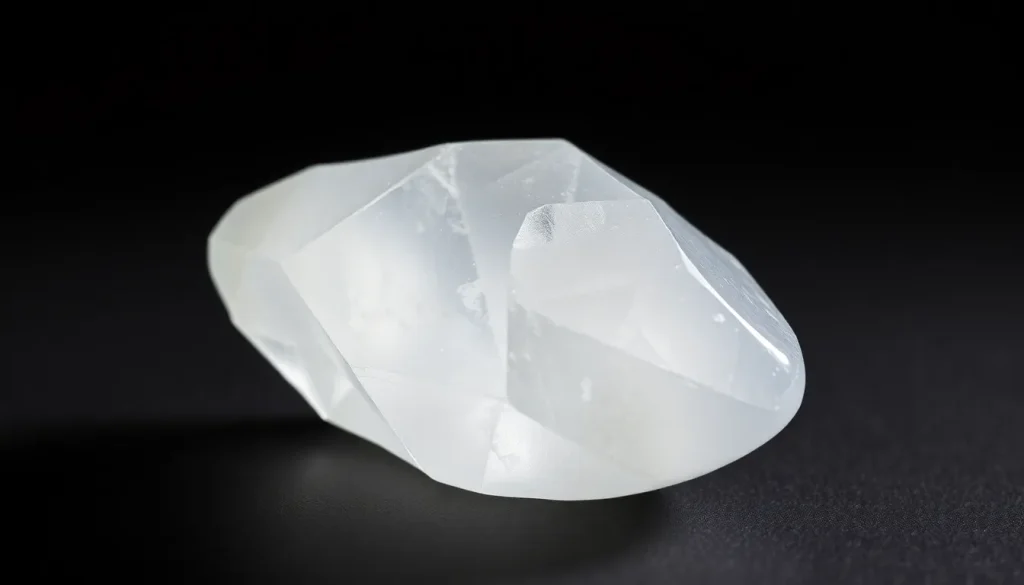
Petalite, also known as castorite, is a lithium aluminum silicate mineral prized for its clear, glassy appearance and subtle pastel hues. With a Mohs hardness of 5.5–6 and a vitreous luster, it is used both as a collector’s mineral and in fine jewelry where its delicate color palette can complement a range of designs.
History and Origin
Petalite was first described in 1800 by French mineralogist René Just Haüy, who named it after the Greek word “petalon” meaning “leaf,” referencing its often leaf‑shaped crystal habit. Natural deposits occur in pegmatitic veins associated with lithium‑rich granitic intrusions. Notable localities include the Minas Gerais region of Brazil, the Bancroft area of Ontario, Canada, and historic occurrences in France’s Brittany.
Meaning and Symbolism
In traditional gemstone lore, petalite is associated with clarity of thought and inner calm. Its transparent quality is said to symbolize openness and honesty, while the soft pastel tones are linked to gentle emotional balance. Some cultures view it as a stone that encourages mental organization and aids in decision‑making.
Healing and Metaphysical Properties
Crystal‑healing practitioners attribute the following properties to petalite, describing them as traditional beliefs rather than medical facts:
- Mind‑body alignment: Thought to promote mental clarity and reduce mental chatter.
- Emotional soothing: Believed to calm anxiety and support emotional stability.
- Spiritual development: Said to assist in meditation by fostering a sense of inner peace.
- Physical wellness: Some claim it may help with thyroid function and hormonal balance, though no scientific evidence supports these claims.
Varieties and Types
Petalite occurs in several color varieties, each reflecting trace impurities:
- Colourless/White: The most common and highly valued for its clarity.
- Pale Pink: Caused by manganese or iron inclusions.
- Pale Green: Resulting from trace amounts of chromium.
- Greyish tones: Often a product of microscopic inclusions.
The term “castorite” is used for especially clear, colourless specimens that display a glass‑like appearance.
Jewelry Uses and Care
Petalite’s modest hardness makes it suitable for pendants, earrings, and brooches where the stone can be set to protect vulnerable edges. It is frequently faceted as a brilliant or cut into cabochons for a smooth, luminous surface. Because petalite can fracture along its perfect basal cleavage, protective settings and careful handling are recommended.
Care guidelines:
- Avoid harsh chemicals and ultrasonic cleaners; a mild soap solution and a soft brush are sufficient.
- Store separately from harder gemstones such as quartz or diamond to prevent scratching.
- Limit exposure to high heat or sudden temperature changes, which can induce stress fractures.
Buying Guide
When selecting petalite, consider the following factors:
- Clarity: Look for specimens free of visible inclusions; high‑clarity stones command higher prices.
- Color: Colourless stones are generally more sought after, though pastel pink or green can be desirable for specific designs.
- Cut and setting: A well‑executed cut will maximize brilliance while protecting the stone’s cleavage planes.
- Treatment disclosure: Some petalite is heat‑treated to improve colour; reputable dealers should disclose any treatments.
- Certification: For valuable pieces, request a gemological report from a recognized laboratory.
Because petalite is less common than many mainstream gemstones, prices vary widely based on quality, size, and origin. Shopping with established jewelers or certified dealers helps ensure authenticity.
FAQ
What is petalite good for?
Petalite is valued for its clear, glassy appearance in jewelry and as a collector’s mineral. Traditionally, it is believed to promote mental clarity, emotional calm, and spiritual insight, though these are not medically proven.
Is petalite rare?
Petalite is less common than many mainstream gemstones, and high‑quality, colourless specimens are particularly scarce. Availability depends on locality, crystal size, and clarity; treated stones may be more plentiful.
How can you tell if petalite is real?
Real petalite feels cool, has a vitreous luster, and shows a refractive index around 1.51‑1.52. It exhibits perfect basal cleavage. Because its hardness is modest, a professional gemological test (e.g., refractive index measurement or spectroscopy) is recommended for certainty.
What chakra is petalite associated with?
In crystal‑healing traditions, petalite is sometimes linked to the crown chakra for its association with mental clarity, though no single standard chakra is universally assigned.
How should you clean petalite?
Clean petalite with warm soapy water and a soft brush. Avoid ultrasonic cleaners, harsh chemicals, and extreme heat. Store it separately from harder gemstones to prevent scratches.
Leave a Reply