Short Answer
Overview
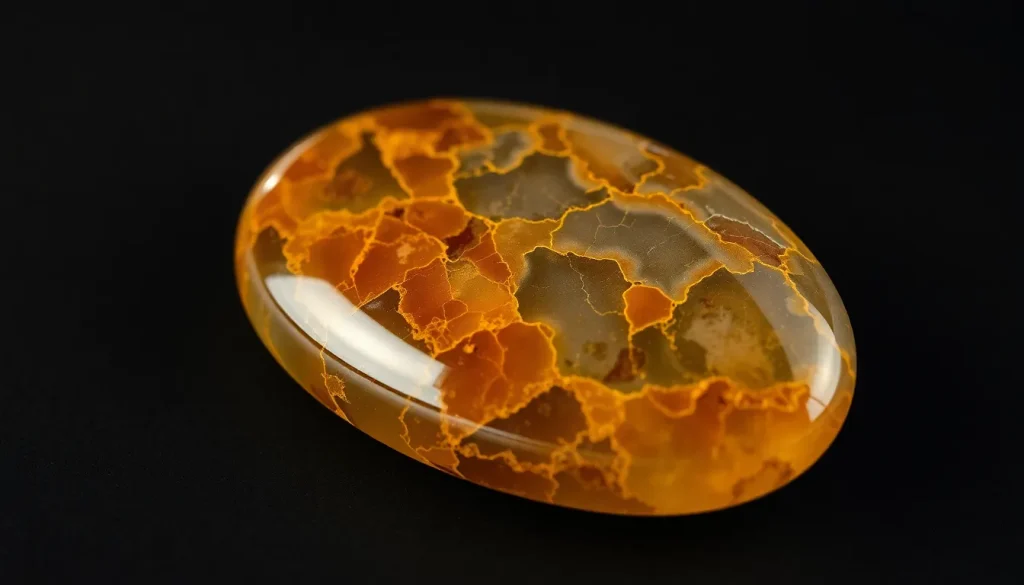
Pietersite is a rare, brecciated form of chalcedony that exhibits a striking, swirling pattern of chatoyant fibers. The stone combines the eye‑like reflectivity of tiger’s eye and hawk’s eye with a matrix of fractured quartz, creating a dynamic, three‑dimensional effect. Colors range from golden‑brown and reddish‑brown to blue, green and multicoloured, making each specimen unique.
History and Origin
The name “Pietersite” honors Adolf Pieters, a South African geologist who first described the material in 1962 after its discovery in the Namib Desert of Namibia. Subsequent deposits have been identified in the Xinjiang region of China, Brazil, and limited occurrences in Canada and Russia. All known sources are brecciated quartz that has undergone mineral replacement and fibrous inclusion, producing the characteristic chatoyancy.
Meaning and Symbolism
In traditional gemstone lore, Pietersite is said to symbolize transformation and inner strength. Its swirling patterns are interpreted as a visual metaphor for the dynamic flow of personal energy, encouraging the wearer to embrace change and pursue personal goals with confidence.
Healing and Metaphysical Properties
Crystal‑healing practitioners attribute several energetic qualities to Pietersite. It is believed to:
- Stimulate the Solar Plexus chakra, fostering self‑confidence and personal power.
- Support emotional balance by helping to release fear and anxiety.
- Promote clarity of thought and decisive action during periods of transition.
These claims are rooted in traditional beliefs and are not supported by medical science. Pietersite should never replace professional medical treatment.
Varieties and Types
Pietersite is classified mainly by its dominant color and the orientation of its chatoyant fibers. Common varieties include:
- Golden Pietersite – Dominated by warm, honey‑golden fibers.
- Reddish Pietersite – Features deep red to brown chatoyancy.
- Blue Pietersite – Rare, with teal or deep blue fibers.
- Multicoloured Pietersite – Displays a mixture of hues, often with green or violet overtones.
All varieties share the same basic mineral composition but differ in trace element content and the geological conditions that formed the brecciation.
Jewelry Uses and Care
Because Pietersite ranks 6.5–7 on the Mohs scale, it is suitable for many types of jewelry, including pendants, earrings, and statement rings. However, its relatively low hardness compared with quartz varieties such as amethyst means it can be scratched by harder gemstones or abrasive cleaning methods.
Recommended care:
- Clean with a soft, lint‑free cloth and mild soapy water; avoid ultrasonic cleaners.
- Store separately from harder stones to prevent scratching.
- Limit exposure to harsh chemicals, extreme heat, and prolonged sunlight, which may affect any surface treatments.
Buying Guide
When purchasing Pietersite, consider the following factors:
- Color and Pattern – Look for vivid, well‑defined chatoyant fibers and a harmonious matrix. Uniform color is rare; a balanced mix is often most valued.
- Clarity – Minor fractures are typical; however, large cracks that compromise durability should be avoided.
- Cut – Cabochon cuts showcase the stone’s depth and movement best. Faceted stones may hide the chatoyancy.
- Origin – Reputable dealers will disclose the source (Namibia, China, Brazil, etc.). Origin can influence price and rarity.
- Treatment Disclosure – Pietersite is generally untreated, but some specimens may be stabilized or dyed. Ask for certification when possible.
For assurance, request a gemological report from a recognized laboratory such as the GIA or a national gem testing institute.
FAQ
What is Pietersite good for?
Pietersite is valued for its striking visual appearance in jewelry and as a focal stone in decorative objects. Traditionally, it is believed to support confidence, emotional balance, and transformation, though these claims are not medically verified.
Is Pietersite rare?
High‑quality Pietersite, especially in vivid colors and with minimal fracturing, is relatively rare. Common sources are Namibia and China, but fine specimens are limited, making the stone more valuable than more abundant quartz varieties.
How can you tell if Pietersite is real?
Real Pietersite shows a three‑dimensional, swirling chatoyant pattern that changes with light. It feels cool to the touch and has a specific gravity around 2.65. Professional testing, such as refractive index measurement or a gemological report, confirms authenticity.
What chakra is Pietersite associated with?
In crystal‑healing traditions Pietersite is most often linked to the Solar Plexus (Manipura) chakra, supporting personal power and confidence. Some practitioners also associate it with the Heart chakra.
How should you clean Pietersite?
Clean Pietersite with mild soapy water and a soft cloth. Avoid ultrasonic cleaners, harsh chemicals, and high‑heat environments. Store separately from harder gemstones to prevent scratching.
Leave a Reply