Short Answer
Overview
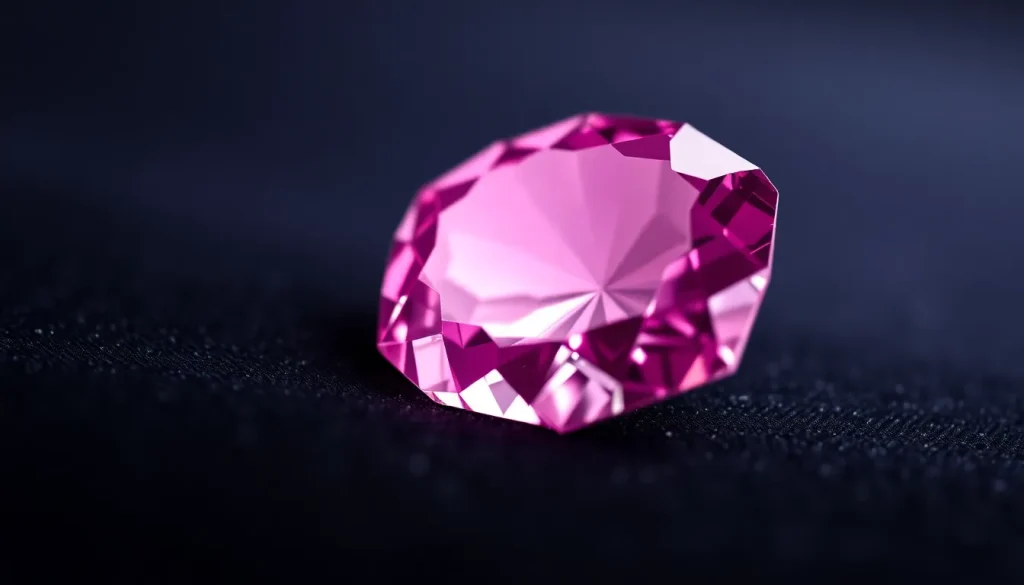
Poudretteite is a rare cyclosilicate mineral first identified in 1965 at the Poudrette quarry on Mont Saint‑Hilaire, Quebec, Canada. Chemically it is a potassium‑sodium beryllium silicate with the formula KNa2BeSi4O10F. Naturally occurring crystals are typically pink to rose‑pink, though colorless specimens also occur. With a Mohs hardness of 7.5–8 and a vitreous luster, poudretteite can be faceted for jewelry, but its extreme scarcity limits its presence in the market.
History and Origin
The mineral was named after the Poudrette family, owners of the quarry where it was first discovered. Initial finds were microscopic and remained a curiosity among mineralogists for decades. In 2002, a larger pink crystal was uncovered in the same region, sparking renewed interest and confirming the gem‑quality potential of the stone. Subsequent discoveries in Madagascar (early 2000s) expanded the known locality, but the Canadian source remains the most historically significant.
Meaning and Symbolism
Traditional gemstone lore associates poudretteite’s soft pink hue with gentle love, emotional healing, and the nurturing of inner compassion. It is often described as a stone that encourages self‑acceptance and the expression of heartfelt truths. In contemporary crystal circles, it is sometimes linked to the awakening of subtle energies and the refinement of personal intentions.
Healing and Metaphysical Properties
Within crystal‑healing belief systems, poudretteite is said to support the heart chakra by fostering unconditional love and emotional balance. Practitioners claim it can aid in releasing past emotional trauma, enhancing empathy, and promoting a calm, meditative state. These attributes are considered metaphysical and are not intended as medical advice.
Varieties and Types
While the mineral itself is chemically uniform, natural variations arise in color and clarity:
- Pink Poudretteite: The most common commercial color, ranging from pale blush to vivid rose.
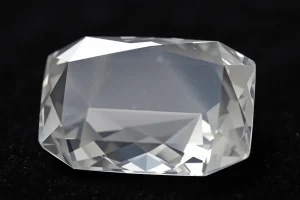
- Colorless Poudretteite: Rare, fully transparent specimens that lack the pink hue.
- Inclusions: Some crystals contain microscopic fluid inclusions that can create a subtle internal sparkle.
No known treatments (e.g., heat or irradiation) are employed to enhance color; the stone’s appearance is entirely natural.
Jewelry Uses and Care
Because of its hardness (7.5–8) and lack of cleavage, poudretteite is suitable for a variety of jewelry settings, especially those that protect the stone from hard knocks. Common applications include pendant settings, earrings, and limited‑edition rings. Care recommendations:
- Clean with warm, soapy water and a soft brush; avoid abrasive cleaners.
- Dry with a lint‑free cloth; do not expose to prolonged steam.
- Store separately from softer gems to prevent scratching.
- Avoid prolonged exposure to direct sunlight, which can fade delicate pink tones over many years.
Buying Guide
When purchasing poudretteite, consider the following criteria:
- Color Saturation: Deep, even pink is generally more valuable than pale or uneven coloration.
- Clarity: Inclusions are acceptable, but large cloudiness reduces brilliance.
- Cut Quality: Well‑proportioned faceting maximizes light performance.
- Origin Documentation: Reputable dealers will provide provenance, especially for stones from Mont Saint‑Hilaire.
- Certification: A gemological laboratory report (e.g., GIA, IGI) confirms authenticity and identifies any treatments.
Due to its rarity, expect a premium price per carat, particularly for stones exceeding 1 carat with high color saturation.
FAQ
What is poudretteite good for?
Poudretteite is valued for its rare pink color and suitability in fine jewelry; traditionally it is believed to promote emotional healing and compassion.
Is poudretteite rare?
Yes. High‑quality pink crystals are extremely scarce, with most known specimens originating from a single Canadian locality and a few recent finds in Madagascar.
How can you tell if poudretteite is real?
Real poudretteite exhibits a hardness of 7.5–8, a vitreous luster, and a specific refractive index (1.610–1.613). Professional gemological testing, such as spectroscopy or a GIA report, is recommended for certainty.
What chakra is poudretteite associated with?
In crystal‑healing traditions, poudretteite is commonly linked to the Crown Chakra, though associations can vary among practitioners.
How should you clean poudretteite?
Clean gently with warm, mildly soapy water and a soft brush. Avoid ultrasonic cleaners and harsh chemicals; dry with a lint‑free cloth and store separately from softer stones.
Leave a Reply