Short Answer
Overview
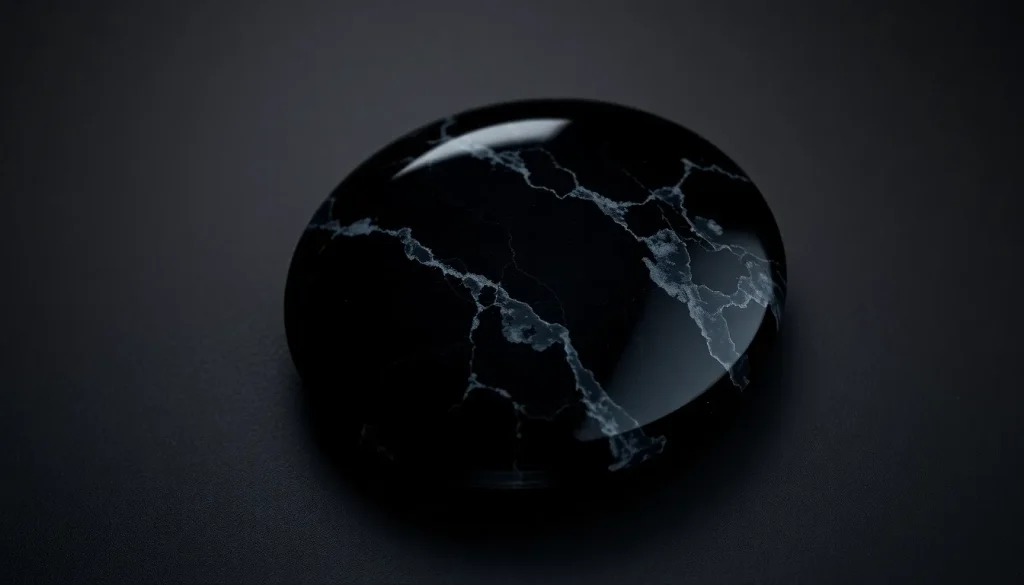
Flint is a cryptocrystalline variety of quartz (SiO₂) that forms as hard, dense nodules or layers within sedimentary rocks such as chalk and limestone. Its most common colors are black, dark gray, and brown, and it displays a conchoidal fracture that made it a preferred material for prehistoric tools. Modern uses include beads, cabochons, and decorative objects, although its brittleness limits extensive jewelry applications.
History and Origin
Flint has been mined and collected since the Paleolithic era. Early humans harvested flint nodules to shape spear points, knives, and fire‑starting tools through a technique known as flintknapping. Archaeological sites across Europe, the British Isles, and North America contain abundant flint artifacts, highlighting its importance in early technology. Geologically, flint forms as silica‑rich groundwater precipitates within fine‑grained sediments, often replacing the original shell material of marine organisms.
Meaning and Symbolism
In many cultures flint is associated with strength, protection, and the power to spark change—literally, the spark that ignites fire. It is considered a stone of courage, helping the wearer confront obstacles and “cut through” negative patterns. Traditional folklore also links flint with clarity of thought and a grounding presence.
Healing and Metaphysical Properties
Crystal‑healing practitioners attribute grounding and protective qualities to flint. It is believed to absorb negative energies, promote mental focus, and assist in releasing emotional blockages. Some users keep flint in meditation spaces to enhance concentration and to “spark” new ideas. These claims are based on tradition and are not medical advice.
Varieties and Types
- Black Flint – The most common variety, deep black to charcoal gray, often found in chalk deposits of the United Kingdom.
- Brown Flint – Exhibits reddish‑brown tones due to iron oxide inclusions; typical of some Midwestern United States locales.
- Band‑ed Flint – Shows concentric layers of differing shades, creating a striped appearance.
- Fire‑spark Flint – Naturally contains pyrite or marcasite inclusions that produce bright sparks when struck.
Jewelry Uses and Care
Because flint lacks true cleavage but fractures conchoidally, it can be cut into cabochons, beads, or small pendants. Its hardness of 6.5–7 on the Mohs scale allows polishing, yet the stone can chip if struck. Cleaning should be done with a soft, damp cloth and mild soap; avoid ultrasonic cleaners and harsh chemicals. Store flint pieces separately from harder gemstones to prevent scratching.
Buying Guide
- Color and Uniformity – Look for a deep, even black or brown hue without excessive mottling unless a specific pattern is desired.
- Surface Finish – Genuine flint has a waxy to vitreous luster; a glossy, glass‑like surface may indicate resin‑filled imitation.
- Weight and Density – Flint feels heavier than many agates of similar size due to its higher specific gravity (≈2.6).
- Origin Documentation – Reputable dealers can provide locality information; major sources include the UK, France, Germany, and the United States.
- Treatment Disclosure – Some commercial flint is stabilized with resins; ask for treatment details if clarity is a concern.
FAQ
What is Flint good for?
Flint is prized for its hardness and ability to produce sharp edges, making it ideal for historic toolmaking. In modern times it is used for beads, cabochons, and decorative pieces, and is traditionally believed to offer grounding and protective energy.
Is Flint rare?
High‑quality, uniformly colored flint is less common than ordinary chert, especially in large, polished pieces. However, flint occurs in many sedimentary basins worldwide, so it is not considered a rare gemstone overall.
How can you tell if Flint is real?
Real flint feels heavy for its size, shows a waxy to vitreous luster, and fractures conchoidally rather than breaking along smooth planes. A professional gemologist can confirm its silica composition with a refractometer or spectroscopic test.
What chakra is Flint associated with?
Traditional crystal‑healing sources often link flint to the Root (Muladhara) chakra, emphasizing grounding, stability, and protective qualities.
How should you clean Flint?
Clean flint with a soft, damp cloth and mild soap. Avoid ultrasonic cleaners, harsh chemicals, and extreme heat, as the stone can chip or become cloudy if treated with abrasive methods.
Leave a Reply