Short Answer
Overview
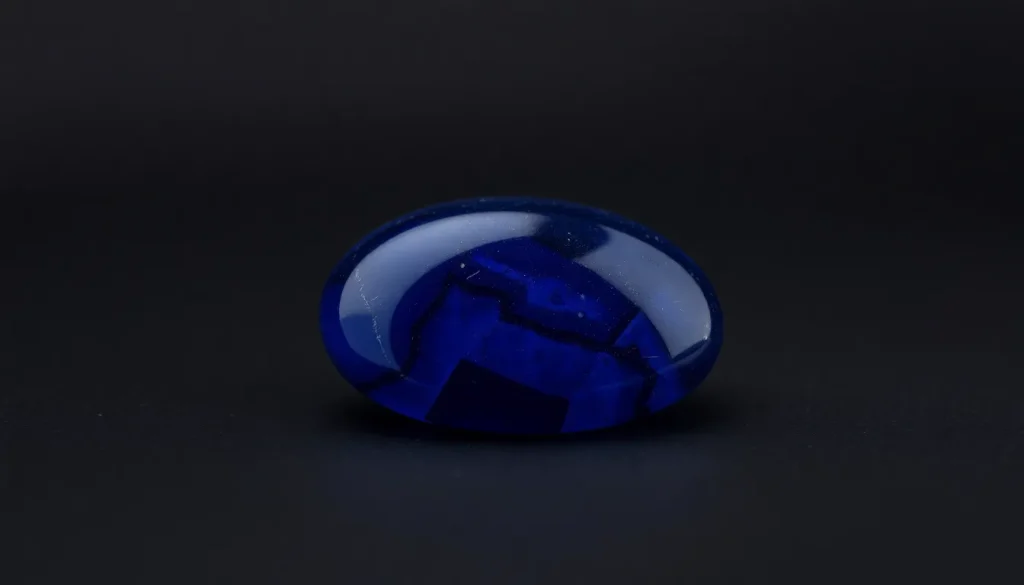
Crocidolite is the fibrous, deep‑blue variety of the amphibole mineral riebeckite. Its chemical formula is Na₂(Fe²⁺₃Fe³⁺₂)Si₈O₂₂(OH)₂, placing it in the silicate class, specifically the amphibole group. Crystallising in the monoclinic system, it exhibits a vitreous to silky luster and ranges from translucent to opaque. The stone’s characteristic indigo to black‑blue color, perfect {110} cleavage, and relatively high specific gravity (2.9–3.1) make it easily identifiable among other blue minerals.
History and Origin
The name “crocidolite” derives from the Greek word krokos (saffron) and lithos (stone), referencing its vivid blue‑violet hue. First described in the late 19th century, crocidolite was mined extensively for its heat‑resistant fibrous properties and became a major source of blue asbestos. Major historic localities include the Canadian province of Quebec, the Ural Mountains of Russia, South Africa’s Transvaal, and the Murray Basin of Australia. Although its industrial use declined after health concerns were recognised, polished crocidolite specimens have occasionally been set in jewelry as cabochons or beads.
Meaning and Symbolism
In traditional gemstone lore, the intense blue of crocidolite symbolizes depth, intuition, and inner truth. Its rarity and the dramatic contrast of its color against a dark background have made it a symbol of mystery and resilience. Collectors often value crocidolite for its striking appearance and the story of transformation from a hazardous mineral to a decorative object.
Healing and Metaphysical Properties
Within crystal‑healing traditions, crocidolite is believed to aid communication, encourage honest self‑expression, and calm emotional turbulence. Practitioners associate the stone with the Throat Chakra, suggesting it can support clear speech and creative articulation. Some also link it to the Third Eye Chakra for heightened intuition. These claims are based on folklore and should not be taken as medical advice.
Varieties and Types
- Fibrous crocidolite – the classic asbestos‑type material, rarely used in jewelry because of health risks.
- Massive riebeckite – a non‑fibrous, compact form often marketed simply as “blue riebeckite” and considered safer for decorative use.
- Polished cabochons – cut from massive riebeckite or carefully stabilized crocidolite, these are the most common jewelry‑grade specimens.
Jewelry Uses and Care
Because raw crocidolite fibers are hazardous when inhaled, reputable jewelers only use fully stabilized, polished stones that pose no health risk. The stone’s Mohs hardness of 5–6 makes it suitable for earrings, pendants, and beads, but it should be protected from harsh impacts. Cleaning is best performed with warm, soapy water and a soft cloth; avoid ultrasonic cleaners, steam, or harsh chemicals that could damage any surface treatments.
Buying Guide
- Verify that the stone is a polished, massive form (often labelled as “riebeckite” or “stabilized crocidolite”).
- Request a gem‑ological report confirming its identity and any treatments.
- Beware of very low‑priced “blue asbestos” that may be raw fibers – these are unsuitable for jewelry.
- Inspect for uniform color and a smooth, vitreous surface; excessive cloudiness can indicate poor quality or excessive porosity.
- Purchase from reputable dealers who adhere to health‑safety regulations concerning asbestos minerals.
FAQ
What is Crocidolite good for?
Crocidolite is prized for its intense blue color in decorative cabochons and beads, while traditional crystal‑healing beliefs associate it with enhanced communication and emotional calm.
Is Crocidolite rare?
High‑quality, polished crocidolite is relatively rare because most natural material is fibrous asbestos, which is unsuitable for jewelry. Rarity depends on locality, color depth, and whether the stone has been safely stabilized.
How can you tell if Crocidolite is real?
Real crocidolite displays a deep indigo hue, perfect {110} cleavage, and a vitreous‑to‑silky luster. Because raw fibers are hazardous, genuine jewelry pieces are usually labeled as polished riebeckite or stabilized crocidolite and should be accompanied by a gem‑ological report.
What chakra is Crocidolite associated with?
In crystal‑healing traditions, crocidolite is linked to the Throat Chakra, supporting clear expression, and is also sometimes connected to the Third Eye Chakra for intuition.
How should you clean Crocidolite?
Clean polished crocidolite with warm, mildly soapy water and a soft cloth. Avoid ultrasonic cleaners, steam, harsh chemicals, or high‑impact abrasion, as the stone’s moderate hardness and possible surface treatments can be damaged.
Leave a Reply