
Short Answer
Overview
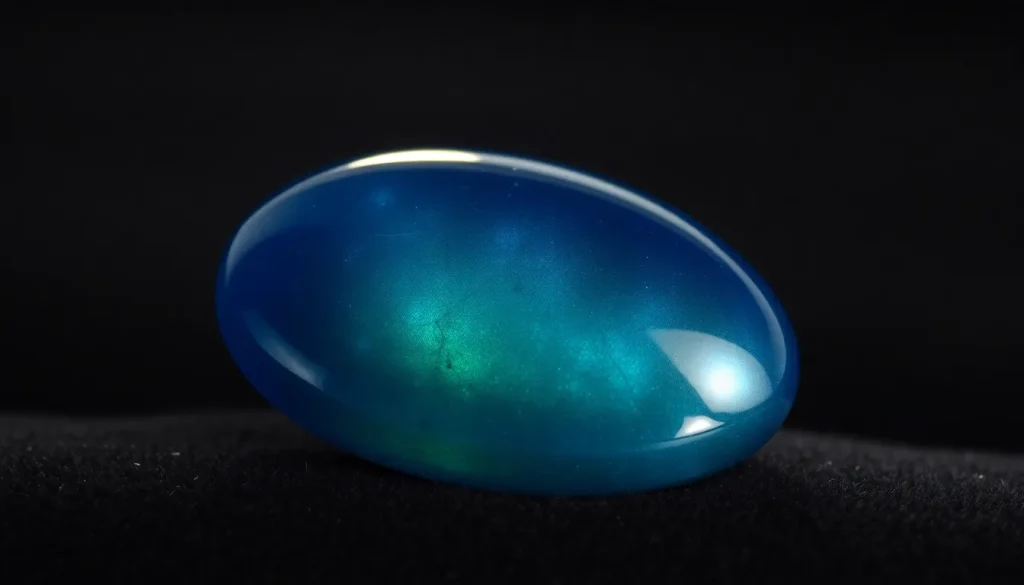
Serendibite is a scarce silicate mineral that occurs chiefly in deep‑blue, blue‑green, green, black, or dark brown hues. Its high refractive index (1.71–1.73) and vitreous to sub‑adamantine luster give it a striking brilliance that rivals more common gemstones. Because it is found only in a few localities and gem‑quality crystals are exceptionally limited, serendibite is primarily of interest to collectors, high‑end designers, and gemstone enthusiasts seeking something truly unique.
History and Origin
The mineral was first described in 1902 from a deposit in the gem‑bearing gravels of Sri Lanka, historically known as Serendib, from which it takes its name. Early specimens were minute and of low quality, leading to little commercial attention. In the late 20th century, larger, clearer crystals were identified in Myanmar (formerly Burma) and later in Tanzania and Madagascar, expanding the known geographic range. Despite these discoveries, gem‑grade serendibite remains extremely limited, reinforcing its reputation as a collector’s treasure.
Meaning and Symbolism
Traditional gemstone lore associates serendibite with deep insight, inner wisdom, and the ability to see beyond ordinary perception. Its intense blue tones are said to symbolize the vastness of the sky and the depths of the ocean, encouraging calm, clarity, and spiritual expansion. In jewelry, it is sometimes chosen to represent rare beauty and the value of perseverance.
Healing and Metaphysical Properties
Within crystal‑healing circles, serendibite is believed to activate the Third Eye chakra, fostering intuition, psychic awareness, and mental clarity. Practitioners claim it can aid in releasing old emotional patterns and promote a sense of inner peace. These attributes are based on tradition and belief; they are not medical facts and should not replace professional health advice.
Varieties and Types
All serendibite belongs to the same mineral species, but gem‑quality material varies in colour and clarity:
- Deep‑blue serendibite – the most prized, displaying a saturated navy hue.
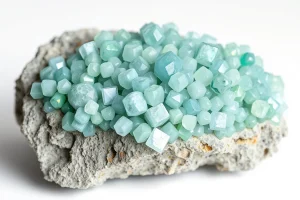
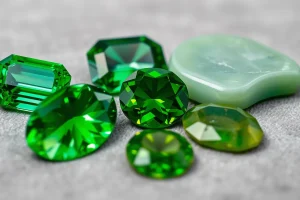
- Blue‑green/green serendibite – exhibits turquoise to emerald tones, often with a subtle play of colour.
- Black or dark brown serendibite – opaque to translucent, valued mainly by collectors.
Because the mineral forms in massive or tabular aggregates rather than well‑defined crystals, most gemstones are cut as cabochons or free‑form stones to showcase colour rather than brilliance.
Jewelry Uses and Care
With a Mohs hardness of 6.5–7, serendibite is suitable for rings, pendants, earrings, and brooches provided the setting offers protection against knocks. Its conchoidal fracture and lack of cleavage mean it can chip if struck sharply. Cleaning should be gentle: use lukewarm water, a soft brush, and mild soap. Avoid ultrasonic cleaners and harsh chemicals, especially on treated or polished surfaces. Store each piece separately in a soft pouch to prevent abrasion from harder gemstones.
Buying Guide
When purchasing serendibite, consider the following factors:
- Colour intensity – deep, uniform blue or blue‑green hues are most valuable.
- Clarity – fewer inclusions and a smooth, eye‑clean surface increase desirability.
- Cut – well‑executed cabochons that enhance colour without excessive grinding are preferred.
- Origin documentation – reputable dealers should provide provenance, especially for stones from Sri Lanka, Myanmar, or Tanzania.
- Certification – a gem‑ological report from GIA, IGI, or a recognized laboratory confirms authenticity and identifies any treatments.
Due to its rarity, expect a premium price per carat, and be wary of synthetic or mis‑identified stones marketed as serendibite.
FAQ
What is serendibite good for?
Serendibite is prized for its rare, deep‑blue colour and high brilliance, making it a collector’s gemstone and a unique choice for high‑end jewelry. Traditional beliefs also link it to intuition and spiritual insight.
Is serendibite rare?
Yes. Gem‑quality serendibite is extremely scarce, occurring only in a few localities such as Sri Lanka, Myanmar, Tanzania, and Madagascar. Large, clear stones are especially rare, which drives high market values.
How can you tell if serendibite is real?
Authentic serendibite displays a high refractive index (≈1.72), a vitreous to sub‑adamantine luster, and a deep blue‑green colour with no artificial fluorescence. Professional verification using a gem‑ological laboratory and a detailed report is recommended.
What chakra is serendibite associated with?
In crystal‑healing traditions, serendibite is linked to the Third Eye chakra, supporting intuition, mental clarity, and inner vision.
How should you clean serendibite?
Clean serendibite gently with lukewarm soapy water and a soft brush. Avoid ultrasonic cleaners, harsh chemicals, and high‑impact polishing, as the stone can be brittle and may chip under stress.
Leave a Reply