

Short Answer
Overview
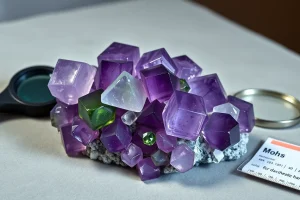
Hackmanite is a striking variety of the mineral sodalite, belonging to the halide (feldspathoid) group. It is most noted for its photo‑chromic property: exposure to ultraviolet (UV) light causes the stone to shift from a pale, often colourless or light pink tone to a deep violet or purple hue. This reversible colour change makes hackmanite a favorite among gem collectors and designers seeking dynamic jewelry pieces.
History and Origin
The name “hackmanite” honors Charles Francis Hackman, an American mineralogist who first described the mineral in 1916 after specimens were found in the famous Mont Saint‑Hilaire locality of Quebec, Canada. Early studies linked the colour change to the presence of sulphur substituting for chlorine in the crystal lattice. Since then, additional deposits have been identified in Namibia, the Ural region of Russia, and a few European localities, each yielding specimens with varying intensity of the photo‑chromic effect.
Meaning and Symbolism
In traditional gemstone lore, hackmanite is associated with transformation and inner awakening. Its ability to change colour is taken as a metaphor for personal growth, encouraging the wearer to embrace change and reveal hidden potentials. The deep violet hue that emerges under UV light is often linked to intuition, spiritual insight, and the mysteries of the night.
Healing and Metaphysical Properties
Crystal‑healing practitioners attribute several metaphysical qualities to hackmanite. It is believed to stimulate the Crown Chakra, enhancing spiritual connection, meditation, and higher‑dimensional awareness. Some claim it assists in releasing emotional blockages, fostering creativity, and promoting psychic development. These beliefs are traditional and not based on medical science; hackmanite should not be used as a substitute for professional health care.
Varieties and Types
- Photo‑chromic Hackmanite – Exhibits a reversible colour change when exposed to UV light; the most sought‑after form for collectors.
- Non‑photo‑chromic Sodalite (Pink/Blue) – Chemically similar but lacks the UV‑induced transformation; often marketed simply as pink or blue sodalite.
- Heat‑treated Hackmanite – Some stones are heat‑treated to enhance colour stability; treatment should be disclosed by sellers.
Jewelry Uses and Care
Hackmanite is cut into cabochons, beads, and faceted stones for rings, pendants, and earrings. Its Mohs hardness of 5.5–6 makes it suitable for occasional wear but recommends avoiding harsh impact. Because the stone can be sensitive to prolonged UV exposure, prolonged sunlight may permanently deepen the colour, which some owners consider desirable.
Care recommendations:
- Clean with a soft, lint‑free cloth and lukewarm soapy water; avoid ultrasonic cleaners.
- Store away from other hard gemstones to prevent scratching.
- Limit exposure to intense UV light if you wish to preserve the original colour state.
Buying Guide
When purchasing hackmanite, consider the following factors:
- Photo‑chromic response – Ask the seller to demonstrate the colour change with a UV source.
- Colour intensity – Deeper violet after UV exposure generally indicates higher quality.
- Clarity – Inclusions are common; a clear zone is preferred for cabochons.
- Treatment disclosure – Ensure any heat or radiation treatments are fully disclosed.
- Certification – Reputable gem labs (e.g., GIA, IGI) can provide identification reports.
Prices vary widely based on size, colour response, and origin. Specimens from Mont Saint‑Hilaire are often valued higher due to historic significance.
FAQ
What is hackmanite good for?
Hackmanite is prized for its unique photo‑chromic colour change, making it popular in dynamic jewellery designs. Traditionally, it is also believed to aid spiritual insight and personal transformation, though these are metaphysical beliefs, not medical facts.
Is hackmanite rare?
High‑quality, strongly photo‑chromic hackmanite is relatively rare, especially from historic localities such as Mont Saint‑Hilaire. More common specimens exist, but intense violet colour after UV exposure and good clarity are less frequent.
How can you tell if hackmanite is real?
A genuine hackmanite will display a reversible colour change under a UV lamp. Look for a clear, vitreous stone with a typical sodalite crystal habit. Professional gemological testing (e.g., spectroscopy or GIA certification) provides definitive verification.
What chakra is hackmanite associated with?
In crystal‑healing traditions, hackmanite is most often linked to the Crown Chakra, supporting spiritual awareness and higher‑consciousness work.
How should you clean hackmanite?
Clean hackmanite gently with lukewarm soapy water and a soft cloth. Avoid ultrasonic cleaners, harsh chemicals, and prolonged UV exposure if you wish to preserve its original colour before activation.
Leave a Reply