
Short Answer
Overview
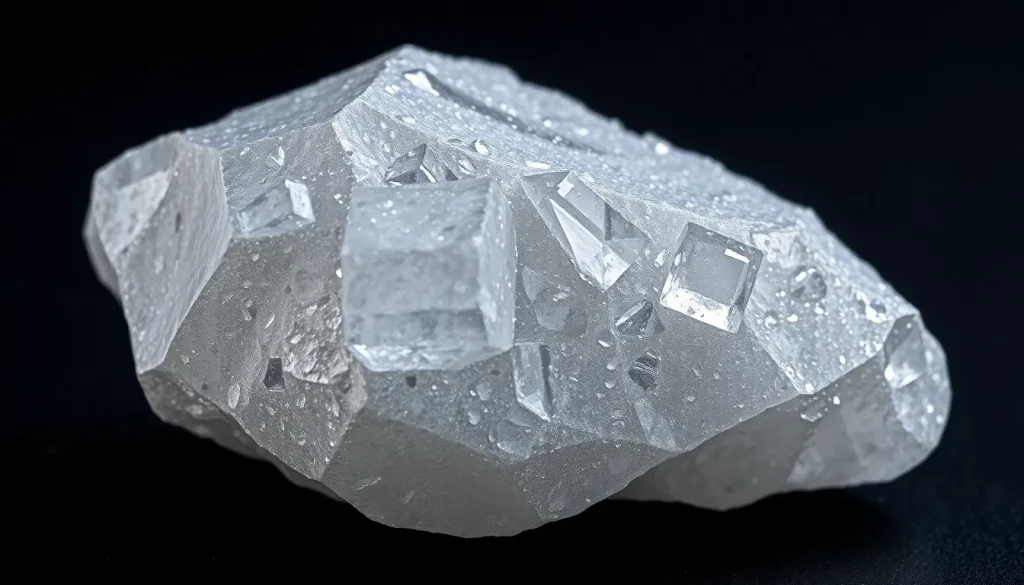
Sperrylite is a rare platinum arsenide mineral, chemically defined as PtAs2. It occurs in massive, granular, or euhedral crystal forms with a bright metallic luster and a steel‑gray to silvery‑white color. Although primarily valued as an ore of platinum, the mineral’s high specific gravity, distinct metallic sheen, and cubic crystal habit have attracted occasional use in high‑end jewelry and as a collector’s gemstone.
History and Origin
The mineral was first described in 1889 from the Sudbury Basin in Ontario, Canada, and was named in honor of the American geologist Francis L. Sperry, who contributed to the study of the region’s ore deposits. Sperrylite forms in magmatic sulfide deposits that are rich in the platinum‑group elements (PGEs). It crystallizes from high‑temperature, sulfur‑poor magmas and is typically found associated with other PGMs such as cooperite (PtS), braggite (PtS, PdS) and native platinum.
Meaning and Symbolism
In modern metaphysical literature, sperrylite is sometimes associated with themes of endurance, inner strength, and the “metallic heart.” Its dense, reflective surface is said to symbolize clarity of purpose and the ability to “reflect” one’s true intentions. Because it contains platinum, a metal long linked with wealth and status, sperrylite is occasionally regarded as a symbol of personal value and resilience.
Healing and Metaphysical Properties
Traditional crystal‑healing beliefs attribute the following properties to sperrylite:
- Grounding and protection: The mineral’s heavy, metallic nature is thought to anchor energy, helping to shield the wearer from negative influences.
- Enhancing willpower: Some practitioners claim it can strengthen determination and support the pursuit of lofty goals.
- Balancing the root chakra: While not universally agreed upon, sperrylite is occasionally linked to the Root (Muladhara) chakra for its stabilizing qualities.
These claims are not scientifically verified and should not replace professional medical advice.
Varieties and Types
Sperrylite does not occur in distinct color varieties; however, it can be distinguished by crystal habit and associated mineral assemblages:
- Massive sperrylite: Irregular grains or compact masses, most common in ore deposits.
- Euhedral crystals: Well‑formed cubic or octahedral crystals, prized by collectors for their geometric clarity.
- Alloyed specimens: Occasionally contains minor amounts of palladium, rhodium, or nickel, which can subtly affect color and density.
Jewelry Uses and Care
Because sperrylite is extremely dense (specific gravity >10) and relatively brittle, its use in jewelry is limited to setting styles that protect the stone, such as bezel or channel settings. It is most often showcased in pendants, cufflinks, or as an accent in high‑end pieces where the metallic shine can be highlighted.
Care instructions:
- Clean with a soft, lint‑free cloth; avoid abrasive cleaners.
- Do not expose to strong acids or chlorine, which can attack the surface.
- Store separately from softer gemstones to prevent scratching.
- Because of its hardness (6.5–7), it can withstand everyday wear, but sudden impacts may cause fracture.
Buying Guide
When purchasing sperrylite, consider the following factors:
- Origin and provenance: Certified specimens from known localities (e.g., Sudbury, Bushveld) are more reliable.
- Crystal quality: Look for well‑formed, unfaulted crystals with a bright metallic luster.
- Weight and size: The high specific gravity means even small pieces feel heavy; verify weight against dimensions.
- Treatment disclosure: Genuine sperrylite is rarely treated, but some sellers may coat the surface to enhance shine. Request documentation.
- Certification: Reputable gemological labs can provide a mineral identification report.
Because sperrylite is primarily an industrial mineral, it commands premium prices only when presented as a gemstone or collector’s item. Expect prices to vary widely based on size, clarity, and rarity of the crystal form.
FAQ
What is sperrylite good for?
Sperrylite is primarily an industrial source of platinum, but it is also prized by collectors for its metallic luster and cubic crystal form, and occasionally used in high‑end jewelry as an accent stone.
Is sperrylite rare?
High‑grade, well‑formed sperrylite crystals are rare because the mineral forms only in specific platinum‑group element deposits. Fine specimens suitable for jewelry are especially uncommon.
How can you tell if sperrylite is real?
Real sperrylite feels very heavy for its size, displays a bright metallic luster, and shows a blackish‑gray streak. Professional testing, such as X‑ray diffraction or a certified mineral identification report, is recommended for certainty.
What chakra is sperrylite associated with?
In crystal‑healing traditions, sperrylite is sometimes linked to the Root (Muladhara) chakra for its grounding qualities, though no single standard chakra association exists.
How should you clean sperrylite?
Use a soft, lint‑free cloth to gently wipe the surface. Avoid abrasive cleaners, ultrasonic baths, and strong acids. Store separately from softer gemstones to prevent scratches.
Leave a Reply