
Short Answer
Overview
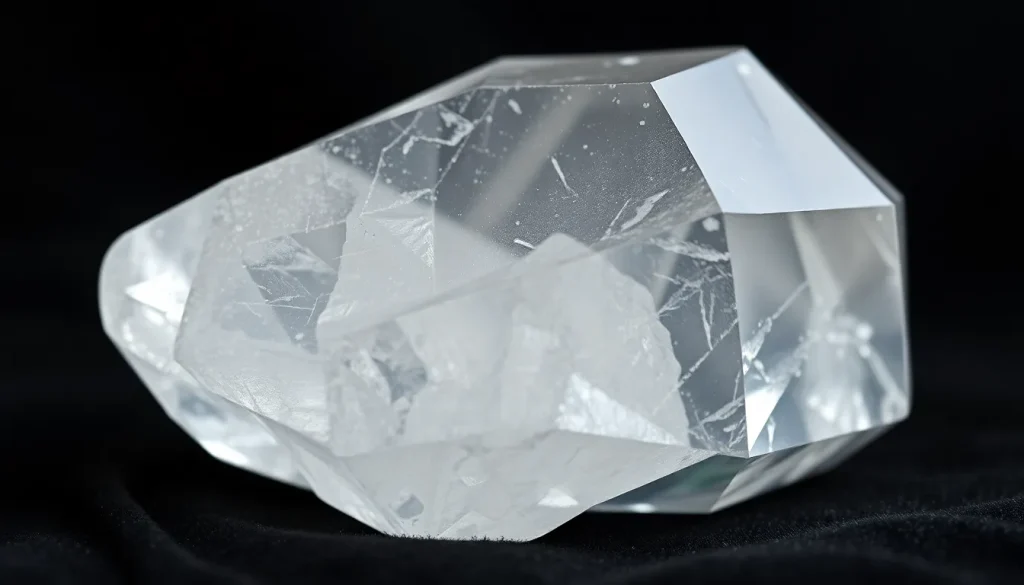
Analcime is a member of the zeolite group, chemically a hydrated sodium aluminosilicate. It typically appears colourless to white, sometimes with pale pink or gray tones, and forms cubic crystals that are occasionally used as a collector’s stone or in ornamental jewelry.
History and Origin
First described in 1795 from a locality in Iceland, the name derives from the Greek “analkimos” meaning “weakly alkaline,” reflecting its low‑pH reaction. Analcime forms in low‑temperature hydrothermal veins, volcanic rocks, and sedimentary deposits where sodium‑rich fluids interact with feldspar or volcanic glass.
Meaning and Symbolism
In traditional gemstone lore, Analcime is said to represent clarity of thought and emotional balance. Its clear, unassuming appearance is associated with honesty, modesty, and a gentle encouragement to speak one’s truth.
Healing and Metaphysical Properties
Crystal‑healing practitioners attribute Analcime with calming nervous tension, enhancing intuition, and supporting the throat and crown chakras. It is believed to aid in meditation, promote mental clarity, and assist in releasing old emotional patterns. These properties are considered metaphysical and are not a substitute for medical treatment.
Varieties and Types
While the mineral itself is uniform, collectors distinguish specimens by colour and crystal habit:
- Colourless Analcime – most common, prized for its transparency.
- Pale Pink Analcime – occasional trace of iron gives a gentle blush.
- Gray‑white Analcime – slightly darker, often found in volcanic tuff.
Jewelry Uses and Care
Analcime’s Mohs hardness of 5–5.5 limits its use to pendants, earrings, and bezel‑set pieces that are not subject to heavy wear. Because the stone can be brittle along its perfect {100} cleavage, settings should protect the edges. Cleaning can be done with warm, soapy water and a soft brush; avoid ultrasonic cleaners and harsh chemicals.
Buying Guide
When purchasing Analcime consider the following factors:
- Colour and Clarity – Colourless or lightly tinted stones with minimal inclusions are most valued.
- Cut and Carat – Cubic crystals are often cut as cabochons; larger, well‑formed cubes are rare and command higher prices.
- Origin – Provenance from reputable localities such as the United States (Wyoming, Oregon), Canada, or Japan can add confidence.
- Treatment Disclosure – Analcime is rarely treated, but any heat or dye should be disclosed by the seller.
FAQ
What is Analcime good for?
Analcime is used as a collector’s mineral and in modest jewelry pieces; traditionally it is believed to promote mental clarity and emotional balance.
Is Analcime rare?
Analcime is relatively common in suitable geological settings, but high‑quality, clear, well‑formed cubic specimens are less frequent and can be more valuable.
How can you tell if Analcime is real?
Check for its cubic crystal habit, hardness of 5–5.5, and a white streak. Professional gemologists can confirm identity with optical microscopy and X‑ray diffraction.
What chakra is Analcime associated with?
In crystal‑healing traditions Analcime is linked to the Crown Chakra, and some practitioners also associate it with the Third Eye Chakra.
How should you clean Analcime?
Clean Analcime with warm, mild soapy water and a soft brush; avoid ultrasonic cleaners, steam, and harsh chemicals that could damage its surface or any treatments.
Leave a Reply