
Short Answer
Overview
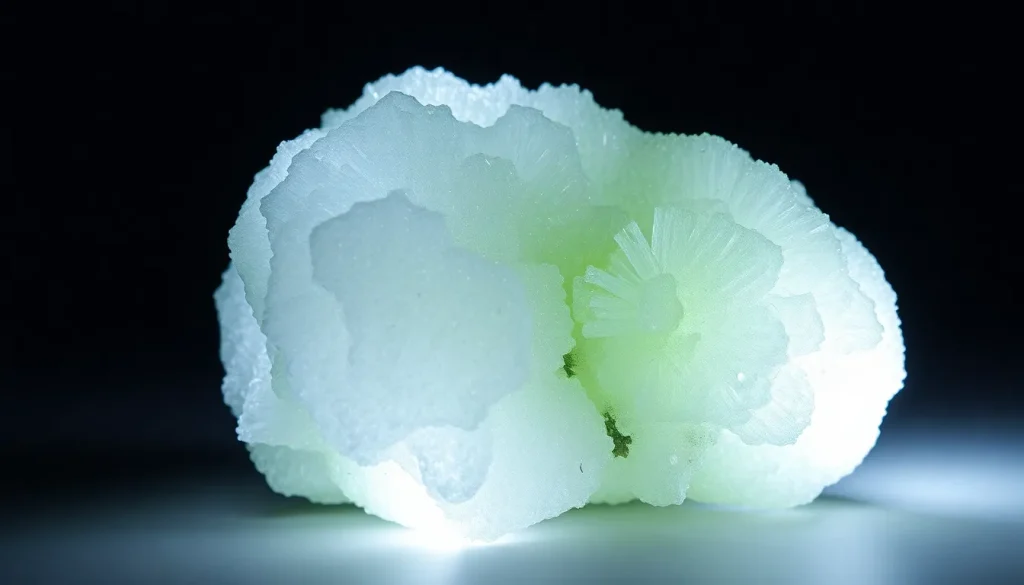
Ulexite is a sodium calcium borate mineral with the chemical formula NaCaB5O6(OH)6·5H2O. It crystallises in the monoclinic system and is best known for its remarkable fiber‑optic property that transmits light along parallel fibers, creating a miniature “television” image when illuminated – a phenomenon that has earned it the nickname “TV rock.”
Typical specimens are white, colourless, or display pale shades of green, yellow, or brown. The mineral is relatively soft (Mohs hardness 2.5) and has a vitreous to pearly luster. Because of its unique optical effect, ulexite is popular among collectors, metaphysical practitioners, and designers of novelty jewelry.
History and Origin
The mineral was first described in 1868 by French mineralogist Henri-Louis Duhamel du Monceau after its discovery in the Ulex (now Ulexite) deposit of the White Pine County, Nevada, United States. The name derives from the German chemist Georg Ludwig Ulex, who studied borate minerals in the 19th century.
Ulexite is found in evaporite deposits where boron‑rich brines have precipitated alongside calcium and sodium. Important localities include:
- Nevada (USA) – the classic White Pine County deposits.
- Atacama Desert, Chile.
- Murcia region, Spain.
- Anti‑Atlas, Morocco.
- Kola Peninsula, Russia.
- Anatolia, Turkey.
In each locality the mineral forms as fibrous or massive aggregates, often intergrown with other borates such as colemanite and borax.
Meaning and Symbolism
In gemstone folklore, ulexite is associated with clarity of perception and the ability to “see through” confusion. Its fiber‑optic property is interpreted as a symbol of inner vision, communication, and the transmission of ideas. Because the mineral can display moving images when light passes through it, it is sometimes linked to imagination, creativity, and the “window to other worlds.”
Healing and Metaphysical Properties
Crystal‑healing practitioners attribute the following traditional beliefs to ulexite:
- Clarity and Insight: The stone is thought to enhance mental clarity, helping the user focus on goals and see situations more objectively.
- Communication: Its “TV‑like” effect is said to aid in expressing thoughts clearly and listening to others.
- Emotional Balance: Some claim it can soothe anxiety and promote a calm, centered state.
These properties are based on traditional beliefs and are not intended as medical advice.
Varieties and Types
Ulexite occurs in several forms, distinguished mainly by colour and habit:
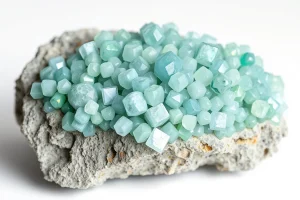
- White/Colourless: The most common, often fibrous and translucent.
- Pale Green: Caused by trace amounts of iron or copper.
- Yellow‑Brown: Resulting from inclusions of iron oxide or organic material.
- Massive: Large, compact aggregates lacking the distinct fibrous texture.
All varieties share the same chemical composition; colour variations are due to minor impurities.
Jewelry Uses and Care
Because ulexite is soft (hardness 2.5) and has perfect cleavage, it is unsuitable for everyday wear in rings or bracelets that endure impact. However, it is occasionally used in:
- Cabochons set in protective bezel settings.
- Pendants and earrings where the stone is displayed rather than subjected to abrasion.
- Artistic pieces that showcase the fiber‑optic effect, often back‑lit with LED illumination.
Care instructions:
- Handle with care – avoid dropping or striking the stone.
- Clean with a soft, lint‑free cloth; avoid ultrasonic cleaners and harsh chemicals.
- Store separately from harder gemstones to prevent scratching.
- If the stone is back‑lit, protect the light source from direct exposure to moisture.
Buying Guide
When selecting ulexite, consider the following factors:
- Clarity of the fiber‑optic effect: Look for well‑defined, parallel fibers that transmit light clearly.
- Colour and Transparency: High‑quality specimens are often colourless to pale‑green and display good translucency.
- Size and Shape: Larger, intact fibers are prized by collectors; for jewelry, a clean cabochon or polished slice works best.
- Treatment Disclosure: Some specimens are artificially back‑lit or combined with resin; reputable sellers should disclose any enhancements.
- Certification: For valuable pieces, request a gemological report from a recognized laboratory.
Because ulexite is relatively abundant in certain localities, price is generally modest, but high‑quality, well‑preserved fiber‑optic specimens can command higher values.
FAQ
What is ulexite good for?
Ulexite is prized by collectors for its unique fiber‑optic effect and is occasionally used in decorative jewelry. In crystal‑healing traditions it is believed to promote mental clarity and enhance communication.
Is ulexite rare?
Ulexite is not extremely rare; it occurs in several borate‑rich deposits worldwide. High‑quality specimens with a strong fiber‑optic display are less common and may be more valuable.
How can you tell if ulexite is real?
Real ulexite shows a distinct fibrous texture and transmits light along its fibers. It is relatively soft (hardness 2.5) and has perfect cleavage. Professional gemological testing can confirm its composition and identify any synthetic or treated imitations.
What chakra is ulexite associated with?
Traditional crystal‑healing sources do not assign a single standard chakra to ulexite; some practitioners associate it with the Crown or Third Eye due to its visual properties, but there is no universally accepted chakra link.
How should you clean ulexite?
Clean ulexite gently with a soft, lint‑free cloth. Avoid ultrasonic cleaners, steam, or harsh chemicals. Store it separately from harder gemstones to prevent scratches, and keep any back‑lit pieces away from moisture.
Leave a Reply