
Short Answer
Direct Answer
Preserving soft mineral specimens—typically those with a Mohs hardness of 5 or below—requires a strategy focused on minimizing physical friction, controlling atmospheric moisture, and preventing chemical reactions. Unlike hard gemstones like diamonds or sapphires, soft minerals such as calcite, fluorite, talc, and gypsum are highly susceptible to surface abrasions and environmental decay. The core objective is to isolate the specimen from external stressors using archival-grade materials and stable climate controls.
Relevant Conditions
Several environmental and physical factors can lead to the rapid deterioration of soft minerals. Understanding these conditions is essential for selecting the correct storage method:
- Mechanical Stress: Soft minerals can be scratched by harder minerals, dust particles (which often contain quartz), or even improper cleaning tools.
- Hygroscopic Sensitivity: Some soft minerals are water-soluble or can dehydrate, leading to cracking or loss of luster (e.g., certain evaporites).
- Photodegradation: Many soft minerals, particularly those with organic components or specific trace elements, are light-sensitive and may fade when exposed to UV rays.
- Chemical Reactivity: Acidic environments or certain plastics (which off-gas volatile organic compounds) can etch the surface of soft carbonates.
Recommended Steps
To ensure the longevity of your collection, follow these professional preservation protocols:
1. Selection of Support Materials
Avoid using acidic cardboard or standard adhesives. Instead, utilize the following:

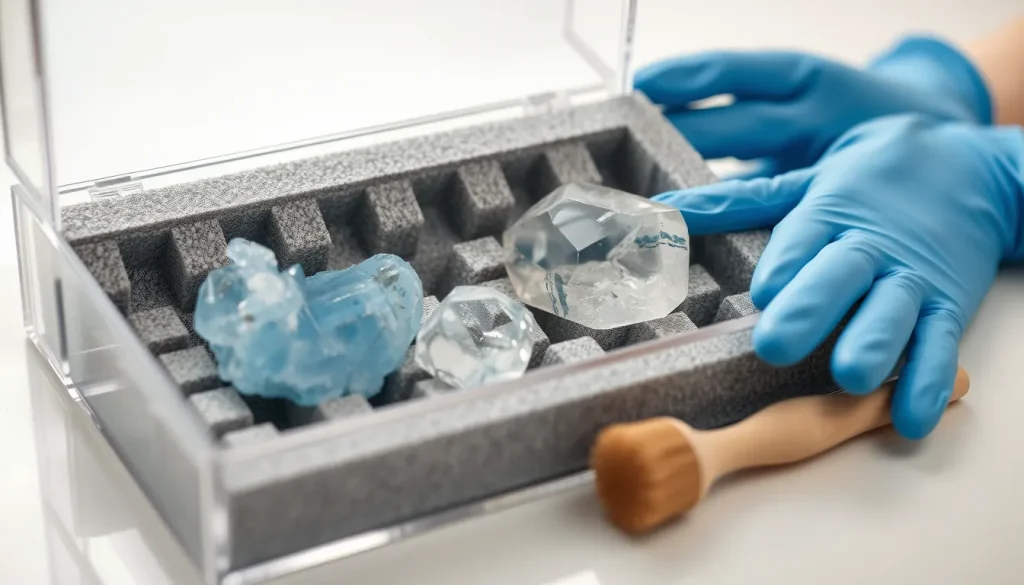
- Acid-free Foam: Use Plastazote or similar closed-cell polyethylene foams to cradle the specimen.
- Archival Paper: Use pH-neutral, lignin-free paper for labeling and wrapping.
- Padded Containers: Store specimens in individual compartments to prevent them from rubbing against one another.
2. Environmental Control
Maintain a stable environment to prevent chemical shifts:
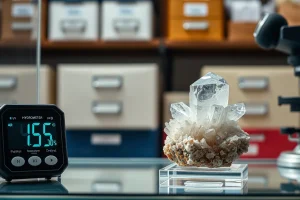
- Humidity Regulation: Use silica gel packets in airtight containers for minerals prone to hydration, or maintain a steady 40-50% RH for most specimens.
- Lighting: Store specimens in dark cabinets or use LED lighting with UV filters to prevent color fading.
- Temperature: Avoid storing specimens near heat sources (radiators) or in areas prone to extreme temperature swings.
3. Handling and Cleaning
Improper handling is the leading cause of damage to soft minerals. Follow these rules:
- Gloves: Always wear powder-free nitrile gloves to prevent skin oils from reacting with the mineral surface.
- Cleaning: Use a soft-bristled brush or a handheld air blower.
Expert Tip: Never use ultrasonic cleaners or harsh chemical solvents on soft minerals, as these can cause structural fractures or dissolve the specimen entirely.
| Mineral Example | Hardness (Mohs) | Primary Risk | Recommended Storage |
|---|---|---|---|
| Talc | 1 | Abrasion | Individual padded boxes |
| Gypsum | 2 | Dehydration/Scratching | Low-humidity, soft-lined cases |
| Calcite | 3 | Acidic Etching | pH-neutral environment |
| Fluorite | 4 | Cleavage/Light Fading | UV-protected, secure cushioning |
Exceptions
Not all soft minerals behave the same way. There are critical exceptions to general rules:
- Water-Soluble Minerals: Halite (salt) should never be stored in high-humidity areas, as it will literally dissolve over time.
- Organic-Based Minerals: Amber or Jet may require slightly different humidity levels than inorganic soft minerals to prevent shrinkage or cracking.
- Highly Cleavable Minerals: Minerals with perfect cleavage (like mica) should be stored flat and never stacked, as the slightest pressure can cause them to flake.
When to Ask a Professional
While basic storage can be managed by collectors, certain scenarios require a professional conservator or gemologist:
- Restoration: If a specimen has already suffered significant cleavage loss or surface etching.
- Complex Mounting: When creating a museum-grade display that requires chemical adhesives.
- Identification of Instability: If a mineral shows signs of “efflorescence” (white powdery deposits) or unexpected crumbling.
FAQ
Can I store soft minerals in plastic bags?
Avoid standard PVC bags, as they can release hydrochloric acid gas over time, which etches soft minerals like calcite. Use archival-grade polyethylene or polypropylene bags.
Is it safe to use water for cleaning soft minerals?
Not always. Many soft minerals are water-soluble or porous. Always test a small, inconspicuous area first or use a dry air blower.
Why do I need gloves for minerals that aren't gemstones?
Skin oils contain acids and salts that can react with soft mineral surfaces, causing permanent stains or accelerating chemical degradation.
Leave a Reply