
Short Answer
Overview
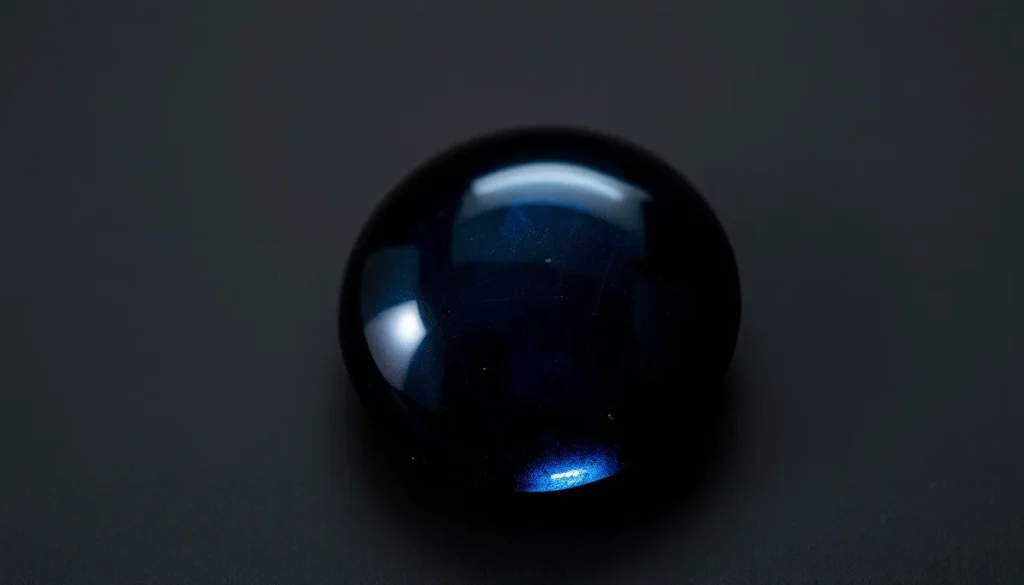
Covellite is a copper sulfide mineral with the chemical formula CuS. It crystallises in the hexagonal system and is most recognisable for its deep indigo‑blue to black metallic appearance. Although it is primarily a collector’s mineral, covellite is occasionally cut into cabochons for artistic jewelry because of its striking colour and high polishability.
History and Origin
The name “covellite” honours the French mineralogist Nicéphore Coville (1793–1877). Natural occurrences of covellite have been documented since the 19th century, particularly in copper‑rich ore deposits where it forms as a secondary mineral from the oxidation of primary copper sulfides such as chalcopyrite. Notable localities include the Democratic Republic of Congo, Zambia, Russia (Ural region), Canada (British Columbia), and Australia (South Australia).
Meaning and Symbolology
In gemstone lore, covellite’s dark metallic hue is associated with protection, grounding, and the absorption of negative energy. Its copper content links it symbolically to vitality, creativity, and the flow of life‑force. Collectors often value covellite for its rarity and the sense of mystery imparted by its deep colour.
Healing and Metaphysical Properties
Traditional crystal‑healing beliefs attribute the following properties to covellite:
- Grounding: Said to anchor the wearer’s energy to the earth, enhancing stability and a sense of security.
- Protection: Believed to create a protective shield against psychic or emotional intrusion.
- Energy Flow: Associated with the circulation of copper‑related magnetic energy, supporting stamina and endurance.
These claims are based on cultural traditions and are not supported by medical evidence. Covellite should never replace professional health care.
Varieties and Types
Pure covellite is a single mineral species, but it can appear in several textural forms:
- Massive aggregates: Rough, earthy masses often found in ore zones.
- Crystalline specimens: Well‑formed hexagonal prisms that display the most vivid colour when polished.
- Alteration products: Covellite may alter to other copper minerals such as cuprite or malachite, creating zoned specimens prized by collectors.
Jewelry Uses and Care
Because covellite is very soft (Mohs 1.5–2.5) and brittle, it is unsuitable for everyday wear in rings or bracelets that are subjected to impact. However, it is used in pendants, earrings, and brooches where the stone can be set securely and protected from knocks. Care recommendations include:
- Handle with gloves or a soft cloth to avoid fingerprints.
- Clean gently with a soft, damp brush; avoid ultrasonic cleaners and harsh chemicals.
- Store separately in a padded pouch to prevent scratching by harder gemstones.
- Limit exposure to direct sunlight for prolonged periods, as intense UV can cause surface oxidation.
Buying Guide
When purchasing covellite, consider the following factors:
- Colour intensity: The most valuable pieces exhibit a uniform, deep indigo‑blue metallic sheen without brownish or gray overtones.
- Crystal form: Well‑formed hexagonal crystals or polished cabochons are preferred over massive, unpolished material.
- Origin documentation: Reputable dealers will provide provenance, especially for specimens from noted localities such as the Congo or Zambia.
- Treatment disclosure: Covellite is rarely treated, but any polishing or stabilization should be disclosed.
Because of its softness, covellite is generally priced lower than more durable gemstones, but high‑quality, museum‑grade crystals can command premium prices.
FAQ
What is covellite good for?
Covellite is prized by collectors for its rare indigo‑blue metallic hue and is occasionally used in artistic jewelry. Traditional crystal‑healing beliefs attribute grounding and protective qualities, but these are not medically verified.
Is covellite rare?
High‑quality, well‑crystallised covellite is relatively rare because it forms only in specific oxidised copper zones and is soft, making it difficult to cut and preserve. Masses are more common, but gem‑grade specimens are limited.
How can you tell if covellite is real?
Real covellite feels heavy for its size, displays a metallic luster, and has a black streak. It is soft (scratchable with a fingernail) and opaque. For certainty, seek professional gemological testing, such as X‑ray diffraction or chemical analysis.
What chakra is covellite associated with?
In crystal‑healing traditions, covellite is linked to the Root (Muladhara) chakra, supporting grounding and stability.
How should you clean covellite?
Clean covellite gently with a soft, damp cloth or a soft brush. Avoid ultrasonic cleaners, harsh chemicals, or high‑pressure water, as the stone is soft and may be damaged. Store it in a padded pouch away from harder gemstones.
Leave a Reply