
Short Answer
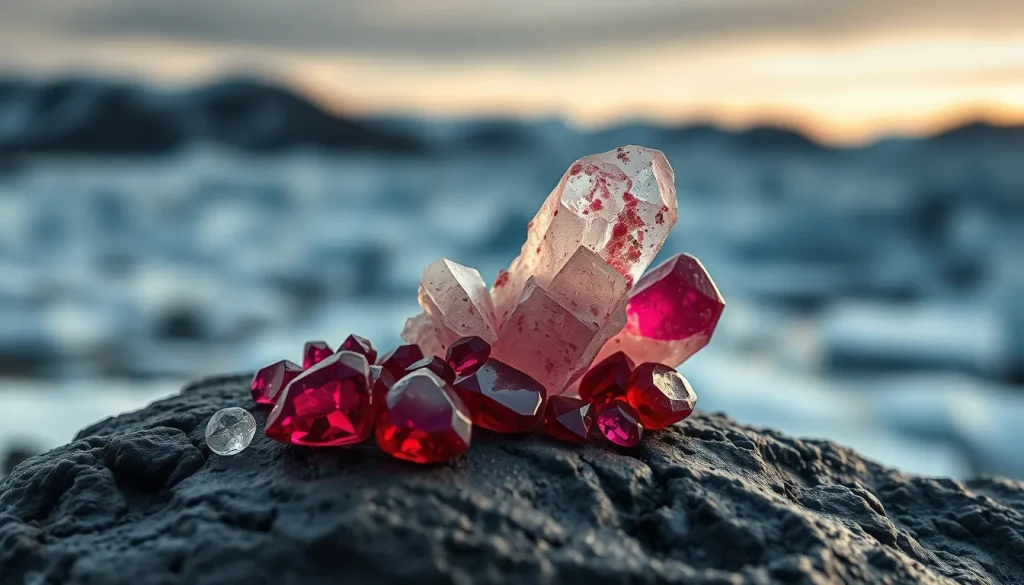
Greenland, the world’s largest island, is a geological treasure trove. Its vast, ice-covered landscapes hide some of the oldest rocks on Earth, providing a window into the early formation of our planet. For the gemologist, Greenland is not merely a source of raw materials but a laboratory of rare chemistry, where extreme conditions have produced minerals found nowhere else on the globe.
What Is Greenland’s Mineral Wealth?
Greenland’s mineralogy is characterized by a diverse array of deposits, ranging from the Archean cratons of the south to the complex alkaline intrusions of the west and east coasts. While not a primary commercial hub for gemstones like Myanmar or Colombia, Greenland produces high-quality specimens that are prized by collectors and scientists for their purity and rarity.
The most notable gemstones include rubies, sapphires, and a variety of rare silicates. However, the region is perhaps most famous for its non-gem minerals, such as cryolite, which was once mined on a massive scale and is now nearly extinct in nature.
Varieties and Related Materials
The gemstones of Greenland can be categorized by their geological origin:

- Corundum (Rubies and Sapphires): Found primarily in metamorphic rocks, Greenlandic rubies are often characterized by a distinct saturation and are found in the South Greenland region.
- Alkaline Complex Minerals: The Gardar Province is world-renowned for rare earth minerals, including eudialyte and various rare feldspars.
- Arctic Quartz and Pegmatites: Large crystals of smoky quartz and rare beryl varieties occur in the island’s pegmatite veins.
Identification and Look-Alikes
Distinguishing Arctic gems from other sources requires careful analysis of inclusions. Greenlandic rubies often lack the silk (rutile needles) common in Burmese rubies, making them appear cleaner but sometimes less “glowy” under certain lighting.
| Gemstone | Greenland Characteristic | Common Look-Alike |
|---|---|---|
| Ruby | High purity, distinct zoning | Red Spinel |
| Eudialyte | Deep red, complex chemistry | Rhodonite |
| Cryolite | White/Colorless, soluble in water | Halite (Salt) |
Quality and Value Factors
For minerals from Greenland, value is driven by rarity and scientific significance rather than just carat weight. The following factors determine the market value:
- Crystal Habit: Well-formed, euhedral crystals are significantly more valuable to collectors than tumbled stones.
- Color Saturation: For rubies, the “pigeon blood” red is the gold standard, though Greenlandic stones often lean toward a slightly more purple-red.
- Provenance: Documented origin from specific Arctic localities can add a premium to the specimen’s value.
History and Cultural Significance
“The geology of Greenland is a chronicle of the Earth’s infancy, where the minerals act as the ink and the ice as the preservative.”
Historically, the mining of minerals in Greenland was driven by industrial needs—specifically the extraction of cryolite for aluminum production. The transition toward gemstone exploration is a more recent phenomenon, blending modern geological surveys with the traditional knowledge of the Inuit people, who have long known the locations of colorful stones in the tundra.
Jewelry Suitability and Care
Most of Greenland’s rare minerals are softer than the primary precious stones. While rubies are perfectly suited for rings (Mohs 9), many of the rare alkaline minerals are fragile (Mohs 5-6) and are better suited for collector’s cabinets or protective bezel settings.
Care Tip: Avoid using ultrasonic cleaners on rare Arctic silicates, as they may contain microscopic fractures from the extreme freeze-thaw cycles of the Arctic environment.
FAQ
Are Greenland rubies commercially available?
They are rare in the commercial market and are mostly found in private collections or specialized mineral shows.
What is cryolite and why is it special?
Cryolite is a rare halide mineral once mined extensively in Greenland; it is unique because it is water-soluble and essential for aluminum smelting.
Can I use Greenland minerals for everyday jewelry?
Rubies from Greenland are durable enough for daily wear, but rare alkaline minerals are too soft and should be kept as specimens.
Leave a Reply