
Short Answer
Overview
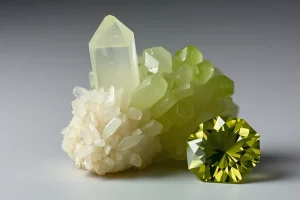
Adamite is a zinc arsenate hydroxide mineral with the chemical formula Zn₂AsO₄OH·H₂O. It belongs to the arsenate class and crystallises in the orthorhombic system, often forming prismatic or tabular crystals that display a brilliant vitreous to adamantine luster. The stone is most famous for its intense yellow to orange hues, though green and brown varieties also occur.
Physical properties include a Mohs hardness of 3.5–4, a specific gravity of 4.2–4.3, and a refractive index ranging from nα = 1.708 to nγ = 1.734. Adamite exhibits perfect cleavage on {010} and a white streak. Its transparency varies from transparent to translucent, depending on crystal quality and inclusions.
History and Origin
Adamite was first described in 1866 from the Tsumeb Mine in Namibia and was named in honour of French mineralogist Gilbert-Joseph Adam. Early specimens were prized by collectors for their bright colour and well‑formed crystals. Significant localities have since been identified in Zambia (Kafubu), Australia (Broken Hill), the United States (Arizona), France (Languedoc), and Morocco, among others.
Meaning and Symbolism
In traditional gemstone lore, adamite is associated with joy, optimism, and the expression of personal power. Its vivid yellow hue is thought to reflect the energy of the sun, encouraging confidence and creativity. Some cultures view it as a stone of transformation, symbolising the ability to turn ordinary experiences into radiant opportunities.
Healing and Metaphysical Properties
Crystal‑healing practitioners attribute the following properties to adamite, describing them as beliefs rather than medical facts:
- Emotional balance: Supports the release of suppressed emotions and promotes a positive outlook.
- Energy amplification: Said to intensify the wearer’s own energy field, aiding in goal‑setting and motivation.
- Physical support: Traditionally linked to the liver, pancreas, and metabolic processes.
These attributes are considered complementary to, not a replacement for, professional healthcare.
Varieties and Types
While classic adamite is bright yellow to orange, several varieties exist:
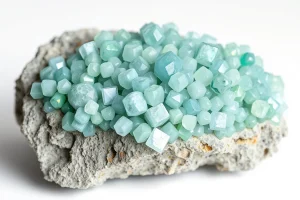
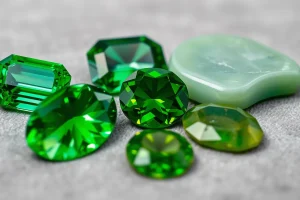
- Green adamite: Results from copper substitution for zinc, producing vivid emerald‑green crystals.
- Brown or chocolate adamite: Occurs when iron or manganese impurities are present.
- Colourless adamite: Rare, often found in well‑preserved, transparent crystals.
All varieties share the same basic chemical structure but differ in trace element composition, which influences colour.
Jewelry Uses and Care
Because of its relatively low hardness, adamite is best suited for pendants, earrings, and brooches rather than rings that endure frequent impact. When set in protective settings, its vivid colour can become a striking focal point.
Care recommendations:
- Clean with a soft, lint‑free cloth; avoid ultrasonic cleaners.
- Use mild soap and lukewarm water for deeper cleaning, then dry promptly.
- Avoid exposure to harsh chemicals, acids, and prolonged sunlight, which may fade the colour.
- Store separately from harder gemstones to prevent scratching.
Buying Guide
When evaluating adamite, consider the following factors:
-
- Colour intensity: Bright, saturated yellows or greens are most valued.
n
- Clarity: Inclusions are common; however, a clean interior enhances brilliance.
- Cut and setting: Well‑cut stones with protective bezels reduce the risk of chipping.
- Treatment disclosure: Some specimens are heat‑treated to enhance colour; reputable dealers should disclose any treatments.
- Certification: Request a gem‑ological report from a recognized laboratory for high‑value pieces.
Because adamite is relatively rare in gem‑quality form, prices can vary widely. Buying from a trusted source ensures authenticity and proper handling.
FAQ
What is adamite good for?
Adamite is prized for its vivid colour in jewelry and is traditionally believed to promote optimism and personal power, while also being collected for its unique crystal forms.
Is adamite rare?
High‑quality, gem‑grade adamite is relatively rare because large, well‑coloured crystals are uncommon; however, lower‑grade specimens are more abundant in mineral collections.
How can you tell if adamite is real?
Real adamite feels heavy for its size, shows a bright yellow‑orange hue, and has perfect cleavage on {010}. Professional testing with a refractometer and spectroscopy confirms its identity.
What chakra is adamite associated with?
Traditionally, adamite is linked to the Solar Plexus (Manipur) chakra, reflecting its association with confidence and personal power in crystal‑healing beliefs.
How should you clean adamite?
Clean adamite gently with a soft cloth and mild soap; avoid ultrasonic cleaners, harsh chemicals, and prolonged sunlight. Store separately from harder stones to prevent scratches.
Leave a Reply