
Short Answer
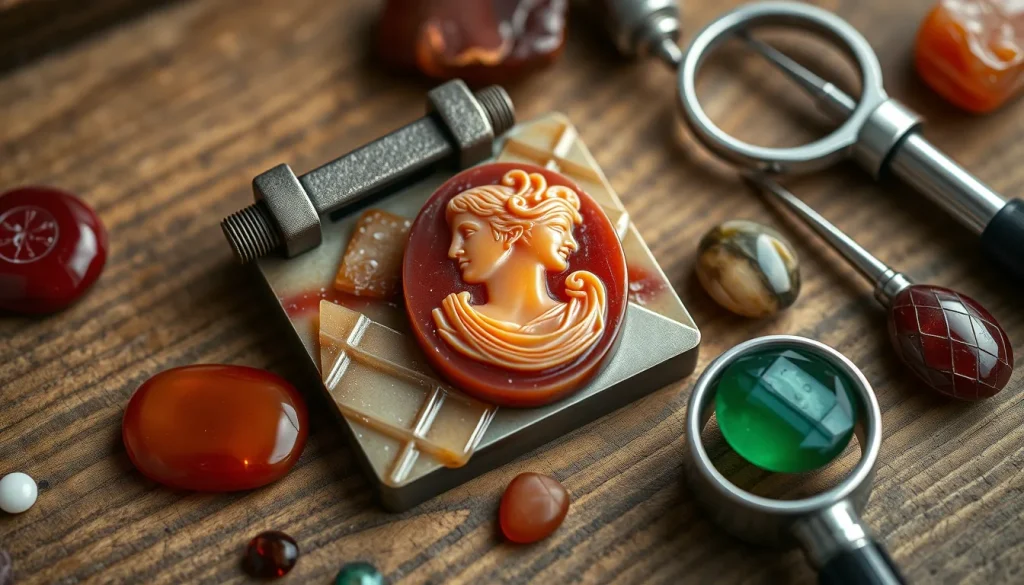
The glyptic arts—comprising the carving of gemstones—are divided into two primary techniques: relief carving (cameo) and recessed engraving (intaglio). While a cameo creates a three-dimensional image that rises from the background, an intaglio sinks into the stone, historically serving as a seal. The selection of the gemstone is the most critical factor in the outcome, as the material must possess specific physical properties to withstand the pressure of the burin or drill while allowing for artistic precision.
Comparison Table
| Gemstone | Hardness (Mohs) | Primary Use | Key Advantage | Typical Contrast |
|---|---|---|---|---|
| Sardonyx | 6.5 – 7 | Cameo | Distinct parallel bands | White on Reddish-Brown |
| Carnelian | 6.5 – 7 | Intaglio | Homogeneous color | Uniform Orange-Red |
| Bloodstone | 6.5 – 7 | Intaglio/Cameo | Dramatic spotting | Red spots on Dark Green |
| Agate | 6.5 – 7 | Both | Versatile banding | Multicolor / Layered |
| Quartz/Chalcedony | 6.5 – 7 | Both | Availability/Clarity | Translucent to Opaque |
Shared Features
Most gemstones selected for glyptic work share a specific range of physical properties. The most common denominator is a Mohs hardness between 6 and 7. This range is the “sweet spot” for carvers; materials softer than 6 are too prone to scratching and wear (making them unsuitable for seals), while materials harder than 8 (like sapphire or diamond) are exceptionally difficult to carve without advanced industrial equipment.
Furthermore, most preferred stones are members of the Chalcedony family. These cryptocrystalline quartz varieties offer a toughness and fine-grained structure that prevents the stone from shattering during the delicate process of removing minute fragments of material.
Important Differences
The primary difference in material selection depends on whether the artist is producing a relief or a recess:
- For Cameos (Relief): The artist requires stratified or banded gemstones. The goal is to utilize contrasting layers of color so that the figure (carved from one layer) stands out against the background (carved from a deeper layer). Sardonyx is the gold standard here due to its sharp contrast between white and brown layers.
- For Intaglios (Recessed): The artist typically prefers homogeneous or monochromatic stones. Since the image is carved into the stone to be pressed into wax or clay, a consistent color ensures the focus remains on the depth and detail of the engraving rather than the natural patterns of the stone. Carnelian is historically the most prized for this purpose.
Suitability by Use
Depending on the intended final application, different stones are prioritized:
Seal Stones (Intaglios)
For functional seals, hardness is paramount. Carnelian and Jasper are preferred because they do not wear down quickly under repeated use. Their opacity also ensures that the carved lines are clearly visible when the seal is pressed.
Decorative Jewelry (Cameos)
For aesthetic jewelry, visual contrast is the priority. Sardonyx and layered Agates allow for the creation of lifelike portraits where the skin tone can be represented by one layer and the hair or background by another.
Expert Tip: When evaluating a cameo, look for “layer integration.” The highest quality carvings use the stone’s natural bands to create a three-dimensional effect without the need for artificial dyes.
Identification Limits
Distinguishing between different types of carved chalcedonies can be challenging because they share the same chemical composition (SiO2). Identification often relies on color and banding:
- Sardonyx vs. Agate: Sardonyx specifically features parallel bands of white and reddish-brown; Agate can have any color and often features concentric or curved banding.
- Bloodstone: Identified by its dark green base with distinct red jasper inclusions.
- Carnelian: A translucent to opaque orange-red variety of chalcedony without significant banding.
Related Profiles
To further understand the materials used in these arts, collectors should study the profiles of the Quartz family, specifically focusing on Chalcedony, Jasper, and Onyx, as these constitute the vast majority of historical glyptic works.
FAQ
What is the difference between a cameo and an intaglio?
A cameo is a relief carving where the image is raised from the background. An intaglio is a recessed carving where the image is engraved into the surface of the stone.
Why is sardonyx preferred for cameos?
Sardonyx naturally possesses contrasting parallel layers of white and reddish-brown, which allows the artist to create a figure in one color against a background of another.
Can any gemstone be used for carving?
Technically yes, but stones that are too soft (like calcite) wear away too quickly, and stones that are too hard (like diamond) are extremely difficult to carve without specialized diamond-tipped tools.
Leave a Reply