
Short Answer
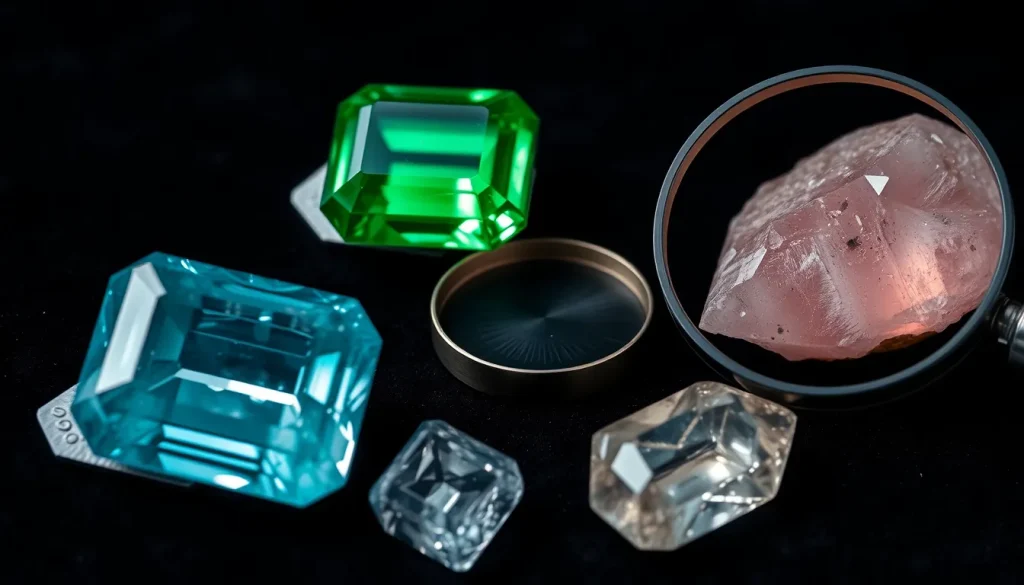
The beryl family represents one of the most versatile and prized groups of minerals in the gemological world. Characterized by its hexagonal crystal structure and a wide spectrum of colors—ranging from colorless to deep green and pink—beryl is a beryllium aluminum cyclosilicate that occurs in various geological environments, primarily pegmatites.
What Is Beryl?
Beryl is a mineral species with the chemical formula Be3Al2Si6O18. In its pure form, beryl is colorless; however, the substitution of trace elements (chromophores) within its crystal lattice creates the vibrant colors associated with its most famous varieties. For instance, chromium and vanadium produce the lush greens of emerald, while iron produces the blues of aquamarine.
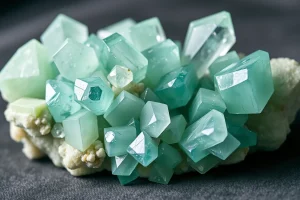
Physically, beryl is known for its high hardness (7.5 to 8 on the Mohs scale), making it durable for jewelry. It possesses a vitreous luster and typically forms elongated hexagonal prisms, which is a key identifying characteristic for gemologists during initial inspection.
Varieties and Related Materials
The beryl family is divided into several distinct varieties based on color and chemical composition:
- Emerald: The most valuable variety, colored green by chromium or vanadium. High-quality emeralds exhibit a “deep grass green” hue.
- Aquamarine: Named for the Latin aqua marina (sea water), these range from pale blue to deep teal, colored by iron.
- Morganite: A rare pink to peach-colored beryl, colored by manganese. It is highly sought after for engagement rings due to its romantic hue.
- Heliodor: The golden-yellow variety, colored by iron. Its name derives from the Greek words for “sun” and “gift.”
- Goshenite: The colorless variety of beryl. While less valuable than the colored versions, it is prized for its purity and clarity.
- Red Beryl: One of the rarest gemstones on Earth, found primarily in Utah, USA. It is colored by manganese and is significantly more scarce than diamond.
Identification and Look-Alikes
Distinguishing beryl from other gemstones requires a combination of visual inspection and laboratory tools. Because many beryls are transparent, they can be mistaken for other minerals:
| Beryl Variety | Common Look-Alike | Key Distinguishing Feature |
|---|---|---|
| Emerald | Tsavorite Garnet / Green Tourmaline | Emeralds typically have more “jardin” (internal inclusions) and a different refractive index. |
| Aquamarine | Blue Topaz / Blue Tourmaline | Aquamarine often shows distinct hexagonal growth patterns and lacks the pleochroism of tourmaline. |
| Morganite | Pink Tourmaline / Kunzite | Morganite has a softer, peachier pink and a lower refractive index than tourmaline. |
Treatments and Synthetic Counterparts
Due to the rarity of high-clarity crystals, treatments are common in the beryl family. It is critical for collectors to understand these modifications:
Oiling and Resin Filling
Emeralds almost always contain fractures. To improve clarity and color, these fissures are often filled with colorless cedar oil or synthetic resins. While accepted in the trade, the type of filler significantly impacts the stone’s value.
Heat Treatment
Aquamarines and Morganites are frequently heated to remove unwanted yellow or brown tints, enhancing the primary blue or pink saturation.
Synthetics
Expert Tip: Synthetic emeralds (created via the hydrothermal process) can be visually identical to natural stones. Always insist on a laboratory report from a recognized authority like GIA or SSEF to verify origin.
Quality and Value Factors
When evaluating beryl, gemologists focus on the “Four Cs,” with a specific emphasis on color saturation:
- Color: For emeralds, the balance between blue and yellow undertones is key. For aquamarine, a saturated blue is more valuable than a pale one.
- Clarity: While “flawless” emeralds are nearly non-existent, the presence of large, eye-visible inclusions that disrupt the light path will lower the value.
- Cut: Proper cutting maximizes the brilliance and prevents “windowing” (where light passes straight through the center).
- Carat Weight: Due to the rarity of large, clean crystals, the price per carat increases exponentially with size.
Jewelry Suitability and Care
Beryl is generally durable, but specific care is required depending on the variety. Emeralds, being more brittle due to internal inclusions, should be protected from hard impacts. Avoid using ultrasonic cleaners or steam cleaning on oiled emeralds, as this can strip the oil from the stone, revealing unsightly fractures.
FAQ
Is it normal for emeralds to have inclusions?
Yes, emeralds almost always have internal inclusions. In the trade, these are called 'jardin' and are often used to help determine the stone's origin.
What is the difference between Aquamarine and Blue Topaz?
While they look similar, they are different minerals. Aquamarine is a beryl (hexagonal), while Topaz is a silicate. They have different hardnesses and refractive indices.
Can I wear Morganite every day?
Yes, with a hardness of 7.5-8, Morganite is suitable for daily wear in rings, though it should be protected from harsh chemicals and heavy impacts.
Leave a Reply