
Short Answer
Overview
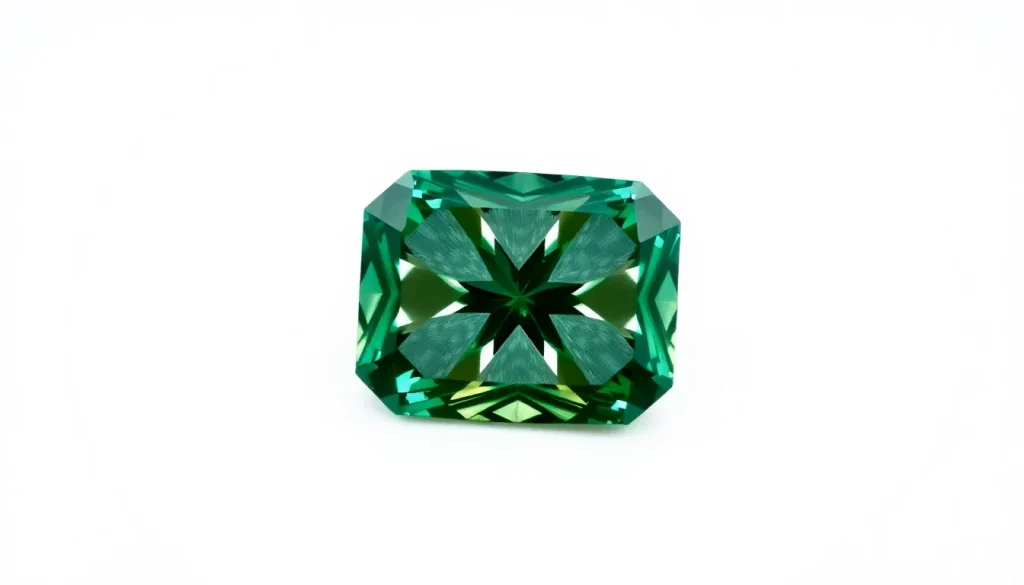
Trapiche emerald is a distinctive variety of emerald (the green member of the beryl family) that displays a radial, star‑like pattern of pale spokes or channels extending from a central hub. The word “trapiche” derives from the Spanish term for a sugar‑cane mill, reflecting the resemblance of the pattern to the mill’s spokes. The gemstone retains the classic emerald green color, ranging from vivid to deep, while the trapiche pattern is typically composed of lighter‑colored, often nearly colorless, crystal growth zones.
History and Origin
The trapiche pattern was first documented in emeralds from the Muzo and Chivor mines of Colombia in the early 20th century. Colombian trapiche emeralds are renowned for their clarity and the sharpness of the radial pattern. Similar specimens have also been reported from Brazil’s Itabira district, Zambia’s Kafubu region, and more recently from Afghanistan’s Badakhshan province. Historically, the rarity of the pattern limited its use to high‑end collectors, and it was seldom set in jewelry until the late 1990s when cutting techniques improved.
Meaning and Symbolism
In traditional gemstone lore, emerald symbolizes rebirth, love, and fidelity. The trapiche pattern adds an extra layer of symbolism, representing the sun’s rays, spiritual illumination, and the concept of inner harmony radiating outward. Many view the stone as a talisman for personal growth, encouraging the wearer to align their inner purpose with outward actions.
Healing and Metaphysical Properties
Crystal‑healing practitioners attribute the following metaphysical qualities to trapiche emerald:
- Heart‑centered energy: Enhances compassion, emotional balance, and unconditional love.
- Chakra alignment: Believed to activate and balance the Heart (Anahata) chakra, fostering emotional openness.
- Vision and insight: The radial pattern is thought to amplify intuition and inner vision, supporting meditation and spiritual insight.
- Physical tradition: Suggested to aid circulation, reduce inflammation, and support the immune system – always as a complementary belief, not a medical treatment.
Varieties and Types
Trapiche emeralds are classified primarily by the number of spokes and the clarity of the central hub. Common types include:
- Classic trapiche: Six to eight evenly spaced spokes with a well‑defined central hub.
- Partial trapiche: Incomplete radial pattern, often due to irregular crystal growth.
- Multicolored trapiche: Rare specimens where the spokes exhibit a slight yellow or blue tint, usually caused by trace elements.
All varieties share the same chemical composition as standard emerald, with chromium and/or vanadium providing the green coloration.
Jewelry Uses and Care
Because of its hardness (7.5–8 on the Mohs scale) and generally good durability, trapiche emerald can be set in rings, pendants, earrings, and high‑end watches. However, the unique pattern is often best showcased in open‑faceted cuts such as emerald, baguette, or modified brilliant cuts that highlight the radial design.
Care recommendations:
- Clean with a soft brush and warm, mildly soapy water; avoid ultrasonic cleaners if the stone has been treated with oils or resins.
- Dry with a lint‑free cloth; store separately from softer gems to prevent scratching.
- Limit exposure to harsh chemicals, acids, or prolonged sunlight, which can fade surface treatments.
Buying Guide
When purchasing a trapiche emerald, consider the following criteria:
- Origin documentation: Reputable sources will provide country of origin, preferably Colombian or Brazilian, as these locales yield the most vivid trapiche patterns.
- Clarity and pattern definition: Look for a sharp, symmetrical radial pattern with minimal inclusions in the central hub.
- Color saturation: The most valued stones display a rich, saturated green with a clear contrast between the green matrix and the lighter spokes.
- Treatment disclosure: Emeralds are often oil‑treated to improve clarity; ensure any treatment is fully disclosed.
- Certification: Obtain a GIA or equivalent gemological report that identifies the stone as a natural trapiche emerald and notes any treatments.
n
Because trapiche emeralds are relatively scarce, prices can vary widely based on size, color intensity, and pattern perfection. Buying from a certified dealer reduces the risk of synthetic or misidentified stones.
FAQ
What is trapiche emerald good for?
Trapiche emerald is prized for its striking radial pattern and vivid green color, making it popular in high‑end jewelry. Traditionally, it is also believed to promote emotional balance and spiritual insight.
Is trapiche emerald rare?
Yes, trapiche emerald is relatively rare. The rarity depends on the clarity of the radial pattern, color saturation, and origin, with Colombian specimens generally considered the most valuable.
How can you tell if trapiche emerald is real?
Authentic trapiche emerald displays a natural hexagonal crystal structure, a consistent green hue, and a distinct radial pattern. Professional testing, such as spectroscopy and a GIA grading report, is recommended to confirm authenticity and disclose any treatments.
What chakra is trapiche emerald associated with?
In crystal‑healing traditions, trapiche emerald is linked to the Heart (Anahata) chakra, supporting love, compassion, and emotional openness.
How should you clean trapiche emerald?
Clean gently with warm soapy water and a soft brush. Avoid ultrasonic cleaners if the stone has been oil‑treated, and never use harsh chemicals. Store separately from softer gems to prevent scratching.

Leave a Reply