Short Answer
Overview
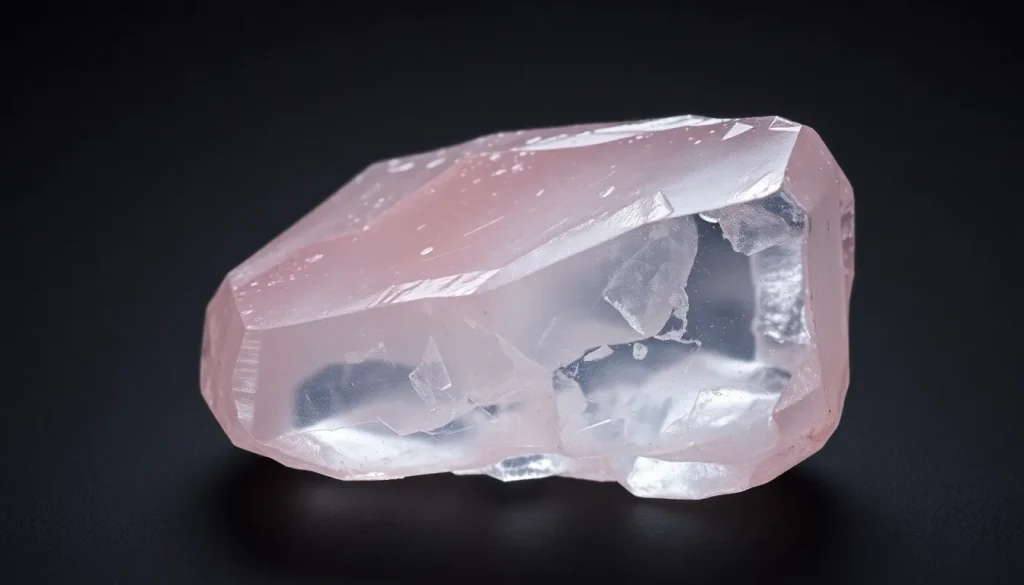
Kainite is a hydrated potassium‑magnesium sulfate‑chloride mineral with the formula KMg(SO4)Cl·3H2O. It belongs to the sulfate mineral class and crystallises in the monoclinic system, typically as tabular or platy crystals. Colours range from colourless and white to pale pink, light blue, or a faint grey. The mineral is most often encountered in evaporite deposits where seawater or lake water has evaporated, leaving a complex suite of salts.
History and Origin
The name “kainite” derives from the Kainuu region of northern Finland, where the mineral was first described in 1888 by Finnish mineralogist Axel K. R. O. H. T. The type locality is the Kainuu evaporite deposits near the town of Kuusamo. Subsequent occurrences have been recorded in the Ural Mountains of Russia, the Great Salt Lake region of the United States, and several Canadian localities such as British Columbia. Kainite is a secondary mineral that forms during the late stages of evaporation, often alongside leonite, gypsum, and halite.
Meaning and Symbolism
In contemporary metaphysical circles, kainite is associated with clarity of thought, emotional balance, and the gentle release of old patterns. Its subtle colours are thought to reflect a calm, introspective energy, encouraging the bearer to trust inner guidance. While these meanings are not scientifically verified, they are part of traditional crystal‑healing lore.
Healing and Metaphysical Properties
Practitioners of crystal healing attribute the following properties to kainite:
- Emotional grounding: Believed to help calm anxiety and promote a sense of inner stability.
- Communication: Said to aid in honest self‑expression and clear communication with others.
- Detoxification: Some traditions claim it supports the body’s natural cleansing processes, particularly of the water‑balance systems.
These claims are based on traditional beliefs and should not replace professional medical advice.
Varieties and Types
Kainite does not have widely recognised commercial varieties, but collectors note subtle colour variations:
- Colourless/White kainite – the most common form, often transparent to translucent.
- Pink kainite – caused by trace iron or manganese impurities.
- Light‑blue kainite – occasionally observed in specimens with minor copper content.
Related minerals include leonite (a potassium magnesium sulfate hydrate without chlorine) and gypsum, which frequently coexist in the same evaporite settings.
Jewelry Uses and Care
Because kainite rates only 2.5–3 on the Mohs scale, it is relatively soft and prone to scratching. Consequently, it is rarely used in mainstream jewelry but can appear in:
- Cabochon pendants set in protective bezels.
- Ring settings that keep the stone recessed and away from daily wear.
- Artistic pieces such as decorative boxes or inlays where the stone is displayed rather than subjected to impact.
Care recommendations:
- Avoid exposure to acids, detergents, or prolonged soaking.
- Clean gently with a soft, lint‑free cloth; for stubborn residue, use lukewarm water and mild soap, then dry thoroughly.
- Store separately from harder gemstones to prevent scratches.
Buying Guide
When selecting kainite, consider the following factors:
- Clarity: Look for specimens free of surface cracks or excessive inclusions, as the mineral is brittle.
- Colour consistency: Uniform pale hues are generally more valued by collectors than mottled or uneven coloration.
- Crystal habit: Well‑formed tabular crystals with sharp edges indicate good growth conditions.
- Origin documentation: Reputable dealers will provide locality information, which can affect both scientific interest and market value.
Because kainite is uncommon in the gem market, prices can vary widely. For significant purchases, request a gem‑ological report or have the stone examined under magnification to verify authenticity.
FAQ
What is kainite good for?
Kainite is valued by collectors for its delicate crystal habit and subtle colours. In crystal‑healing traditions it is believed to promote emotional balance and clear communication, though these uses are not medically proven.
Is kainite rare?
Kainite is uncommon in high‑quality gem form. Good specimens are limited to a few localities, and the stone’s softness restricts its use in jewelry, making pristine crystals relatively rare and sought after by collectors.
How can you tell if kainite is real?
Real kainite displays a vitreous to pearly luster, perfect cleavage on {001}, and a low hardness of 2.5–3. Under magnification it shows tabular crystal faces and a white streak. Professional gemological testing, such as X‑ray diffraction, provides definitive confirmation.
What chakra is kainite associated with?
Traditional crystal‑healing sources do not assign a single, universally accepted chakra to kainite; it is often linked to the Crown or Throat chakras, but these associations vary among practitioners.
How should you clean kainite?
Because kainite is soft and can be water‑sensitive, clean it with a soft, lint‑free cloth. For stubborn dirt, use lukewarm water with mild soap, rinse quickly, and dry immediately. Avoid ultrasonic cleaners, acids, and prolonged soaking.
Leave a Reply