Short Answer
Overview
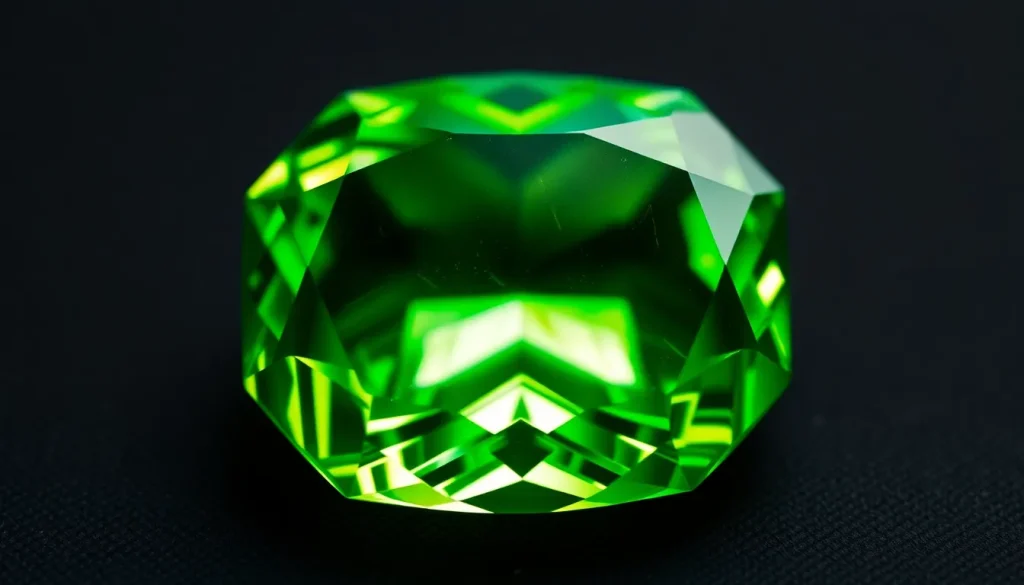
Chloromelanite is a chlorine‑bearing variety of melanite, the iron‑rich member of the garnet group. It displays a vivid green to yellow‑green hue that can rival emerald, yet it possesses the hardness and durability typical of garnets, making it suitable for a range of jewelry applications.
History and Origin
The name “chloromelanite” derives from the Greek chloros (green) and melas (black), referring to the green coloration of a traditionally black garnet species. Early gemological literature from the mid‑20th century noted its occurrence in Madagascar and Tanzania, where chlorine‑rich hydrothermal fluids altered the standard melanite composition. Since then, additional localities such as Sri Lanka, South Africa, and the Ural region of Russia have yielded specimens, though high‑quality material remains scarce.
Meaning and Symbolism
In traditional gemstone lore, chloromelanite is associated with renewal, growth, and emotional balance. Its green color links it to the heart’s nurturing energy, symbolizing compassion, forgiveness, and the opening of new opportunities. Collectors value it not only for its rarity but also for these longstanding symbolic attributes.
Healing and Metaphysical Properties
Crystal‑healing practitioners attribute the following properties to chloromelanite, describing them as traditional beliefs rather than medical facts:
- Heart Chakra – Enhances love, empathy, and emotional healing.
- Physical Well‑being – Said to support the circulatory system and aid in detoxification.
- Mental Clarity – Believed to promote focus and reduce anxiety.
These claims are part of cultural folklore and should not replace professional health advice.
Varieties and Types
Chloromelanite is essentially a single variety distinguished by its chlorine content. However, variations in hue occur based on trace element chemistry and formation conditions:
- Pure Green – Deep, saturated emerald‑like shade.
- Yellow‑Green – Lighter, more citron tone.
- Brownish‑Green – Subtle brown undertones, often found in specimens from higher‑temperature locales.
Jewelry Uses and Care
Because of its hardness (6.5–7.5 on the Mohs scale) and good cleavage resistance, chloromelanite is well suited for rings, pendants, earrings, and high‑impact pieces. When set in protective settings such as bezels or prongs, it retains its brilliance even with everyday wear.
Cleaning: Use warm, soapy water and a soft brush. Rinse thoroughly and dry with a lint‑free cloth. Avoid ultrasonic cleaners if the stone has been fracture‑filled or if any surface treatments are present.
Storage: Keep separate from softer gems (e.g., turquoise, opal) to prevent scratching. Store in a padded compartment or a soft‑lined pouch.
Buying Guide
When selecting chloromelanite, consider the following factors:
- Color Saturation – The most valuable stones exhibit a vivid, even green without brown or gray zones.
- Clarity – Inclusions are common; however, eye‑clean stones command higher prices.
- Cut – Well‑proportioned cuts maximize brilliance. Common cuts include oval, cushion, and round brilliant.
- Treatment Disclosure – Reputable dealers should disclose any heat treatment, fracture filling, or surface coating.
- Certification – For high‑value pieces, request a gemological report from a recognized laboratory (e.g., GIA or IGI).
Because chloromelanite is relatively rare, prices can vary widely. Always purchase from a trusted source that offers a return policy and clear provenance.
FAQ
What is chloromelanite good for?
Chloromelanite is valued for its striking green color in jewelry and is traditionally believed to promote emotional balance and heart‑centered compassion. It is also collected for its rarity among garnet varieties.
Is chloromelanite rare?
High‑quality, vivid‑green chloromelanite is considered rare because it forms only in specific chlorine‑rich geological environments. Specimens from well‑known localities such as Madagascar are especially sought after, but lower‑grade material can be found more frequently.
How can you tell if chloromelanite is real?
Real chloromelanite shows a consistent green hue, a hardness of 6.5–7.5, and a refractive index around 1.88. A professional gemologist can confirm identity with a refractometer, spectroscope, and possibly X‑ray diffraction. Look for a reputable certification.
What chakra is chloromelanite associated with?
In crystal‑healing traditions, chloromelanite is linked to the Heart (Anahata) chakra, where it is said to support love, forgiveness, and emotional healing.
How should you clean chloromelanite?
Clean chloromelanite with warm, mildly soapy water and a soft brush. Rinse well and pat dry with a lint‑free cloth. Avoid harsh chemicals, ultrasonic cleaners, or steam if the stone has been fracture‑filled or surface‑treated.
Leave a Reply