
Short Answer
Overview
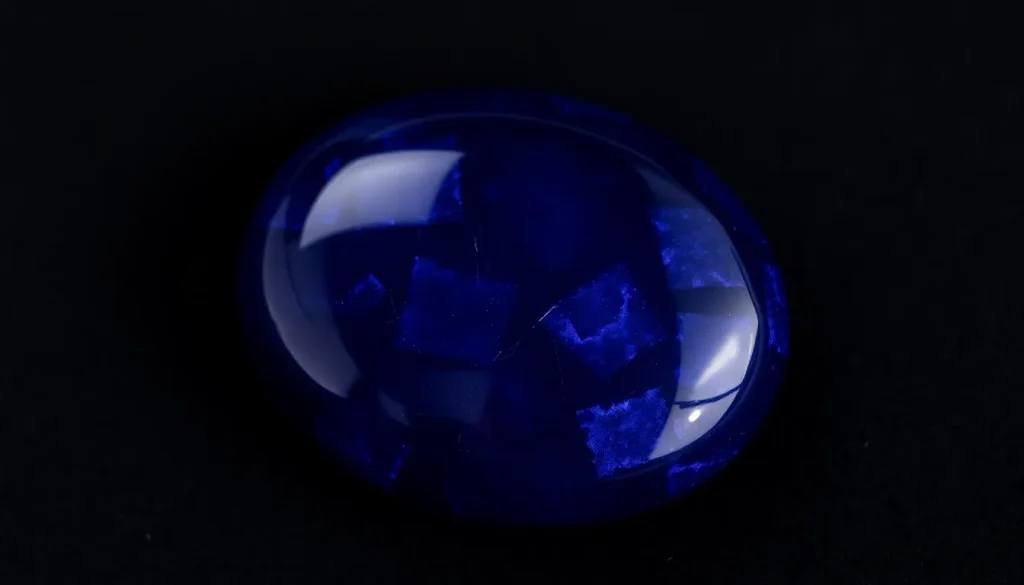
Hauyne is a rare, blue‑to‑violet feldspathoid mineral prized for its striking color and occasional use in fine jewelry. Chemically it is a sodium‑calcium aluminosilicate sulfate, belonging to the sodalite group. With a Mohs hardness of 5.5–6 and a vitreous luster, hauyne is cut as cabochons, beads, or small faceted stones.
History and Origin
The name “hauyne” honors French mineralogist René‑Auguste Hauy (1826–1911). The mineral was first described in 1866 from specimens collected in the Mont‑Boron area of France. Natural deposits are found in alkaline igneous rocks such as nepheline syenites and phonolites. Notable localities include the Mont‑Boron (France), the Langesund region of Norway, the San Pietro Caprino area of Italy, the Mont‑Saint‑Hilaire region of Canada, and the California Sierra Nevada.
Meaning and Symbolism
In traditional gemstone lore, hauyne is associated with clarity of thought and inner vision. Its deep blue hues are said to symbolize the sky, truth, and spiritual communication. The stone is sometimes given as a gift to encourage honesty and to strengthen personal relationships.
Healing and Metaphysical Properties
Crystal‑healing practitioners attribute the following properties to hauyne:
- Emotional balance: believed to calm anxiety and promote calmness.
- Communication: said to aid self‑expression and verbal clarity, especially in situations requiring diplomacy.
- Intuition: linked to the throat and third‑eye chakras, supporting intuitive insight.
These claims are based on traditional beliefs and are not a substitute for professional medical advice.
Varieties and Types
Hauyne occurs in several color variants, the most common being:
- Blue‑violet hauyne – deep, saturated blue to violet, the classic gemstone form.
- Yellow hauyne – a pale, sunshine‑yellow variety that is less common in jewelry.
All varieties belong to the sodalite group and share the same crystal structure, differing primarily in trace element chemistry that influences color.
Jewelry Uses and Care
Because of its moderate hardness, hauyne is best suited for:
- Ring settings with protective bezels or channels.
- Earrings, pendants, and brooches where the stone is set away from heavy impact.
- Beaded necklaces and bracelets, especially when the stones are polished cabochons.
Care recommendations:
- Clean with a soft, lint‑free cloth and mild soap‑water solution. Avoid ultrasonic cleaners.
- Store separately from harder gemstones such as quartz or diamonds to prevent scratching.
- Protect from prolonged exposure to heat or harsh chemicals, which can affect surface luster.
Buying Guide
When selecting hauyne, consider the following factors:
- Color intensity: Deep, evenly saturated blue‑violet stones are the most valuable.
- Clarity: Inclusions are common; a clean, eye‑clean specimen commands a higher price.
- Cut: Well‑proportioned cabochons or faceted stones that showcase the stone’s natural luster.
- Treatment disclosure: Natural hauyne is rarely treated, but some stones may be stabilized; request documentation.
- Certification: For larger or high‑value pieces, a certificate from a reputable gemological laboratory adds confidence.
Because hauyne is relatively scarce, prices can vary widely. Shopping with reputable dealers and asking for provenance helps ensure authenticity.
FAQ
What is hauyne good for?
Hauyne is valued for its vivid blue‑violet color in jewelry and, in crystal‑healing traditions, for promoting clear communication and emotional calm. It is not a medically approved treatment for any condition.
Is hauyne rare?
High‑quality, deep‑blue hauyne is relatively scarce, especially in larger, eye‑clean specimens. It occurs in a few alkaline igneous localities, making fine gemstones less common than many other silicates.
How can you tell if hauyne is real?
Real hauyne displays a vitreous luster, a white streak, and a refractive index around 1.514. It is typically isometric and may show conchoidal fracture. Professional gemological testing (e.g., spectroscopy or a GIA report) provides definitive verification.
What chakra is hauyne associated with?
Traditional crystal lore links hauyne to the Throat chakra, supporting expression and communication, though interpretations can vary.
How should you clean hauyne?
Clean hauyne gently with a soft cloth and mild soap‑water solution. Avoid ultrasonic cleaners, harsh chemicals, and high heat, as the stone’s moderate hardness (5.5–6) makes it vulnerable to scratching and surface damage.
Leave a Reply